UEFA Champions League Final: Arsenal vs Paris Saint Germain Showdown
At Puskas Arena in Budapest, Paris Saint Germain and Arsenal meet in the UEFA Champions League Final, a one-off game that will define their entire 2025 campaign. In the league phase, Arsenal arrive as the benchmark side, ranked 1st with 24 points from 8 wins in 8 matches and a dominant 23:4 goal record, while Paris Saint Germain come in as dangerous challengers from 11th place with 14 points and a 21:11 goal balance. With no second leg or safety net, this final is season-defining for both: for Arsenal, the chance to convert flawless league-phase dominance into a continental crown; for Paris Saint Germain, the opportunity to overturn a weaker league-phase ranking and rewrite their European narrative in 90 minutes.
Head-to-Head Tactical Summary
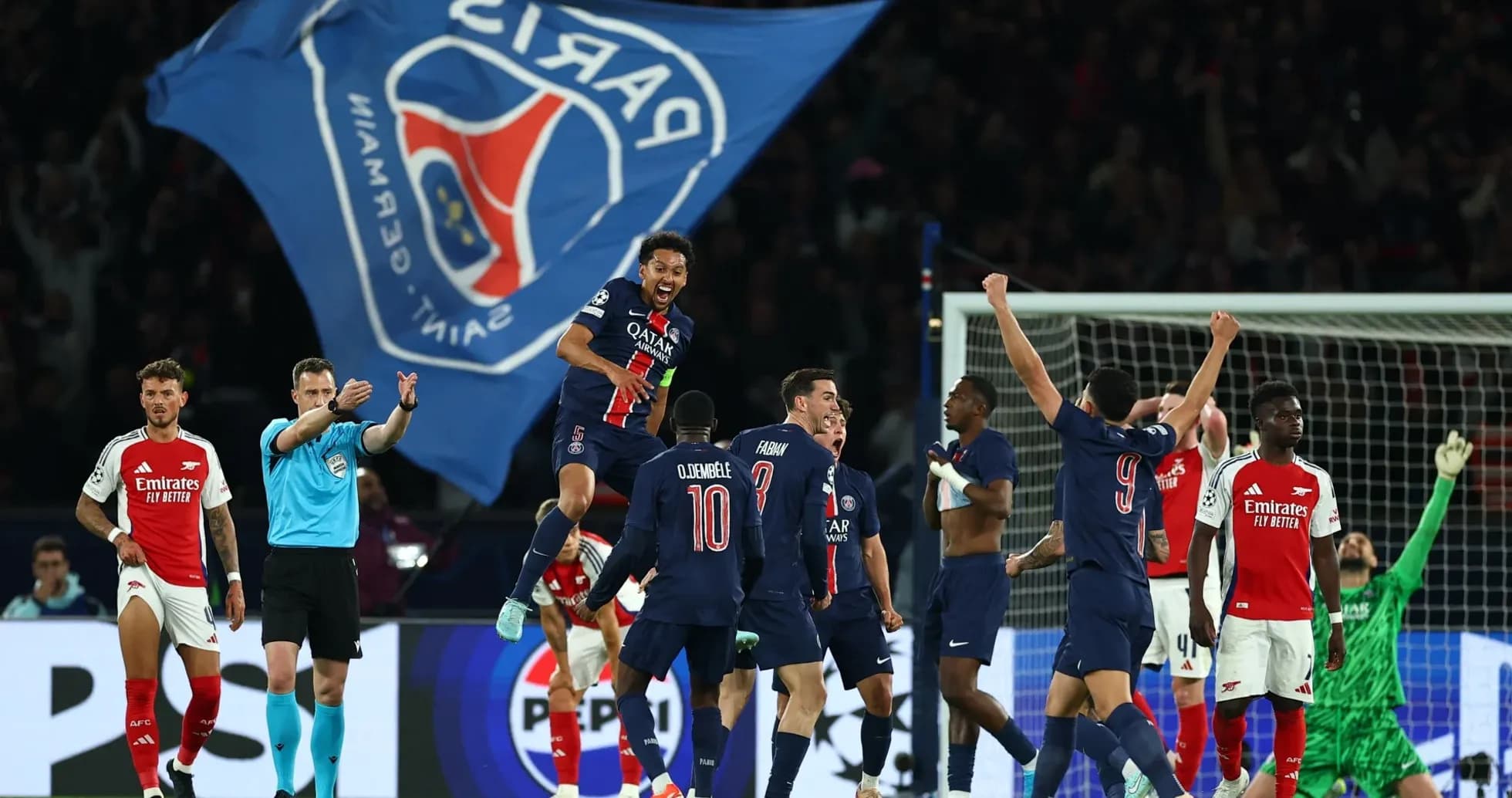
The recent head-to-head history in European competition tilts slightly towards Paris Saint Germain but shows genuine balance at the top level. In the 2024 UEFA Champions League semi-finals, the sides met twice: on 29 April 2025 at Emirates Stadium in London, Arsenal 0–1 Paris Saint Germain (HT 0–1), where Paris Saint Germain protected an early lead with compact defending; and on 7 May 2025 at Parc des Princes in Paris, Paris Saint Germain 2–1 Arsenal (HT 1–0), a narrow home win that completed a two-leg triumph. Earlier in the same 2024 edition, on 1 October 2024 in the League Stage - 2 at Emirates Stadium, Arsenal 2–0 Paris Saint Germain (HT 2–0), with Arsenal imposing themselves early and then managing the game. Beyond the current Champions League format, their 2018 International Champions Cup meeting at The National Stadium (Singapore) ended Arsenal 5–1 Paris Saint Germain (HT 1–0), a friendly but still a notable attacking display from Arsenal. Their 2016 UEFA Champions League Group Stage match on 23 November 2016 at Emirates Stadium finished Arsenal 2–2 Paris Saint Germain (HT 1–1), underlining how tight and high-scoring this matchup can be at full competitive intensity.
Global Season Picture
- League Phase Performance: In the league phase, Paris Saint Germain’s 11th place reflects a strong but inconsistent campaign: 4 wins, 2 draws, 2 defeats from 8 matches, with 21 goals scored and 11 conceded, for 14 points and a +10 goal difference. Their profile is that of a high-output but occasionally vulnerable side (21:11). Arsenal, ranked 1st, have been close to flawless: 8 wins from 8, 23 goals for and only 4 against, for 24 points and a +19 goal difference. Their league-phase dominance is built on both an efficient attack (23 goals) and an elite defensive record (4 conceded).
- Season Metrics: Scope detection shows team statistics only slightly above league-phase totals (Paris Saint Germain 16 games vs 8 league-phase; Arsenal 14 vs 8), indicating this is largely a single-competition picture, but we will still treat these as broader season indicators and explicitly label them. Across all phases of the competition, Paris Saint Germain have scored 44 goals in 16 matches (2.8 per game) and conceded 22 (1.4 per game), numbers that support the view of a very aggressive attack paired with a defense that allows chances. Arsenal, across all phases of the competition, have 29 goals in 14 games (2.1 per game) and only 6 conceded (0.4 per game), a profile of control and defensive authority. Disciplinary trends also matter: Paris Saint Germain accumulate a large share of yellow cards late (42.86% between minutes 76–90), suggesting rising risk in closing phases, while Arsenal’s yellows peak between minutes 61–75 (31.82%), often when they are protecting leads. Both sides show 100% conversion from the penalty spot (Paris Saint Germain 2/2, Arsenal 3/3), underlining their reliability in high-pressure set-piece moments.
- Form Trajectory: In the league phase, Paris Saint Germain’s form string “DLDWL” indicates volatility: only one win in the last five, mixed with draws and defeats, which hints at inconsistency just before the final. Arsenal’s “WWWWW” in the league phase is a perfect run of five consecutive wins, reinforcing the impression of a team peaking at exactly the right time. When combined with the broader form sequences across all phases (Paris Saint Germain “WWWLWDLDWDWWWWWD”, Arsenal “WWWWWWWWDWWDDW”), Arsenal’s trajectory is more sustained at a very high level, while Paris Saint Germain’s includes short winning streaks punctured by occasional setbacks.
Tactical Efficiency
Without explicit numerical Attack/Defense Index values from the comparison block, we infer tactical efficiency by aligning the season averages and league-phase outputs. Across all phases of the competition, Paris Saint Germain’s attacking efficiency is high: 44 goals in 16 matches (2.8 per game) and biggest away wins up to 2–7, showing they can explode offensively when space opens up. However, conceding 22 goals (1.4 per game) and having home goals against up to 4 indicates a defense that can be stretched by elite opposition. Arsenal’s efficiency is more balanced and structurally robust: 29 goals in 14 matches (2.1 per game) combined with just 6 conceded (0.4 per game) and 9 clean sheets, an outstanding defensive index by any standard. Their inability to lose across all phases (0 defeats in 14) suggests that even when their attack is not at maximum output, their defensive structure holds. Translating this into the final: Paris Saint Germain’s route to victory is likely based on leveraging their high scoring rate and accepting a more open game, while Arsenal’s underlying numbers point to a strategy of control, compactness, and selective pressing, trusting their superior defensive metrics to tilt marginal moments in their favour.
The Verdict: Seasonal Impact
This final has binary, transformative consequences for both clubs’ 2025 narratives. For Arsenal, who sit 1st in the league phase with 24 points and a 23:4 goal record, anything short of lifting the trophy would feel like a significant underachievement relative to their statistical dominance and unbeaten run. Victory would validate their status as the most complete side in Europe, confirm the sustainability of their defensive-first metrics (0.4 goals conceded per game across all phases), and establish a platform to retain and attract top talent. Defeat, especially against a lower-ranked league-phase side, would raise questions about their ability to convert control into ultimate prizes in single-event, high-variance finals.
For Paris Saint Germain, coming from 11th in the league phase with 14 points and a 21:11 goal record, the final is an opportunity to override earlier inconsistency. Winning here would instantly reframe a mixed league-phase campaign as a deliberate build towards peak performance in the knockout path, reinforcing belief in their high-variance, high-output attacking model (2.8 goals per game across all phases). It would also offset concerns about their defensive concessions by demonstrating that, in the very highest-stakes environment, their attack can still outgun even the competition’s most efficient defense. Losing, however, would likely confirm the statistical hierarchy: Arsenal’s superior league-phase and season metrics would be seen as decisive, and Paris Saint Germain’s campaign would be remembered as strong but short of the standard required to dethrone the top-ranked side. In strategic terms, the result will either validate Arsenal’s control-and-defense model as the reference point for 2026, or elevate Paris Saint Germain’s more expansive approach as a viable alternative blueprint for winning at the very top level.