Graham Potter's Swedish Revival at the World Cup
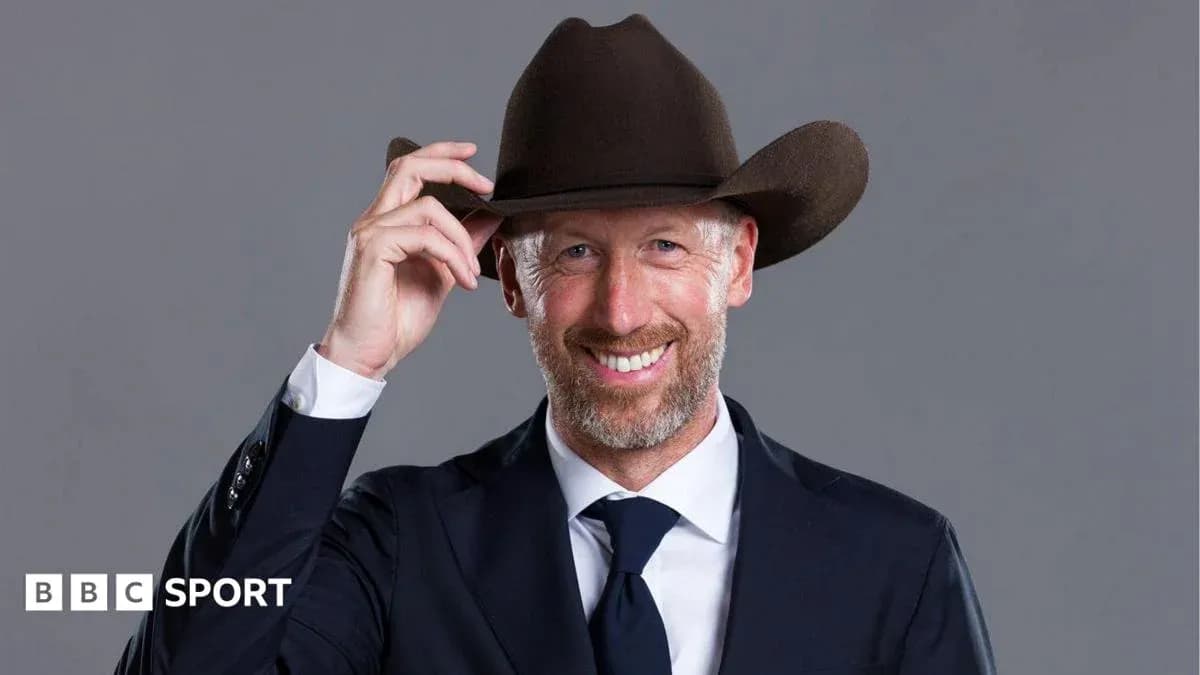
Graham Potter walked out to Sweden training in Texas last week wearing a Stetson. It looked like a joke, a bit of World Cup dress-up from a coach trying to loosen his players before the heat of a summer in the United States.
It also looked like a man being cast, again, as an outsider. The Englishman with the cowboy hat, the manager many in his own country had already filed under “failed at the top level”, suddenly front and centre of another big stage.
In Monterrey, the punchline vanished.
Sweden 5-1 Tunisia. A statement, not a stunt.
From sackings to a World Cup storm
Potter arrived at this tournament with his reputation dented and his future questioned. Two high-profile Premier League jobs in 15 months, two sackings. Chelsea first, where the scale and speed of expectation swallowed him whole. Then West Ham, where six wins from 23 league games cost him his job in late September.
From there to leading a nation at a World Cup the following summer felt unlikely. Not impossible, but far from expected.
“You never know, that's the truth,” he said after the win. “You never know how things are going to go. We were optimistic because we felt confident in the work.
“But until the game is played you don't know for sure. That's the beauty of sport. We are delighted with how we performed tonight and it's a great start for us.”
His team backed up his words with something he has often been accused of lacking at elite level: ruthlessness. Sweden did not just beat Tunisia at Estadio Monterrey. They dismantled them.
Five goals, more than they managed in the entirety of their qualifying group. Under Jon Dahl Tomasson they had laboured through that phase, scoring four in total and finishing bottom of a section that included Switzerland, Kosovo and Slovenia, without a single win in six games. Automatic qualification disappeared under the Dane; so did belief.
Potter arrived in October, too late to repair the damage in the group, but just in time to seize the lifeline offered by Sweden’s Uefa Nations League ranking. That ranking, 34, nudged them into the play-off path. From there they beat Ukraine and Poland and dragged themselves to the World Cup.
This, then, is his second act. Maybe his last at this level if it goes wrong. For now, it looks like a revival.
Back where he became “Swedish”
For Potter, this job is not a foreign adventure. It is a return.
He built his coaching identity in Sweden, hauling Ostersunds FK from the fourth tier to the Allsvenskan, winning the domestic cup and guiding the club into Europe. Those seven years shaped him more than any short, savage stint in the Premier League.
“I feel very Swedish when I'm working,” he told BBC Sport before the tournament. “I even look a bit Swedish. Two of my children were born in Sweden. I had seven unforgettable years at Ostersunds, with memories that will stay with me for life.
“I came from the fourth tier of Swedish football, which is quite low, and worked my way up through the system to the Allsvenskan.
“You almost become Swedish in a coaching sense because of the experiences you have. I think it has definitely helped.
“Now I'm working for the Swedish FA as head coach of the national team, so I feel very Swedish.”
His Instagram feed in recent months has been full of lakes, forests and Nordic literature, of family trips and cultural events. It paints a picture of a man reconnecting with a country that once gave him a chance when few in England knew his name.
The important work, though, has been done away from the camera. Sweden looked drilled, hungry and clear in their ideas against Tunisia. This was not nostalgia. It was a plan.
Isak, Gyokeres and a front line with bite
The return to full fitness of Alexander Isak has changed the outlook of this Sweden side. A £125m Liverpool striker, sharp again and moving with confidence, is a luxury any national coach would cherish. For Potter, the bonus is that Isak has a partner.
Viktor Gyokeres, Arsenal’s powerful frontman, gives Sweden a different threat. Together, they stretched Tunisia to breaking point. They both scored. They both assisted each other. They looked like a pairing that could trouble far better defences than the world’s 56th-ranked side.
For a country back on the biggest stage after missing Qatar 2022, that matters. This attack is expensive, explosive and, on this evidence, in sync.
Behind them, though, lies a group light on World Cup know-how. Only Victor Lindelof has played in this tournament before; goalkeeper Kristoffer Nordfelt was on the bench in Russia in 2018 but did not get on the pitch. The rest will need to learn quickly, and Potter will need to guide them through the turbulence that always arrives at some point in a World Cup campaign.
The format helps. With this expanded structure, a five-goal win in the opener plants Sweden firmly in the race to reach the last 32. The numbers are on their side. The performance suggests the football might be as well.
Tougher road ahead
No one inside the Sweden camp will pretend Tunisia are the benchmark. This was a soft landing, and the tournament will not stay this forgiving.
Netherlands await on Saturday. A genuine contender, a side Potter himself described as “one of the favourites for the competition”. That is where this Swedish resurgence will be measured.
“We just focus on what we can do, we focus on our performances,” Potter said. “It doesn't matter what people think from the outside or opinions.
“That's the beauty of the World Cup everyone has predictions and forecasts but we have to focus on our job and how we play as a team.
“We will meet another top team at the weekend who are one of the favourites for the competition.”
The history books offer their own tease. Sweden’s best World Cup finishes, both third place, came in 1958 under another English coach, George Raynor, and in 1994 when the tournament was also held in the United States. Different eras, different squads, but the echoes are hard to ignore.
Potter is not Raynor, and this is not 1994. The modern game is harsher, the scrutiny more unforgiving. Yet here he is again, on the edge of something significant in a country that once believed in him before his own did.
The Stetson may have started as a joke. After Monterrey, it feels more like a marker. If Sweden keep playing with this edge, the cowboy hat-wearing manager will not just be a curiosity on the touchline. He will be a serious problem for the rest of the World Cup.