Bayern vs Paris Saint Germain: A Tactical Semi-Final Showdown
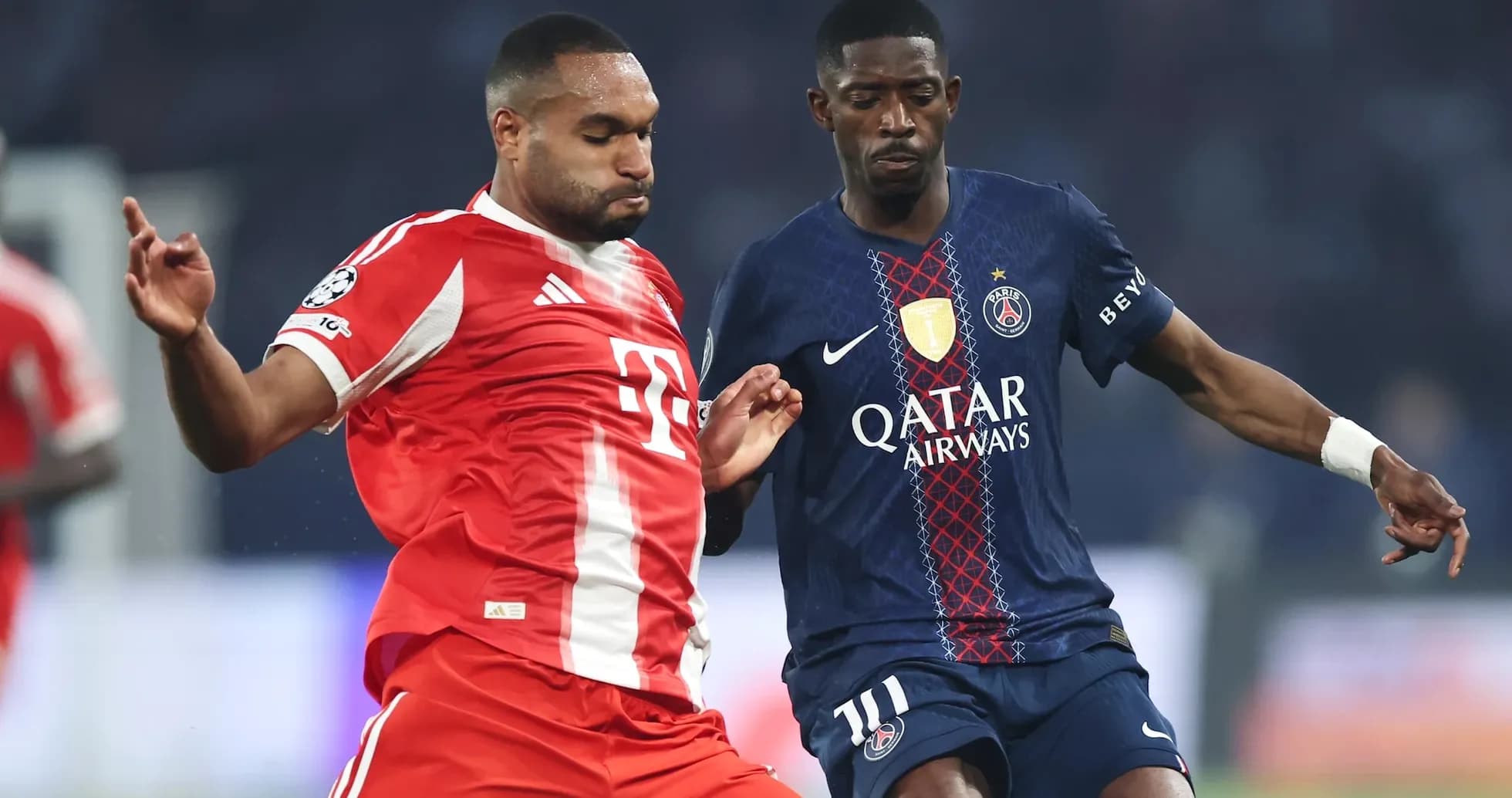
Under the lights of the Allianz Arena, this semi-final felt less like a single match and more like a collision of fully formed footballing identities. Bayern München, the competition’s ruthless machine, and Paris Saint Germain, the flamboyant disruptor, played out a 1–1 draw that perfectly mirrored their seasonal DNA: high-scoring, high-risk, and relentlessly ambitious.
I. The Big Picture – Two Superpowers, One Narrow Margin
Heading into this game, Bayern arrived as one of the tournament’s most dominant forces. Overall this campaign they had played 14 Champions League matches, winning 11, drawing 1 and losing just 2. At home they were close to flawless: 7 fixtures, 6 wins, 1 draw, 0 defeats. The numbers behind that dominance were stark. At home they averaged 3.0 goals for and 1.0 against, with an overall attacking output of 43 goals and 20 conceded – a goal difference of +23 in total.
Paris Saint Germain, by contrast, had taken a more winding path to the last four. Overall they had played 16 matches, winning 10, drawing 4 and losing 2, with 44 goals scored and 22 conceded – an overall goal difference of +22. On their travels they were efficient rather than overwhelming: 8 away games, 5 wins, 2 draws, 1 defeat, scoring 19 and conceding 8, an away goal difference of +11.
The formations told their own story. Vincent Kompany doubled down on Bayern’s season-long blueprint, again rolling out the 4‑2‑3‑1 that had been used in all 14 of their Champions League outings. Enrique Luis matched with Paris Saint Germain’s trusted 4‑3‑3, the shape that had underpinned all 16 of their European games.
The result – Bayern 1, Paris Saint Germain 1 – leaves the tie balanced on a knife-edge, but the way each side arrived here gives the draw a very different emotional weight. For Bayern, with a perfect home record in the group and knockouts, any dropped point at the Allianz Arena feels like a missed opportunity. For Paris, holding the most prolific home side in the competition to a single goal on their own pitch looks like a small triumph of structure and resilience.
II. Tactical Voids – Absences that Bent the Game
Both squads were powerful, but neither was complete.
Bayern were without a cluster of depth options: M. Cardozo (thigh injury), S. Gnabry (muscle injury), C. Kiala (ankle injury), W. Mike (hip injury) and B. Ndiaye (inactive) were all ruled out. In pure star power, Gnabry was the headline absence – his 5 assists in this Champions League campaign had previously given Bayern an extra layer of chaos from the bench. Without him, Kompany’s attacking rotation narrowed, increasing the load on L. Díaz and M. Olise to provide width and incision.
Paris Saint Germain’s most significant absentee was A. Hakimi, sidelined with a thigh injury. His 6 assists in this competition and his ability to explode from deep on the right flank had been a core part of Paris’s transition game. L. Chevalier (muscle injury) and Q. Ndjantou (muscle injury) were also unavailable, trimming options but not the core.
Disciplinary trends hung over both midfields like a quiet threat. For Bayern, J. Kimmich and K. Laimer came into the semi-final with 4 yellow cards each in this Champions League season, and Bayern as a team showed a pronounced late-game disciplinary spike: 37.04% of their yellow cards arrived between 76–90 minutes. Paris mirrored that volatility; 42.86% of their yellows also came in the 76–90 window. This shared tendency toward late fouls and tactical infractions turned the final quarter-hour into a psychological minefield for both coaches, influencing substitutions and pressing intensity as legs tired and tempers frayed.
III. Key Matchups – Hunter vs Shield, Engine Room vs Orchestrator
The central narrative of the night was always going to revolve around the competition’s deadliest finisher. H. Kane entered the semi-final with 14 Champions League goals in 13 appearances, from 36 shots and 25 on target. Against a Paris side that, overall, conceded 1.4 goals per game but just 1.0 on their travels, this was the pure “Hunter vs Shield” duel.
Behind Kane, Bayern’s flanks were loaded with end product. L. Díaz, with 7 goals and 3 assists, and M. Olise, with 5 goals and 6 assists, formed a creative and goalscoring triangle with J. Musiala. Olise in particular, second in the competition’s assist rankings with 6, was the designated locksmith between the lines, his 34 key passes and 75 dribble attempts a constant test of Paris’s defensive timing.
Paris responded with their own layered threat. K. Kvaratskhelia, sitting near the top of both scoring and assist charts (10 goals and 6 assists), operated as both finisher and primary conduit, leading the competition in assists. His duel with Bayern’s right side – K. Laimer and J. Kimmich – was a fascinating clash of control and risk. On the opposite flank, O. Dembélé (7 goals, 2 assists) and D. Doué (5 goals, 4 assists) formed a dynamic, dribble-heavy pairing, ideal for attacking transition moments when Bayern’s full-backs pushed high.
In the “Engine Room” matchup, Vitinha and J. Neves faced Kimmich and A. Pavlovic. Vitinha’s numbers framed him as Paris’s metronome and enforcer in one body: 1,553 completed passes at 93% accuracy, 23 key passes, 25 tackles and 17 interceptions. His job was to blunt Bayern’s central overloads, deny Musiala and Olise clean pockets, and still feed the front three early. Kimmich, by contrast, balanced protection and progression, with 1,117 passes at 90% accuracy and 30 key passes. This duel of deep-lying playmakers shaped the game’s rhythm: when Vitinha dictated, Paris could slow Bayern’s waves; when Kimmich found his range, the German side pinned Paris back.
Behind them, the defensive axes were crucial. For Bayern, D. Upamecano and J. Tah anchored a back line that, at home, conceded just 1.0 goal on average. For Paris, Marquinhos and W. Pacho were tasked with absorbing aerial pressure from Kane and dealing with Bayern’s relentless crossing game, particularly with Hakimi absent and W. Zaire-Emery asked to play a more conservative role on the right.
IV. Statistical Prognosis – A Tie on a Razor’s Edge
Following this result, the numbers still lean slightly towards Bayern’s firepower, but Paris’s away resilience has complicated the picture.
Bayern’s overall average of 3.1 goals for and 1.4 against suggests that, in terms of Expected Goals, they consistently generate and concede in high volumes. Paris’s profile is similar: 2.8 goals for and 1.4 against overall, with a notably tighter defensive record away (just 1.0 goal conceded on average on their travels). Both sides are perfect from the spot in this campaign as teams – Bayern have scored 4 of 4 penalties, Paris 2 of 2 – but individual histories add nuance. Kane has scored 4 penalties but missed 1, while O. Dembélé and Vitinha have each converted 1 and missed 1, meaning no side can claim true perfection from 12 yards at player level.
Disciplinary patterns hint at a volatile second leg. Both teams cluster yellow cards late – 37.04% for Bayern and 42.86% for Paris in the 76–90 window – and Paris have already seen red twice in this competition, with I. Zabarnyi and L. Hernández both dismissed once. In a finely poised semi-final, that late-game edge could tilt xG and territory sharply if either side is reduced to ten.
From a tactical and statistical standpoint, the prognosis is of a second leg where xG is likely to be high on both sides, with Bayern’s structured 4‑2‑3‑1 pressing for volume and Paris’s 4‑3‑3 primed to counter through Kvaratskhelia, Dembélé and Doué. Bayern’s slightly superior attacking metrics and flawless home record before this draw suggest they may still be marginal favourites over 180 minutes, but Paris’s away defensive solidity and multi-headed attacking threat have turned this into a true 50‑50 tie.
The semi-final now moves away from Munich, but the narrative is set: a duel between Bayern’s relentless machine and Paris’s inventive, risk-embracing collective, where a single late challenge, a single penalty – scored or missed – could decide who walks out of this tactical chess match and into the Champions League final.