Netherlands and Japan Draw 2–2 in World Cup 2026 Opener
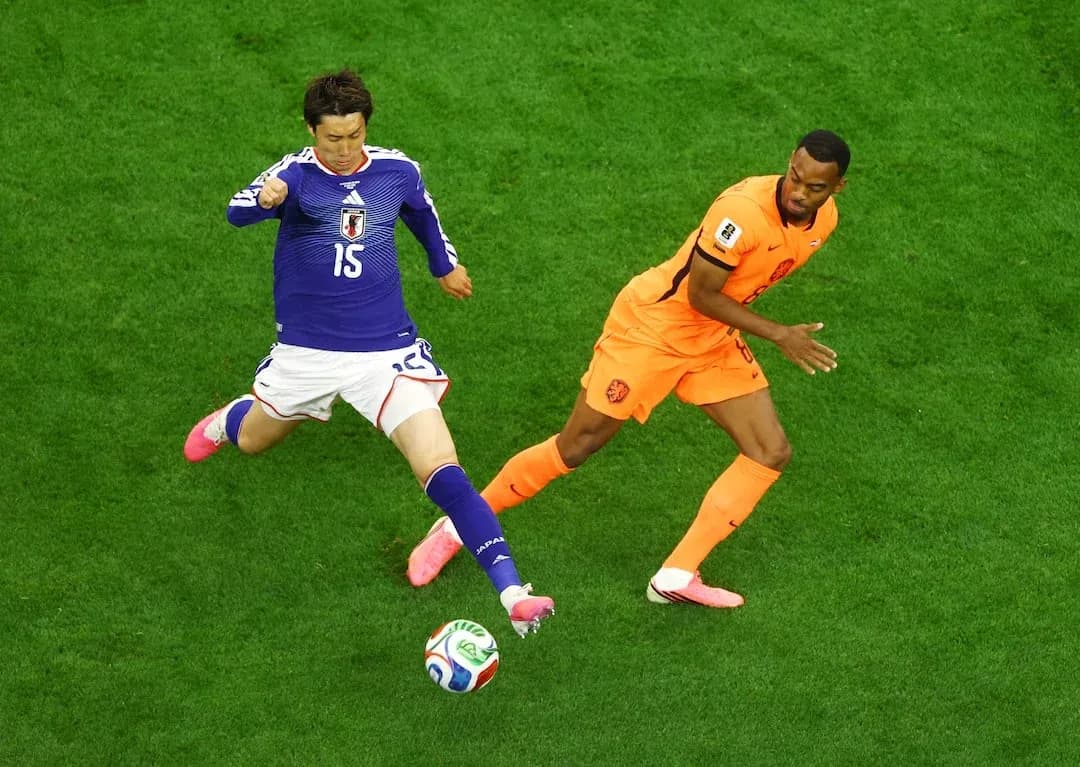
Under the vast roof of AT&T Stadium, Netherlands and Japan opened their World Cup 2026 stories with a 2–2 draw that felt less like an opening chapter and more like a statement of intent from both camps. Following this result, Group F is immediately taut: Netherlands sit on 1 point with a total goal difference of 0 (2 goals for, 2 against), and Japan mirror that same total record, their own goal difference also 0. For a “Group Stage - 1” fixture, the tactical shapes and individual performances already hint at how these sides will navigate the rest of the campaign.
I. The Big Picture – Structures and Identities
Netherlands lined up in a 4-3-3 under Ronald Koeman, a familiar blueprint but with a modern twist. Bart Verbruggen anchored the back, shielded by a back four of Denzel Dumfries, Jan Paul van Hecke, Virgil van Dijk, and Micky van de Ven. In front, a technically gifted midfield triangle of Ryan Gravenberch, Frenkie de Jong, and Tijjani Reijnders sought to dictate tempo, feeding a dynamic front three of Crysencio Summerville, Donyell Malen, and Cody Gakpo.
Japan, under Hajime Moriyasu, answered with a 3-4-2-1 that leaned into fluidity and verticality. Zion Suzuki started in goal behind a back three of Takumu Watanabe, Shinnosuke Taniguchi, and Hiroki Ito. The wing and central lanes were patrolled by Ritsu Doan, Kaishu Sano, Daichi Kamada, and Koki Nakamura, with Takefusa Kubo and Daizen Maeda operating between the lines behind Ayase Ueda.
Statistically, both teams emerge from this match with striking symmetry. Heading into their next games, Netherlands have played 1 home fixture, scoring 2 and conceding 2 at home, for a home goals-for average of 2.0 and a home goals-against average of 2.0. Japan, on their travels, have played 1 away match, scoring 2 and conceding 2 away, with an away goals-for average of 2.0 and an away goals-against average of 2.0. Neither side has yet kept a clean sheet or failed to score, underlining attacking ambition paired with defensive vulnerability.
II. Tactical Voids and Discipline – Edges Still Unsharpened
There are no registered absentees in the data, so the “voids” here are conceptual rather than personnel-based. For Netherlands, the numbers frame a side that can punch but not yet parry: 2 home goals scored, 2 home goals conceded, and 0 clean sheets in total. The back line, despite the presence of Van Dijk and the pace of Van de Ven, is still calibrating against elite transitions.
Discipline is already a narrative thread. Netherlands have accumulated their yellow cards in clearly defined phases: 1 total yellow between 61–75 minutes, 1 between 76–90, and 1 between 91–105, each accounting for 33.33% of their total cautions. This late-game clustering suggests that as intensity spikes and legs tire, control wavers. Crysencio Summerville, who combined end product with aggression, and Memphis Depay, who came off the bench and committed 1 foul in 20 minutes, both sit high in the yellow card charts with 1 booking each.
Japan, by contrast, exit this opener with a clean disciplinary slate: no yellow cards and no reds across any time range. That restraint, combined with their structural discipline in a 3-4-2-1, sets a foundation for controlled chaos: they can foul tactically when needed later in the tournament without suspension clouds forming early.
III. Key Matchups – Hunter vs Shield, Engine Room vs Enforcer
The most vivid duel in this match – and a likely template for future fixtures – came on Netherlands’ left. Summerville, operating from the wing in the 4-3-3, delivered a performance that justifies his status among the World Cup’s early top scorers. In total this campaign he has 1 goal from 1 appearance, needing just 1 shot (1 on target) to find the net, and he completed 1 dribble from 1 attempt. His 8.3 rating, 29 total passes at 86% accuracy, and 5 duels won from 7 underline a winger who not only finishes but also carries and protects the ball under pressure.
Against Japan’s back three, particularly Ito and Watanabe on that flank, Summerville’s directness forced constant recalibration. For Japan, the “shield” is collective rather than individual star power: three centre-backs compressing space, with wing-backs dropping into a back five when under siege. The fact that Japan still conceded 2 away goals and have an away goals-against average of 2.0 shows that this shield, while structurally sound on paper, is still porous when isolated one-v-one or when dragged wide.
In the engine room, Gravenberch was the quiet conductor of Netherlands’ best phases. With 2 assists in total this campaign from 1 appearance, 25 passes at 88% accuracy, and 2 key passes, he has quickly emerged as one of the World Cup’s top assist providers. His ability to break lines from midfield dovetails with De Jong’s metronomic recycling and Reijnders’ vertical running.
Japan’s response in that central corridor came from Kamada and Sano, with Kubo and Maeda dropping in to overload. Kubo’s numbers underline his dual role as creator and presser: 1 assist in total this campaign, 16 passes at 75% accuracy, 1 interception, and 1 duel won from 3. When he drifted into half-spaces, he asked real questions of Van de Ven and Van Dijk, particularly when Ueda pinned the back line.
From the bench, Koki Ogawa offered another tactical wrinkle for Japan. In just 15 minutes he produced 1 assist and 1 key pass from a single total pass, a cameo that hints at his utility as a late-game connector when Japan chase or protect a result.
IV. Statistical Prognosis – Where This Draw Points Next
With both teams sitting on 1 point, a total goal difference of 0, and identical scoring and conceding patterns (2 goals for, 2 against overall), the numbers suggest that future matches involving these sides will be open, with a tilt toward attacking exchanges rather than cagey stalemates.
Netherlands’ reliance on Summerville’s cutting edge and Gravenberch’s creative supply is already statistically clear. Their lack of penalties (0 taken, 0 scored, 0 missed in total) means they are yet to test their nerve from the spot, but also that their chance creation is flowing more from open play than from set-piece chaos.
Japan’s away profile – 1 draw on their travels, 2 goals scored and 2 conceded away – indicates that they will not sit back in hostile environments. With Kubo and Ogawa already on the assist charts and Ueda as a central reference point, their 3-4-2-1 is built to exploit transitional spaces that Netherlands, and future opponents, continue to leave.
In xG terms, while no explicit figures are provided, the balance of chances implied by a 2–2 scoreline, the shot involvement of key attackers, and the absence of penalties suggests a relatively even expected goals landscape. The defensive solidity metrics are less flattering: 0 clean sheets for both sides, and symmetric goals-against averages of 2.0 (home for Netherlands, away for Japan), project more high-scoring affairs ahead.
Following this result, the tactical preview for the rest of Group F is clear: Netherlands will lean on controlled possession and individual brilliance in wide and half-space zones, while Japan will trust in their structural discipline and late-game impact from the bench. The margins in this group are likely to be decided not by whether these teams can create, but by which of them first learns to close the door.