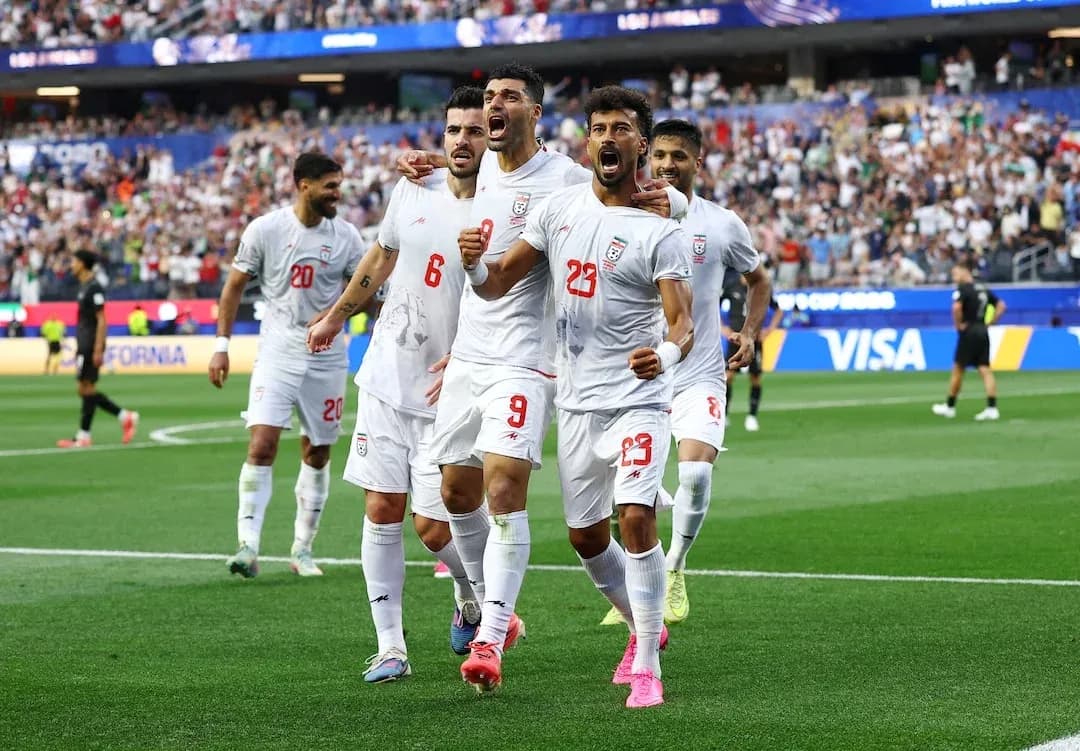
Iran and New Zealand Draw 2-2 in High-Tempo Match
Iran 2-2 New Zealand at SoFi Stadium opened Group G with a high-tempo draw that reflected both sides’ attacking intent and defensive looseness. Iran, starting the night second in the group and already in the Round of 32 zone, move to 2 points from 2 games with a neutral goal difference, while New Zealand stay top of the section on 2 points as well, also with a level goal difference, after twice leading but failing to close out the contest.
Match Report
The game ignited early. In the 7th minute New Zealand struck first: 7' New Zealand goal — E. Just (assisted by C. Wood). Wood dropped off the front line to link play and released Just, who finished clinically to cap New Zealand’s bright start.
Iran responded by pushing their full-backs higher and found parity just after the half-hour. 32' Iran goal — R. Rezaeian (unassisted). The right-back drove inside from the flank and, with no passing lane on, opted for a direct effort that beat Max Crocombe and levelled the score at 1-1.
At half-time, Iran sought more incision from the bench. 46' M. Ghaedi replaced A. Yousefi (Iran), adding a more attacking profile on the flank. Seven minutes later, they adjusted again up front: 53' A. Alipour replaced S. Moghanlou (Iran), a like-for-like change aimed at adding mobility in the penalty area.
New Zealand immediately punished Iran’s reshuffle. 54' New Zealand goal — E. Just (assisted by C. Wood). Once again Wood combined smartly with Just, who timed his run into the box to restore New Zealand’s lead at 2-1 and complete his brace.
Iran refused to fold and equalised for a second time with their best move of the night. 64' Iran goal — M. Mohebi (assisted by R. Rezaeian). Rezaeian overlapped aggressively on the right and delivered a measured ball for Mohebi, whose composed finish made it 2-2 and underlined Iran’s threat from wide areas.
Immediately after the goal, Iran looked to stabilise midfield. 65' E. Hajsafi replaced S. Ghoddos (Iran), bringing extra experience and control in the centre of the pitch.
New Zealand turned to their bench on 68 minutes with a triple positional reset on the flanks and in midfield. 68' B. Old replaced L. Cacace (New Zealand), refreshing the left side. In the same minute, 68' R. Thomas replaced C. McCowatt (New Zealand), adding fresh legs and distribution in the advanced midfield line.
As the game entered its final quarter, New Zealand altered their right-back. 78' C. Elliot replaced T. Payne (New Zealand), maintaining energy and defensive coverage against Iran’s increasingly adventurous left side.
Iran’s last attacking roll of the dice came on 80 minutes. 80' A. Hosseinzadeh replaced M. Taremi (Iran), introducing fresh attacking impetus and pressing from the front in the closing stages.
The only booking of the match arrived late. 89' E. Hajsafi (Iran) — yellow card (Tripping). The substitute was cautioned for halting a New Zealand transition with a cynical foul, reflecting Iran’s desire to protect their point.
In added time New Zealand made two final changes, primarily to manage legs and secure structure. 90+2' J. Randall replaced S. Singh (New Zealand), followed moments later by 90+2' T. Bindon replaced M. Stamenic (New Zealand), as the All Whites saw out the final seconds of a contest that finished level but open until the whistle.
Fixture Statistics & Tactical Audit
- xG: Iran 1.5 vs 1.24 New Zealand
- Possession: Iran 48% vs 52% New Zealand
- Shots on Target: Iran 4 vs 8 New Zealand
- Goalkeeper Saves: Iran 6 vs 2 New Zealand
- Blocked Shots: Iran 5 vs 2 New Zealand
The 2-2 scoreline broadly matched the underlying numbers, with Iran’s slight xG edge (1.5 vs 1.24) offset by New Zealand’s greater volume of shots on target (8 vs 4). New Zealand’s 52% possession and higher accuracy in passing (85% vs Iran’s 77%) underpinned a more controlled build-up, while Iran compensated with volume and pressure in the final third, generating more total shots (17 vs 14) and blocked efforts (5 vs 2) as they repeatedly tested the defensive block. Defensively, Iran’s back line allowed too many clean looks on goal, forcing Alireza Beiranvand into 6 saves, whereas New Zealand’s Crocombe was less busy but still beaten twice by high-quality strikes. Overall, a draw felt fair: New Zealand’s sharper finishing through E. Just was balanced by Iran’s territorial pressure and slightly higher chance quality.
Standings Update & Seasonal Impact
For Iran, who began the night on 1 point with 2 goals scored and 2 conceded, the draw moves them to 2 points, 4 goals for and 4 against, leaving their goal difference unchanged at 0. They remain in the Round of 32 qualification zone in Group G, but with little margin for error given how open the group now looks.
New Zealand also started on 1 point with 2 goals scored and 2 conceded, and they too climb to 2 points with 4 goals for and 4 against, keeping a goal difference of 0. They stay top of Group G on rank, but the identical records underline how finely balanced the section is, with head-to-head details and small tactical edges likely to decide who advances comfortably and who faces a final-day scrap.
Lineups & Personnel
Iran Starting XI
- GK: Alireza Beiranvand
- DF: Ramin Rezaeian, Shoja Khalilzadeh, Ali Nemati, Milad Mohammadi
- MF: Mohammad Mohebi, Saman Ghoddos, Saeid Ezatolahi, Aria Yousefi
- FW: Shahriar Moghanlou, Mehdi Taremi
New Zealand Starting XI
- GK: Max Crocombe
- DF: Tim Payne, Finn Surman, Michael Boxall, Liberato Cacace
- MF: Joe Bell, Marko Stamenic, Callum McCowatt, Sarpreet Singh, Elijah Just
- FW: Chris Wood
Post-Match Verdict
This was an attacking, evenly poised contest in which both teams showed strengths and vulnerabilities in equal measure. New Zealand were notably clinical in their combinations between Chris Wood and Elijah Just (2 goals from 1.24 xG and 8 shots on target), but their defensive unit allowed Iran too many shooting opportunities (17 total shots conceded), especially from wide areas. Iran, meanwhile, were aggressive and enterprising in possession (17 shots, 10 inside the box) yet defensively vulnerable (allowing 8 shots on target and relying on 6 saves from Beiranvand). The draw ultimately reflected a balance: New Zealand’s sharper finishing against Iran’s sustained pressure and slightly superior chance quality. Both sides leave SoFi Stadium knowing their attacking blueprints are effective, but their defensive structures will need tightening if they are to convert these performances into wins later in the group.