Scotland's Tactical Triumph Over Haiti in World Cup Opener
Under the Boston lights of Gillette Stadium, Scotland’s 1–0 win over Haiti felt less like a routine group opener and more like a statement of identity. Following this result in Group C of the World Cup, Scotland sit 1st with 3 points and a goal difference of +1, while Haiti are 4th, still searching for their first point and first goal after a 0–1 defeat.
I. The Big Picture – Two 4-4-2s, Two Very Different Stories
Both coaches walked into this Group Stage – 1 clash with the same structural idea: a 4-4-2. On paper, it was symmetry. On the grass, it was contrast.
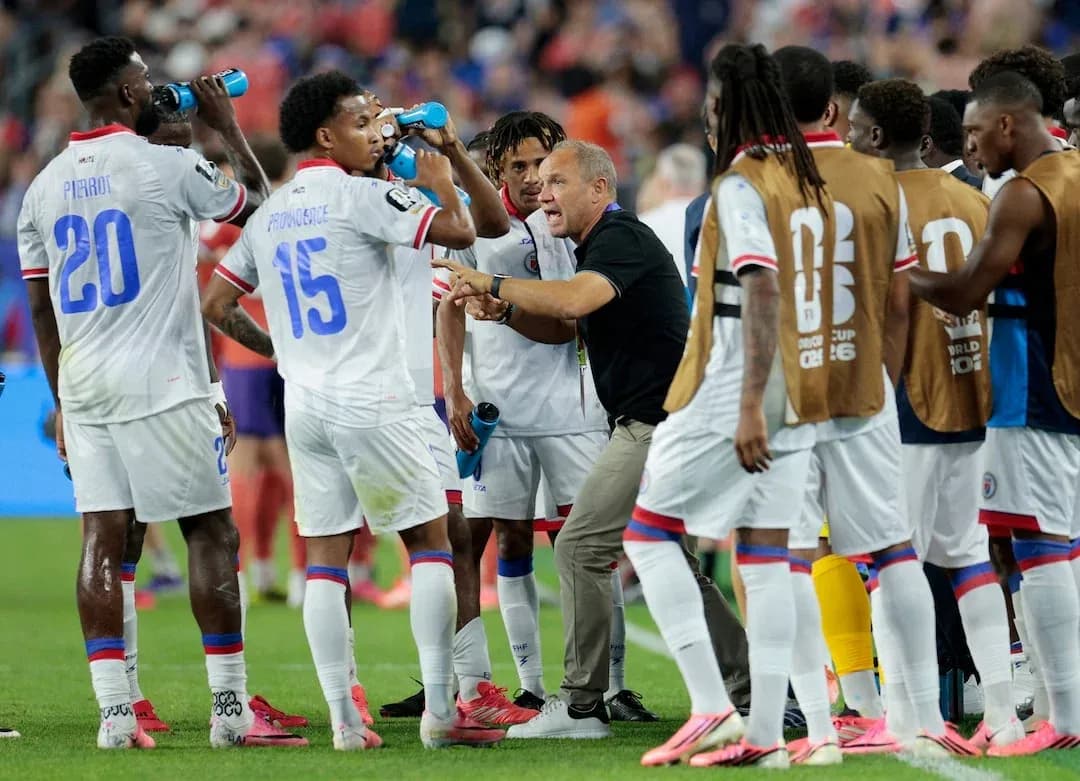
Sebastien Migne set Haiti up in a classic, honest 4-4-2: Johny Placide in goal, a back four of Carlens Arcus, Ricardo Adé, Hannes Delcroix and Martin Expérience, with a flat midfield band of Louicius Don Deedson, Danley Jean Jacques, Jean-Ricner Bellegarde and Ruben Providence behind the front pair Frantzdy Pierrot and Wilson Isidor. It was a shape built for compactness and counter-attacks, but Haiti’s season numbers underline how fragile the margin for error is. Overall this campaign, they have played 1 match, lost 1, scored 0 and conceded 1. At home, they have played 1, with 0 wins, 0 draws and 1 defeat, failing to score and conceding 1. Their overall goals for average stands at 0.0, with 1.0 goals against on average. The DNA so far: organised, but blunt and vulnerable to a single blow.
Steve Clarke mirrored the 4-4-2 but with a very different rhythm. Angus Gunn anchored a back line of Aaron Hickey, Grant Hanley, Jack Hendry and Andy Robertson. Ahead of them, Ben Gannon-Doak, Scott McTominay, Lewis Ferguson and John McGinn formed a flexible midfield four, feeding Lawrence Shankland and Che Adams. On their travels this campaign, Scotland have played 1, won 1, scored 1 and conceded 0. Overall, their goals for average is 1.0 and goals against average is 0.0, the statistical profile of a side comfortable edging tight games and defending a narrow lead.
II. Tactical Voids – Discipline and the Edges of Control
With no listed absentees in the data, both coaches had the luxury of full squads. The voids, instead, were psychological and disciplinary.
For Haiti, the season card profile is telling. Their only yellow card so far has come between 31–45 minutes, with 100.00% of their cautions in that window. It hints at a team that starts cautiously, then becomes stretched and reactive as the first half wears on. In this match, that pattern translated into a critical loss of control just as Scotland were tightening the screw before the interval. Haiti’s failure to score overall (1 match, 0 goals, 1 game failed to score) magnified every lapse; one moment of ill-timed aggression or positional error could not be offset at the other end.
Scotland’s discipline was more complex. Their season yellow-card distribution shows 1 yellow between 46–60 minutes (33.33%) and 2 yellows between 91–105 minutes (66.67%). That late surge of cards speaks to a team willing to suffer and foul to protect a lead. Individually, three names define that edge: Aaron Hickey, Kenny McLean and Findlay Curtis.
Hickey, who started and played 75 minutes, picked up a yellow and still posted a 7.2 rating, with 35 passes at 88% accuracy and 2 key passes. His 7 total duels, 5 won, underline a full-back who lives on the front foot, both a weapon and a risk in wide defensive zones. McLean and Curtis, both substitutes, each saw yellow in limited minutes, committing 1 foul apiece. They represent Clarke’s willingness to inject fresh legs with a combative edge to see games out, even at the cost of cards.
III. Key Matchups – Hunter vs Shield, Engine Room vs Enforcer
Hunter vs Shield for Haiti was always going to be Frantzdy Pierrot against Scotland’s central block of Hanley and Hendry, screened by McTominay. Haiti’s overall attacking record – 0 goals in 1 match, 0.0 goals for on average at home – meant Pierrot needed to be both target man and finisher. But Scotland’s defensive numbers were pristine: on their travels they have conceded 0 goals in 1 match, with an away goals against average of 0.0 and a clean sheet already banked. The result was predictable: Haiti’s long balls and early crosses rarely produced clean looks, and every second ball was contested by McTominay’s physical presence stepping into midfield duels.
On the other side, Scotland’s “hunter” role was shared. Shankland and Adams provided depth and penalty-box presence, but the real incision came from the flanks and half-spaces. Ben Gannon-Doak and McGinn pulled Haiti’s full-backs into uncomfortable decisions, while Hickey and Robertson overlapped to create 2v1s. The Haitian back four, with Adé and Delcroix central, were forced to defend the width of the box constantly, and without an attacking outlet to relieve pressure, the cumulative effect was Scotland’s control of territory.
In the engine room, McTominay and Ferguson faced Danley Jean Jacques and Bellegarde. Haiti’s midfield pair worked to stay compact, but the numbers again show the imbalance. Scotland, overall, are a side that have not failed to score yet (0 matches failed to score), while Haiti have already failed to score once in their only outing. McTominay’s role as an enforcer allowed Ferguson and McGinn to step into pockets between the lines, constantly asking questions of Haiti’s structure. Every clearance from Haiti seemed to come straight back.
IV. Statistical Prognosis – A Narrow Scoreline, A Clear Pattern
Following this result, the standings and season metrics align neatly with the eye test. Haiti’s overall record reads: 1 match played, 0 wins, 0 draws, 1 loss, 0 goals for, 1 against, goal difference -1. Scotland’s overall line: 1 match, 1 win, 0 draws, 0 losses, 1 goal for, 0 against, goal difference +1.
Even without explicit xG numbers in the data, the statistical context points to a clear tactical prognosis for both squads going forward:
- Haiti’s margin for error is microscopic. With an overall goals for average of 0.0 and a goals against average of 1.0, they cannot afford to chase games. Their 4-4-2 must evolve into a more aggressive, risk-taking structure earlier, or Pierrot and Isidor will remain isolated. The late-first-half yellow trend suggests that emotional control and game management before the break are critical.
- Scotland’s blueprint is sustainable. On their travels, they win by small margins, defend with discipline, and are not afraid to close games with physical, card-risking substitutes like McLean and Curtis. The back four, protected by McTominay, looks built for tournament football: low concession, high resilience.
In narrative terms, this was a 1–0 that felt like a template. Haiti’s story is one of needing to add cutting edge without losing their defensive spine. Scotland’s is of a side that knows exactly who they are: pragmatic, structured, and perfectly content to let a single goal define the night.