Saudi Arabia 1-1 Uruguay: Match Report & Tactical Analysis
Saudi Arabia 1-1 Uruguay at Hard Rock Stadium leaves Group H finely poised, with both sides moving to 2 points, 2 goals for and 2 against, and an unchanged goal difference of 0. Uruguay remain top of the group on rank, while Saudi Arabia stay second, each taking a second consecutive draw that keeps qualification for the Round of 32 in their own hands but delays any early decisive move in the group.
Match Report
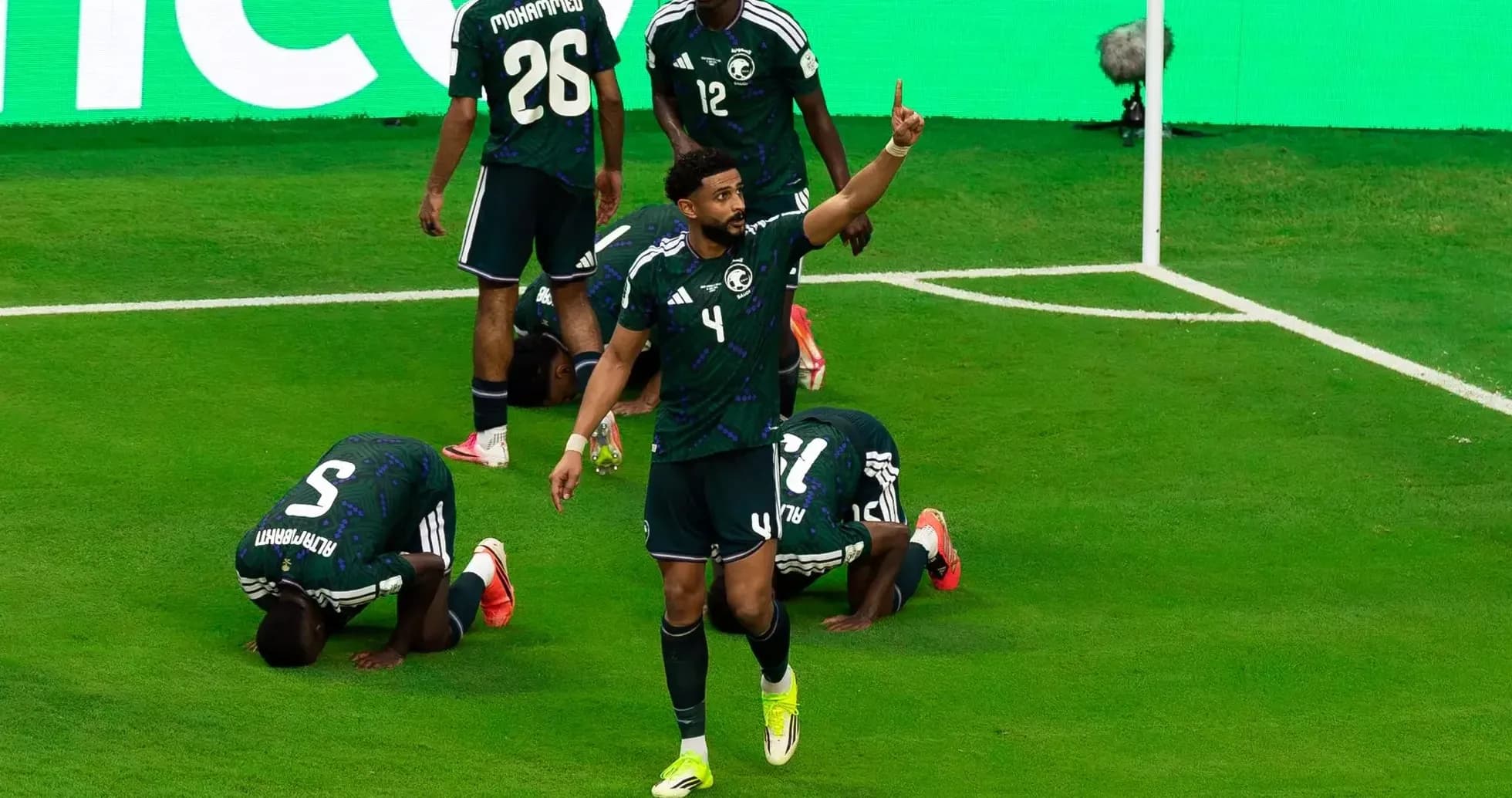
The game’s first major incident arrived on 41', when Saudi Arabia took the lead: 41' Saudi Arabia goal — A. Al Amri (unassisted), a centre-back stepping up to finish a loose ball in the box after a set-piece situation, giving the hosts a 1-0 advantage despite prolonged Uruguayan possession.
Just three minutes later, the scorer was in the book: 44' A. Al Amri (Saudi Arabia) — yellow card (Roughing), punished for an aggressive challenge as Uruguay tried to build quickly from midfield, underlining the increasing defensive strain on the Saudi back line before half-time.
At the break, Marcelo Bielsa reacted immediately. On 46', Uruguay reshaped their left side: 46' J. Sanabria replaced M. Vina (Uruguay), adding more attacking thrust from full-back. Simultaneously, Bielsa refreshed his front line: 46' A. Canobbio replaced D. Nunez (Uruguay), a like-for-like change aimed at adding more mobility and pressing intensity in the final third.
Saudi Arabia’s first change came as they sought fresh legs to protect the lead: 63' N. Al Dawsari replaced M. Al Juwayr (Saudi Arabia), adding energy in midfield to cope with Uruguay’s increasing territorial dominance.
As Uruguay’s control deepened, Bielsa turned to his bench again to add creativity between the lines: 72' N. de la Cruz replaced M. Ugarte (Uruguay), sacrificing a holding midfielder for a more progressive passer to tilt the pressure further towards the Saudi box.
The pressure finally told on 80', when Uruguay found their equaliser: 80' Uruguay goal — M. Araujo (unassisted). The wide midfielder cut inside from the left and finished a move himself, a solo effort that levelled the score at 1-1 and reflected Uruguay’s sustained attacking volume.
Immediately after scoring, Uruguay managed Araujo’s workload: 81' B. Rodriguez replaced M. Araujo (Uruguay), a straight swap on the flank to maintain width and dribbling threat against a tiring Saudi back four. At the same moment, Saudi Arabia adjusted on the right: 81' N. Boushal replaced M. Abu Al Shamat (Saudi Arabia), reinforcing the defensive side of their wide play to cope with Uruguay’s repeated overloads.
As the game entered its final phase, Uruguay made a late attacking tweak at centre-forward: 90' R. Aguirre replaced F. Vinas (Uruguay), introducing a more physical presence to attack crosses and second balls in the box as they chased a winner.
Saudi Arabia, under heavy pressure, used stoppage time to shore up their defensive structure and run down the clock. On 90+3', they made three rapid-fire changes: 90+3' A. Lajami replaced S. Abdulhamid (Saudi Arabia), adding fresh legs in defence; 90+3' A. Al Hamdan replaced M. Al Harbi (Saudi Arabia), a change on the left side to help in transition and ball retention; and 90+3' A. Hejji replaced F. Al Buraikan (Saudi Arabia), withdrawing a forward for a more conservative option to secure the point. Uruguay continued to press, but Saudi Arabia held firm to close out the 1-1 draw.
Fixture Statistics & Tactical Audit
- xG: Saudi Arabia 0.99 vs 1.48 Uruguay
- Possession: Saudi Arabia 35% vs 65% Uruguay
- Shots on Target: Saudi Arabia 3 vs 9 Uruguay
- Goalkeeper Saves: Saudi Arabia 8 vs 2 Uruguay
- Blocked Shots: Saudi Arabia 1 vs 5 Uruguay
The draw broadly aligns with the underlying numbers, but the balance of play tilted heavily towards Uruguay. Uruguay were dominant in territory and ball circulation (65% possession, 571 passes at 88% accuracy) and consistently more threatening in the final third (24 total shots, 9 on target, xG 1.48). Saudi Arabia, by contrast, produced fewer but relatively efficient chances (7 shots, 3 on target, xG 0.99), leaning on set-pieces and quick transitions rather than sustained build-up.
The goalkeeping data underlines the pattern: Mohammed Al-Owais was heavily worked (8 saves against 9 shots on target), while Fernando Muslera had a quieter evening (2 saves against 3 shots on target). Uruguay’s higher xG and shot volume suggest they had the better platform to win the game, but Saudi Arabia’s compact 4-4-2 block, combined with last-ditch defending (1 blocked shot but significant box protection) and a high save count, allowed them to convert a smaller attacking output into a valuable point. In tactical terms, Uruguay’s structure functioned as intended in progressing the ball and creating volume, but their finishing and final-ball precision did not fully match their territorial control, which is why the 1-1 scoreline is defensible despite their statistical superiority.
Standings Update & Seasonal Impact
Both teams entered this match on 1 point, 1 goal scored and 1 conceded, with a goal difference of 0 after their opening group fixtures. The 1-1 draw in Miami moves Saudi Arabia to 2 points, 2 goals for and 2 against (goal difference 0), consolidating their position in second place in Group H and keeping them firmly in the Round of 32 qualification zone. Uruguay also rise to 2 points, 2 goals for and 2 against (goal difference 0), remaining top of the group on rank criteria and still within the same qualification band. The result leaves the group finely balanced: both sides retain control of their destiny, but Uruguay will feel they have dropped two points given their attacking dominance, while Saudi Arabia have banked a hard-earned result that could prove decisive in a tight group.
Lineups & Personnel
Saudi Arabia Starting XI
- GK: Mohammed Al-Owais
- DF: Saud Abdulhamid, Abdulelah Al-Amri, Hassan Altambakti, Moteb Al-Harbi
- MF: Mohammed Abu Al-Shamat, Mohamed Kanno, Abdullah Al-Khaibari, Salem Al-Dawsari
- FW: Firas Al-Buraikan, Musab Al Juwayr
Uruguay Starting XI
- GK: Fernando Muslera
- DF: Guillermo Varela, Sebastián Cáceres, Mathías Olivera, Matías Viña
- MF: Manuel Ugarte, Rodrigo Bentancur, Federico Valverde, Federico Viñas, Maximiliano Araújo
- FW: Darwin Núñez
Post-Match Verdict
From a tactical standpoint, this was a disciplined Saudi performance built on defensive resilience rather than attacking ambition. Their low block in a 4-4-2 shape was compact and often vulnerable only in terms of volume rather than clear breakdowns (they allowed 24 shots but only 1.48 xG), and Al-Owais’s workload (8 saves) underscores how much they relied on goalkeeping and box defence to protect their lead and then the point. Going forward, Saudi Arabia were selective but relatively efficient (3 shots on target from 7 attempts, xG 0.99), maximising set-piece moments and second balls, as illustrated by Al Amri’s unassisted opener.
Uruguay, meanwhile, delivered a dominant but ultimately incomplete attacking display. Their control of possession (65%) and high passing accuracy (88%) reflected a well-structured build-up and effective occupation of the half-spaces, especially after the introduction of N. de la Cruz. The volume of chances (24 shots, 9 on target, xG 1.48) points to a proactive, front-foot game plan, but the inability to convert that superiority into a win raises questions about their efficiency in the box and decision-making in the final third. The equaliser from M. Araujo, a solo effort rather than a crafted combination, typified a night where Uruguay’s structure created platforms but their finishing lacked the clinical edge their statistics suggested they merited. Overall, the draw rewards Saudi Arabia’s defensive organisation and resilience, while leaving Uruguay with the clear task of turning territorial and statistical dominance into more ruthless scorelines in their remaining group fixtures.