
Australia's World Cup Awakening: From Underdogs to Contenders
Mike Grella wanted a lay-up. He might have handed Australia a sledgehammer instead.
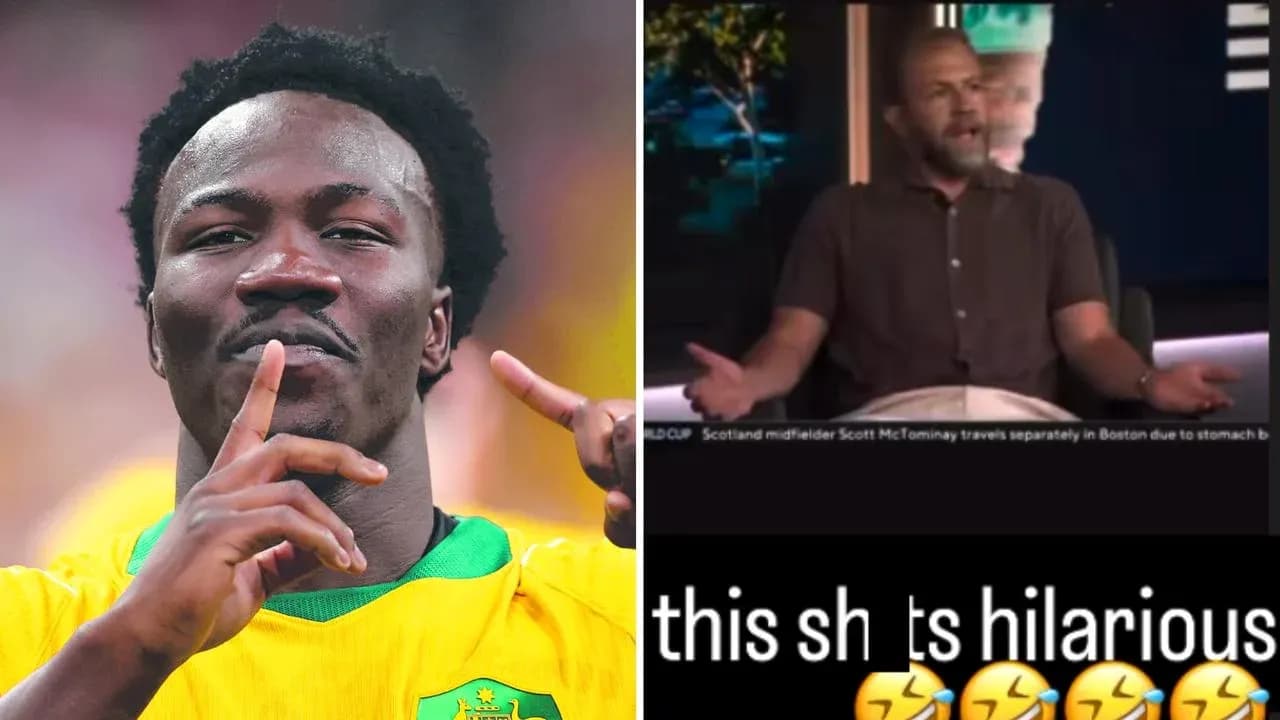
On the eve of a group showdown with the USA in Seattle, the former American international has become the unwitting face of every lazy slight ever thrown at the Socceroos. His now-viral clip, recorded before the tournament, is everywhere again: Australia, he said, had “no shot of doing anything at the World Cup”. A “lay up” for the United States. The “weakest team in the group”.
Then came Vancouver.
From punchline to problem
Australia’s 2-0 win over Turkiye did more than rip up a few prediction models. It detonated them.
Nestory Irankunda, all pace and audacity, struck before the break. Connor Metcalfe, with a strike that will live in World Cup montages for years, killed it off after half-time. Between them, goalkeeper Patrick Beach produced the kind of debut that shifts a career overnight and leaves a nation wondering how they didn’t know his face a week ago.
Grella’s words suddenly looked very old, very fast.
Former AFL player Dan Gorringe gleefully reposted the original clip with a blunt “we’re gona f*** you up”. Grella, doubling down, quote-tweeted it with “Yo this sh*t’s hilarious” and a “see you Friday”, dressing the tension in laughing emojis that only made it clearer: he knows he’s in the firing line now.
He is not alone.
On CBS Sports Golazo, where Grella first dismissed the Australians, his colleagues can already feel the blowback coming.
“Grella’s going to be hired as their motivational speaker at this point,” former US midfielder Benny Feilhaber joked. “He willed them to three points yesterday.”
Jimmy Conrad, once a US defender, did not bother with subtlety: “Everybody keeps discounting Australia and that seems to be not the right thing to do. So, thanks Grella. We appreciate that.”
Irankunda’s breakout, Australia’s awakening
If Beach became a cult hero overnight, Irankunda became a global story.
The Watford winger was always going to catch the eye in England after his Championship season, but this was different. His goal, his acceleration, the fear he injected into Turkiye’s back line – it all travelled.
The BBC’s Chris McKenna framed it as another step in a remarkable journey: from refugee to World Cup scorer, a player who, just a year ago, was learning from Harry Kane at Bayern Munich. In the UK, The Sun pushed the Socceroos and Irankunda to the top of their site with the headline: “Watford star born in refugee camp scores historic World Cup goal.”
FourFourTwo went straight for the comparison that always guarantees attention: “The new Michael Owen?” They saw shades of Owen’s famous 1998 run and finish against Argentina in Irankunda’s strike. Different stage, different stakes, same sense of a young player ripping open a game with one fearless moment.
Back in the studio, there was a distinctly Australian voice guiding the conversation. Ange Postecoglou, on ITV duty, could barely hide his admiration.
“It doesn’t matter what level of football you play at, in the park or World Cup, that is fantastic speed,” the former Socceroos and Tottenham manager said. “A massive moment. Sometimes in World Cups, you just need a good couple of weeks and your whole world can change. Let’s hope that is the start for him.”
It might be the start of something larger for Tony Popovic’s entire squad.
Grit, ‘darker arts’ and a tactical masterclass
Outside the US pundit bubble, the analysis of Australia’s win has been far more serious.
The Athletic’s senior football writer Simon Hughes, in Vancouver for the match, went on CBS Sports Golazo to explain why this was not a fluke and certainly not a “lay up”.
“They were street wise,” he said. “Some of the darker arts in the game, they weren’t afraid to get involved in that side of it.”
His post-match column carried a simple warning: “never underestimate true Australian grit”.
On air, he expanded. Australia, he argued, knew exactly who they were.
“What really impressed me about them was they really understood what their limitations were and they got the maximum out of what they could do,” Hughes said. “You know what, I think they deserved to win. The game isn’t always defined by who had the most shots and the most possession. Sometimes it can be quite misleading.
“I always felt like Australia had control of what was going on. Occasionally they needed the goalkeeper to step in and do his thing, but that’s what goalkeepers are there for. People forget this.”
He also pointed to something less tangible but just as important: the bond with the crowd.
“I really felt in Vancouver yesterday that they really had the fans behind them. That’s a massive thing in World Cup football. A lot of nations’ fans turn up and want the team to do well, but Australia really, really believed they could effect this game and make an imprint on this tournament.
“I think they’re going to be quite difficult to stop. The US, if they underestimate them, might have a few problems.”
The numbers now agree. The Athletic’s projections give Australia an 85 per cent chance of reaching the knockout rounds. For a team written off as anonymous and harmless, that is a sharp, public correction.
The world finds its second team
Scroll through social media and a pattern appears. Neutral fans are picking sides, and many are landing on the same answer: Australia.
Some of it is tactical fascination. Jokes fly about Popovic’s approach being a throwback to Arsenal’s title-winning defensive steel or tagged as “Haram Ball” – a tongue-in-cheek label for ultra-defensive, “anti-football” setups. Yet behind the memes sits respect. People watched a team suffer without breaking, then explode forward with terrifying speed.
Comedian and football obsessive Trevor Noah captured it neatly on the Men in Blazers podcast.
“Australia has giants at the back. You don’t just swing the ball in and hope for the best against Australia,” he said. “If there’s one thing the Socceroos know how to do, it’s compact their defence, make sure that nothing gets in. You score by keeping it on the floor against these boys and they didn’t pick that up.”
Then he turned to the front line.
“And their new attack up top is completely different to what we’ve seen in years before from like the (Tim) Cahill and Harry Kewell days. This was fast. It was like a lightning quick counter-attack and can I tell you, that boy (Jordan) Bos, number five. Yo, yo, I want to see which team he’s (playing for next)... that man is silky on the ball!”
That blend – granite at the back, electricity up top – is exactly what makes them so watchable. They look like a team built for tournament football: awkward, stubborn, and lethal when the space finally opens.
A team that looks like its country
The affection is not just about tactics or upsets. Off the pitch, Australia have quietly built a story people want to attach themselves to.
A video recorded before the tournament has resurfaced in recent days, showing players talking about their backgrounds and what this team represents. Different heritages, different journeys, one jersey. They call the Socceroos the best reflection of modern Australia, and one line hits hardest: “our diversity is our strength”.
It is not a slogan when you can see it on the pitch – in Irankunda’s journey, in Beach’s sudden rise, in a squad stitched together from across leagues and continents.
That is why this side is starting to feel like the World Cup’s feel-good team, the one neutrals adopt when their own nations fall away.
Now comes Seattle, and with it the USA – the team Grella insisted Australia could not compete with, the match he once framed as a formality.
The lay-up has turned into a live wire. The only question now is whether the Socceroos use his words as background noise or as fuel for another night that makes the rest of the world sit up and ask, again: where on earth did that come from?




