Germany Dominates Curaçao 7-1 in 2026 World Cup Opener
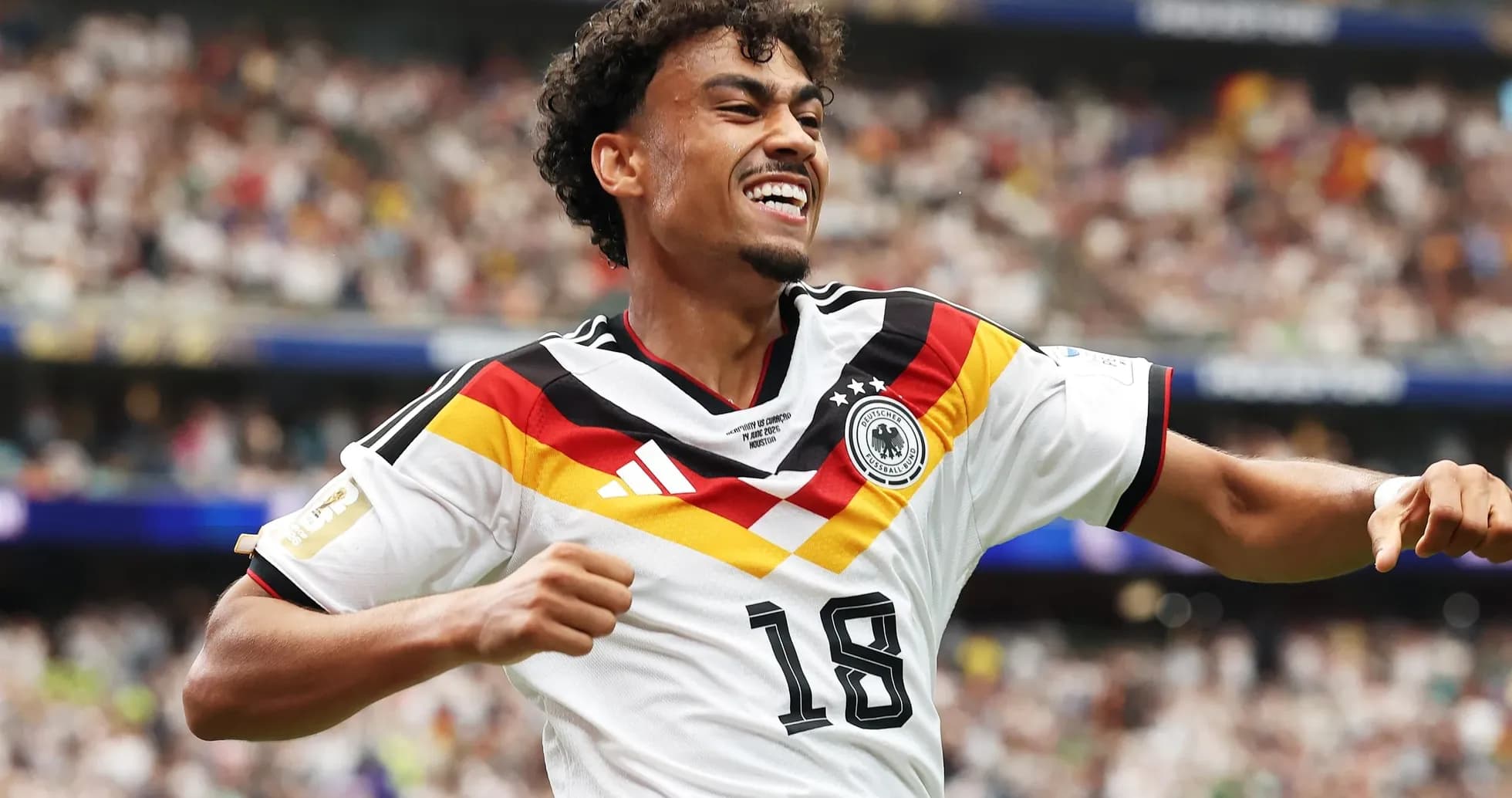
Under the closed roof of NRG Stadium in Houston, Germany opened their 2026 World Cup campaign with a statement 7–1 dismantling of Curaçao, a scoreline that echoed past tournament ruthlessness. In a Group Stage - 1 fixture refereed by Jalal Jayed, the contest was effectively decided by half-time, Germany leading 3–1 before adding four more without reply after the interval.
Following this result, the standings in Group E are brutally clear. Germany sit 1st with 3 points and a goal difference of +6, having scored 7 and conceded 1 overall. Curaçao are 4th, with 0 points and a goal difference of -6 from their single outing, their lone goal a small consolation against seven conceded.
The statistical DNA of both sides after this opener is stark. Germany have played 1 match in total, at home in this fixture, winning that sole game. They average 7.0 goals for in total and 1.0 goal against in total, with their biggest win so far the very same 7–1 at home. Curaçao, on their travels, have played 1, lost 1, scoring 1.0 goal in total and conceding 7.0 in total, their heaviest defeat a 7–1 away loss. No clean sheets for either side yet, but only one of them walked out of Houston with their tournament ambitions reinforced.
Tactical Voids and Structural Choices
With no published list of absentees, both coaches appeared close to full strength. Julian Nagelsmann doubled down on Germany’s modern identity: a 4-2-3-1 that behaves like a shape-shifting platform rather than a rigid structure. M. Neuer anchored from goal, behind a back four of J. Kimmich, J. Tah, N. Schlotterbeck and N. Brown. Ahead of them, F. Nmecha and A. Pavlovic formed a double pivot, while the line of three – L. Sane, J. Musiala and F. Wirtz – floated behind K. Havertz as the nominal centre-forward.
Curaçao, under Dick Advocaat, opted for a 4-3-1-2, a compact central block designed to crowd Germany’s creative lanes. E. Room started in goal, shielded by a back four of S. Floranus, R. Bazoer, A. Obispo and D. Fonville. In midfield, L. Comenencia, L. Bacuna and J. Bacuna formed a narrow trio, with T. Chong given licence as the advanced midfielder behind a strike pair of J. Locadia and S. Hansen.
On paper, Advocaat’s structure tried to funnel Germany wide and protect the central corridor. In practice, the lack of width from Curaçao’s midfield and the constant rotations of Germany’s front four stretched that block until it tore. With no yellow or red card data recorded for either team across time ranges, the game was not defined by disciplinary chaos but by structural overload and technical mismatch.
Nagelsmann’s bench options underlined the depth at his disposal. D. Undav, L. Goretzka, A. Rudiger, D. Raum, A. Stiller, A. Ouedraogo and others offered alternative profiles in every line. When Undav stepped in, his 26 minutes produced 1 goal and 2 assists, a devastating cameo that confirmed Germany’s capacity to change the tone of a match from the dugout.
Key Matchups – Hunter vs Shield, Engine Room
Hunter vs Shield tilted heavily in Germany’s favour. K. Havertz, already among the competition’s top scorers, finished with 2 goals in total from 2 shots, both on target. He also converted 1 penalty from 1, reinforcing Germany’s 100.00% penalty record overall (1 scored from 1 taken, 0 missed). His movement between the lines repeatedly unstitched Curaçao’s central defenders. R. Bazoer and A. Obispo were drawn into zones they did not want to defend, leaving channels for late runners and diagonal passes.
Behind him, the creative supply line was ruthless. J. Musiala, who has 1 goal from his first 64 World Cup minutes, attacked half-spaces with a dribbling rhythm that Curaçao’s midfield could not match. His 5 attempted dribbles with 4 successes underlined how often he broke the first line of pressure. F. Wirtz, floating to the left and between lines, complemented that with subtle positioning rather than raw dynamism.
On the flanks, N. Brown’s performance from left-back was one of the game’s tactical revelations. In total he scored 1 goal and delivered 1 assist, with 36 passes at 88% accuracy and 3 key passes. His overlaps and underlaps forced Curaçao’s right side – S. Floranus and L. Comenencia – into constant two-against-one scenarios. Brown’s willingness to step into midfield also helped Germany create a 3-2 base in build-up, freeing Kimmich to act as a deep playmaker.
Kimmich, for his part, was the metronome and the scalpel. With 73 passes in total at 89% accuracy and 5 key passes, he effectively functioned as a quarterback from right-back. His diagonal switches pulled Curaçao’s narrow block apart; his underlapping movements into central zones meant Germany often had an extra midfielder, overloading L. Bacuna and J. Bacuna.
For Curaçao, the “shield” never truly set. L. Bacuna tried to link defence and attack, but with Germany pressing high and counter-pressing immediately after losses, Curaçao’s midfield spent most of the match running backwards. T. Chong, nominally the No.10, was forced so deep that the 4-3-1-2 often resembled a 4-4-2 diamond pinned inside its own third. The front pair of J. Locadia and S. Hansen fed on sporadic transitions rather than sustained possession.
Statistical Prognosis and Tactical Verdict
Following this result, the numbers offer a brutal but honest forecast. Germany’s offensive ceiling is already illustrated by 7 goals for in total and an average of 7.0 goals for in total per match. Their defensive record – 1 goal against in total, 1.0 on average – suggests that while they are not yet a clean-sheet machine, their attacking volume can overwhelm most group-stage opponents.
Curaçao, by contrast, emerge from Houston with 1 goal for and 7 against in total, an attacking average of 1.0 but a defensive average of 7.0 conceded in total. Their 4-3-1-2, as deployed here, struggled both to protect the half-spaces and to track late runs from deep. Without data on xG, the eye test combined with shot volume and scoreline suggests a massive Expected Goals gap in Germany’s favour, amplified by clinical finishing from Havertz and Undav.
From a tactical storytelling perspective, this was less a contest and more a demonstration: Nagelsmann’s 4-2-3-1, powered by a fluid front four and full-backs who act as playmakers, is already humming. Curaçao will need structural tweaks – perhaps wider midfield coverage and a more conservative back line – if they are to stem the flow against the remaining group opponents.
For Germany, the question is not whether they can create chances, but how they manage game states once leads are established. For Curaçao, survival in Group E now depends on turning their compact 4-3-1-2 into something more resilient, without sacrificing the transitional threat that gave them their solitary goal on a sobering night in Houston.