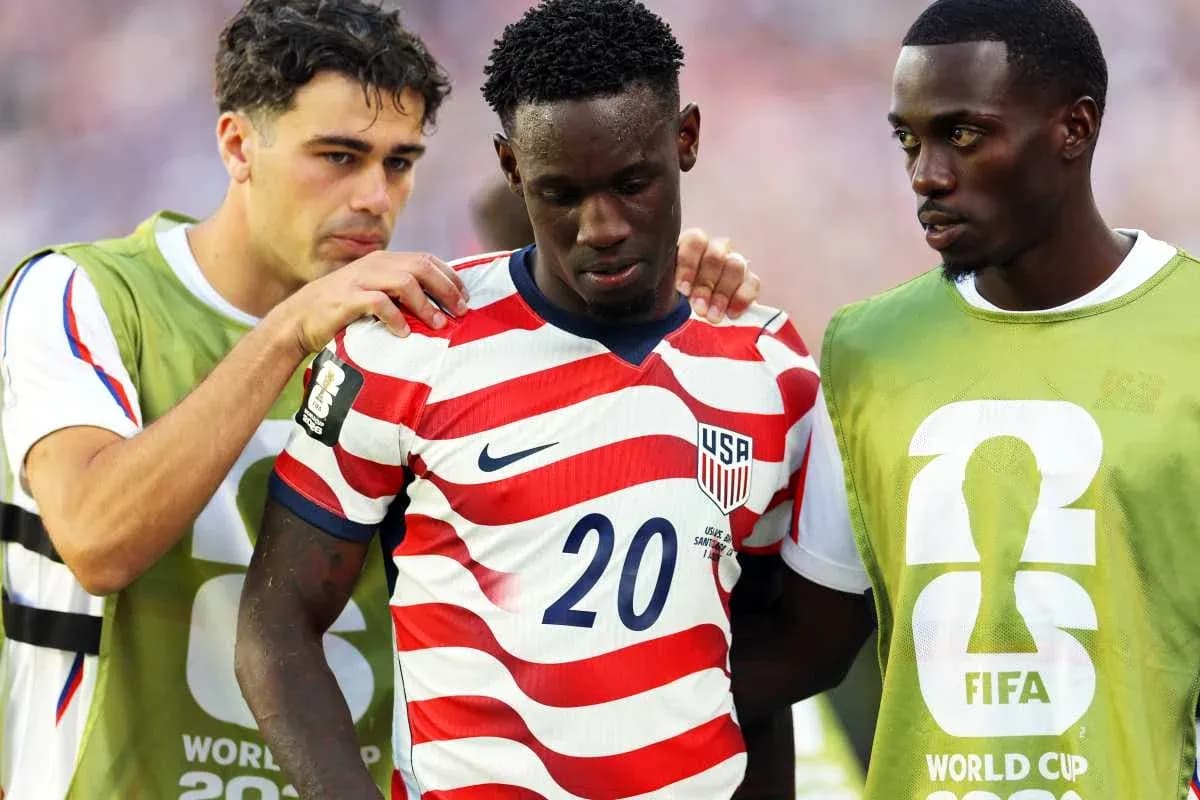
USA vs Belgium: Tactical Showdown in World Cup 1/8 Final
A high-stakes World Cup 1/8 final at Lumen Field pits group winners USA against fellow group winners Belgium, a knockout tie where a single mistake ends the tournament and a single win propels the victor into the last eight and keeps a realistic path to the 2026 title alive.
Head-to-Head Tactical Summary
The most recent meeting came on 28 March 2026 in a Friendly International at Mercedes-Benz Stadium in Atlanta, where USA hosted Belgium and lost 2-5 after a 1-1 half-time scoreline. That match underlined Belgium’s ability to punish in transition and sustain attacking output across 90 minutes. The other relevant modern clash was also on the World Cup stage: on 1 July 2014 in the Round of 16 at Itaipava Arena Fonte Nova in Salvador, Belgium were the home side against USA and advanced after extra time, winning 2-1 following a 0-0 full-time. Across these two knockout-style encounters, Belgium have twice found a way through USA’s resistance late in games, combining patience in regular time with decisive surges once spaces appear.
Global Season Picture
- League Phase Performance: In the group stage, USA topped Group D with 6 points from 3 games, scoring 8 goals and conceding 4, a positive goal difference built on an aggressive attack. Belgium led Group G with 5 points from 3 matches, scoring 6 and conceding 2, reflecting a more controlled balance between offense and defensive solidity.
- Season Metrics: Across all competitions in this World Cup cycle, USA have been expansive: 10 goals scored and 4 conceded in 4 fixtures, averaging 2.5 goals for and 1.0 against per match, with no failures to score and 2 clean sheets. Their flexibility in systems (notably 4-3-3 and 4-2-3-1 used most often) supports a front-foot approach but leaves occasional exposure, as shown by a 3-2 away defeat and a 4-1 home win as their extremes. Belgium’s profile is more controlled but still potent: 9 goals for and 4 against in 4 games, averaging 2.3 scored and 1.0 conceded. They have shown they can win both tight (3-2 at home) and open (1-5 away) games, with one clean sheet and one match where they failed to score, all within a consistent 4-2-3-1 framework that stabilizes their structure.
- Form Trajectory: In the group stage, USA’s form line of WLWW shows a response to an early setback with back-to-back wins, indicating upward momentum and resilience. Belgium’s WWDD sequence suggests they started strongly with consecutive victories before managing two draws, pointing to an unbeaten but slightly plateauing trajectory where game control has been high but finishing or risk appetite has dipped enough to allow opponents to take points.
Tactical Efficiency
USA’s attacking efficiency in this World Cup has been high, with 10 goals in 4 matches and no games without scoring, pointing to a consistently dangerous frontline supported by flexible formations. Defensively, conceding 4 in 4 across all phases of the competition and only one away defeat indicates that when they control tempo and territory, they can protect their box effectively, but their willingness to commit numbers forward can be exploited by elite counter-attacking sides like Belgium.
Belgium’s attack has been similarly productive, with 9 goals in 4 matches and a demonstrated capacity to explode in certain games, as evidenced by a 5-goal away performance. Their defensive record — 4 conceded in 4 — mirrors USA’s in raw numbers but has come within a more stable structural context, with a single preferred formation and no defeats. The combination of a consistent tactical framework and the ability to raise their attacking ceiling in big moments has translated into a side that is hard to beat and capable of sudden surges in output when space appears, as seen in both the recent 5-2 win over USA and the extra-time breakthrough in 2014.
The Verdict: Seasonal Impact
This 1/8 final will heavily shape the narrative of both nations’ 2026 campaigns. For USA, elimination here would frame the tournament as one where an exciting, high-scoring group stage (8 goals in 3 group matches) could not be converted into a deep run, reinforcing the perception of a side that entertains but still struggles to clear the decisive knockout hurdle against top European opposition. A win, by contrast, would mark a clear progression from previous cycles, overturning the 2014 Round of 16 precedent and validating their attacking evolution and tactical versatility as tools capable of beating elite teams under maximum pressure.
For Belgium, going out at this stage after an unbeaten group (6 scored, 2 conceded) and recent dominance in the head-to-head would be seen as underperformance and fuel talk of a missed window for a generation still expected to challenge for major honours. Victory would confirm their status as a tournament-hardened knockout side: it would extend an unbeaten run in 2026, maintain their psychological edge over USA, and keep them on a realistic path toward the semi-finals and beyond. In seasonal terms, this match is a hinge: the winner strengthens a credible title narrative; the loser’s campaign will be remembered as solid but ultimately short of the competition’s decisive final weeks.