Colombia Defeats Ghana 1-0 in World Cup Round of 32
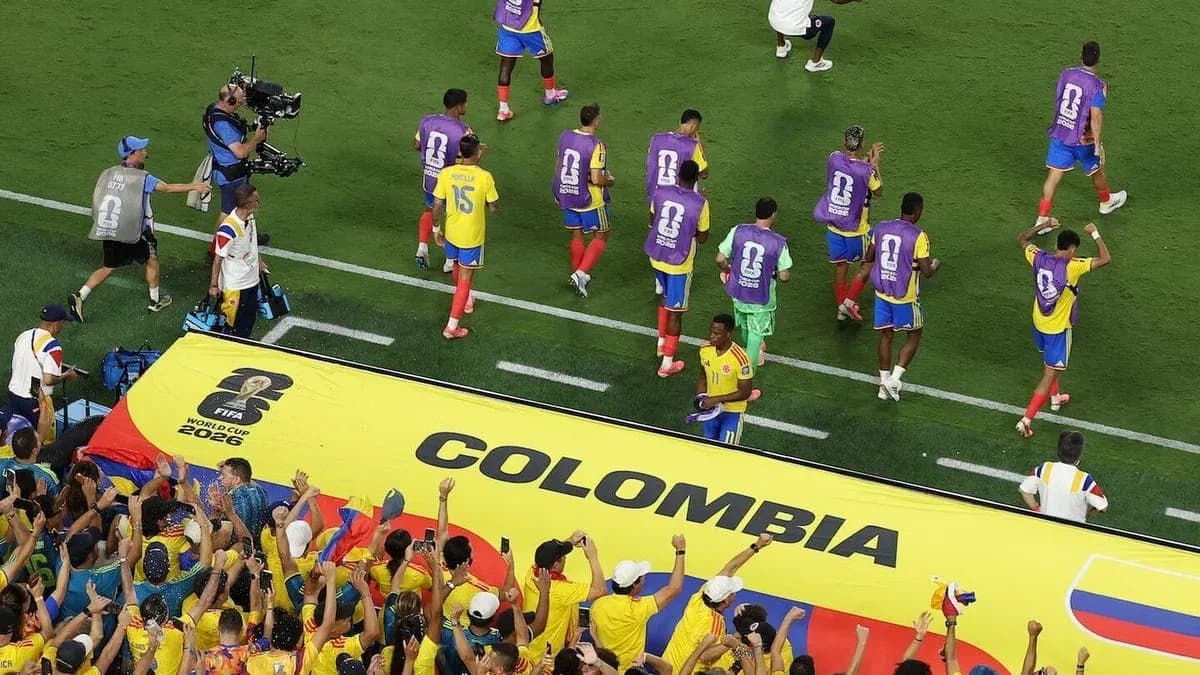
Colombia 1-0 Ghana at Arrowhead Stadium sends Néstor Lorenzo’s side into the World Cup Round of 32 knockouts with authority, extending an unbeaten campaign and underlining their status as one of the form teams of the tournament. With the win, Colombia move from 7 to 10 points, their goals for rising from 4 to 5 and against from 1 to 1 (goal difference now +4), while Ghana exit after a narrow defeat that leaves them stuck on 4 points, still with 2 goals scored and now 3 conceded (goal difference −1).
Match Report
The game opened with an early enforced change for Colombia in the 8th minute, as Luis Javier Suárez replaced Jhon Córdoba in attack, slightly reshaping the front line but not the 4-3-3 structure.
In the 12th minute Colombia’s aggression in midfield drew the first booking: Jhon Arias (Colombia) — yellow card (Tripping) after a late challenge as Ghana tried to transition through the centre.
Ghana were also forced into an early defensive adjustment in the 13th minute when Alidu Seidu replaced Marvin Senaya at right-back, a like-for-like switch that hinted at either an injury concern or tactical dissatisfaction from Carlos Queiroz.
The breakthrough arrived almost immediately afterwards. In the 14th minute Colombia goal — Jhon Arias (assisted by Luis Javier Suárez). Arias arrived from midfield to finish a flowing move, with Suárez’s involvement quickly vindicating Lorenzo’s early substitution. The strike put Colombia 1-0 up and would ultimately decide the tie.
Colombia refreshed their midfield at half-time, with Richard Ríos replacing James Rodríguez in the 46th minute, adding extra legs and defensive balance to protect the lead.
Ghana’s frustration began to show after the interval. In the 49th minute Caleb Yirenkyi (Ghana) — yellow card (Holding) for halting a Colombian counter with a cynical pull.
Colombia thought they had doubled their advantage in the 56th minute when Luis Díaz finished from close range, but VAR intervened: Goal disallowed — offside against Díaz after a tight review that kept the score at 1-0.
Seeking more threat in the final third, Ghana made a double change on 62 minutes. First, Abdul Fatawu Issahaku replaced Iñaki Williams on the right side of the line of four, adding direct dribbling and pace. Moments later, Elisha Owusu replaced Kwasi Sibo in central midfield, aiming to improve ball progression and control.
The substitutes were quickly in the thick of it. In the 66th minute Abdul Fatawu Issahaku (Ghana) — yellow card (Unsportsmanlike conduct) after a confrontation that underlined Ghana’s growing desperation.
Colombia continued to manage minutes intelligently. In the 73rd minute, Juan Fernando Quintero replaced Jhon Arias, injecting fresh creativity between the lines while removing a booked player from potential disciplinary risk.
Ghana’s disciplinary tally grew again in the 76th minute when Alidu Seidu (Ghana) — yellow card (Tripping) for a late challenge on the flank as Colombia tried to run down the clock.
Colombia then collected their second caution in the 78th minute: Richard Ríos (Colombia) — yellow card (Tripping) for a mistimed tackle in midfield, briefly inviting pressure from Ghana’s set pieces.
Queiroz rolled the dice with another attacking reshuffle in the 79th minute. Ernest Nuamah replaced Jordan Ayew up front, offering fresher legs and more vertical runs in behind, while Prince Kwabena Adu replaced Caleb Yirenkyi, adding another forward option as Ghana effectively moved to a more aggressive shape.
Colombia’s final change came on 90 minutes, with Jaminton Campaz replacing Luis Díaz on the left of the front three, a move designed to preserve energy and add ball retention for the closing stages as they saw out a controlled 1-0 victory.
Fixture Statistics & Tactical Audit
- xG: Colombia 2.18 vs 0.26 Ghana
- Possession: Colombia 61% vs 39% Ghana
- Shots on Target: Colombia 8 vs 0 Ghana
- Goalkeeper Saves: Colombia 0 vs 7 Ghana
- Blocked Shots: Colombia 4 vs 5 Ghana
The scoreline was fully aligned with the underlying numbers. Colombia were dominant (2.18 xG vs 0.26) in terms of chance creation, repeatedly working the ball into the box through structured wide combinations and third-man runs from midfield. Their 61% possession reflected a controlled, patient build-up that pinned Ghana back and forced Queiroz’s side into a reactive, low-block posture.
Ghana’s inability to register a single shot on target (0 shots on goal) underlined how effectively Colombia’s 4-3-3 compressed space between the lines and denied clean entries into the final third. Jhon Lucumí and Davinson Sánchez stepped out aggressively to intercept, while Jefferson Lerma and Gustavo Puerta screened passing lanes into Jordan Ayew and the advanced midfielders.
At the other end, Lawrence Ati Zigi’s workload told its own story: Ghana’s goalkeeper made 7 saves against 8 Colombian shots on target, and with Colombia’s xG at 2.18, his performance — supported by 5 blocked shots from his defenders — prevented the defeat from becoming heavier. Colombia’s finishing, by contrast, was less clinical (1 goal from 2.18 xG), with several promising situations failing to translate into a decisive second goal, including the Díaz strike ruled out for offside.
Ghana’s 39% possession and low xG of 0.26 reflected a game plan that never quite transitioned from containment to genuine threat. Even after the attacking substitutions of Issahaku, Nuamah and Adu, their attacks were largely restricted to hopeful balls and speculative efforts from distance, consistently smothered by Colombia’s compact defensive structure.
Standings Update & Seasonal Impact
Colombia build on their strong group-phase platform, moving from 7 to 10 points, with their goals for increasing from 4 to 5 and goals against remaining at 1, improving their goal difference from +3 to +4. Already positioned as group winners and marked for the Round of 32, this win reinforces their momentum and seeding strength heading into the knockout bracket.
For Ghana, the defeat leaves them on 4 points, with their goals for stuck at 2 and goals against rising from 2 to 3, shifting their goal difference from 0 to −1. Coming into the Round of 32 from a third-place group finish, they exit the tournament at this stage, undone by an attack that could not generate meaningful chances against elite opposition and a defence that, despite battling, could not keep Colombia entirely at bay.
Lineups & Personnel
Colombia Starting XI
- GK: Camilo Vargas
- DF: Daniel Muñoz, Davinson Sánchez, Jhon Lucumí, Johan Mojica
- MF: Gustavo Puerta, Jefferson Lerma, Jhon Arias
- FW: James Rodríguez, Jhon Córdoba, Luis Díaz
Ghana Starting XI
- GK: Lawrence Ati Zigi
- DF: Marvin Senaya, Derrick Luckassen, Jerome Opoku, Gideon Mensah
- MF: Thomas Partey, Iñaki Williams, Caleb Yirenkyi, Kwasi Sibo, Antoine Semenyo
- FW: Jordan Ayew
Post-Match Verdict
This was a controlled, largely one-sided display from Colombia: they were dominant in territory and chance creation (61% possession and 2.18 xG vs 0.26), yet only partially translated that superiority into the scoreline. The 4-3-3 structure functioned well, with Lerma and Puerta providing the platform for Arias and Díaz to attack the half-spaces, and the early introduction of Luis Javier Suárez proved decisive, his assist for Arias’ winner encapsulating Colombia’s fluid rotations in the final third.
Defensively, Colombia were impressively secure (0 shots on target conceded), their back four and midfield triangle maintaining compact distances that suffocated Ghana’s attempts to combine centrally. The absence of any saves for Camilo Vargas reflected how effectively they managed risk and controlled second balls.
Ghana, by contrast, produced a blunt attacking performance, struggling to progress beyond Colombia’s midfield screen and finishing with just 8 total shots and an xG of 0.26. While their defensive block and goalkeeper kept them competitive — 7 saves and 5 blocked shots prevented a heavier defeat — the lack of offensive structure meant their late attacking substitutions could not meaningfully alter the pattern of play. In the end, Colombia’s tactical coherence and territorial control justified their narrow 1-0 win and underlined their credentials heading deeper into the World Cup knockout rounds.