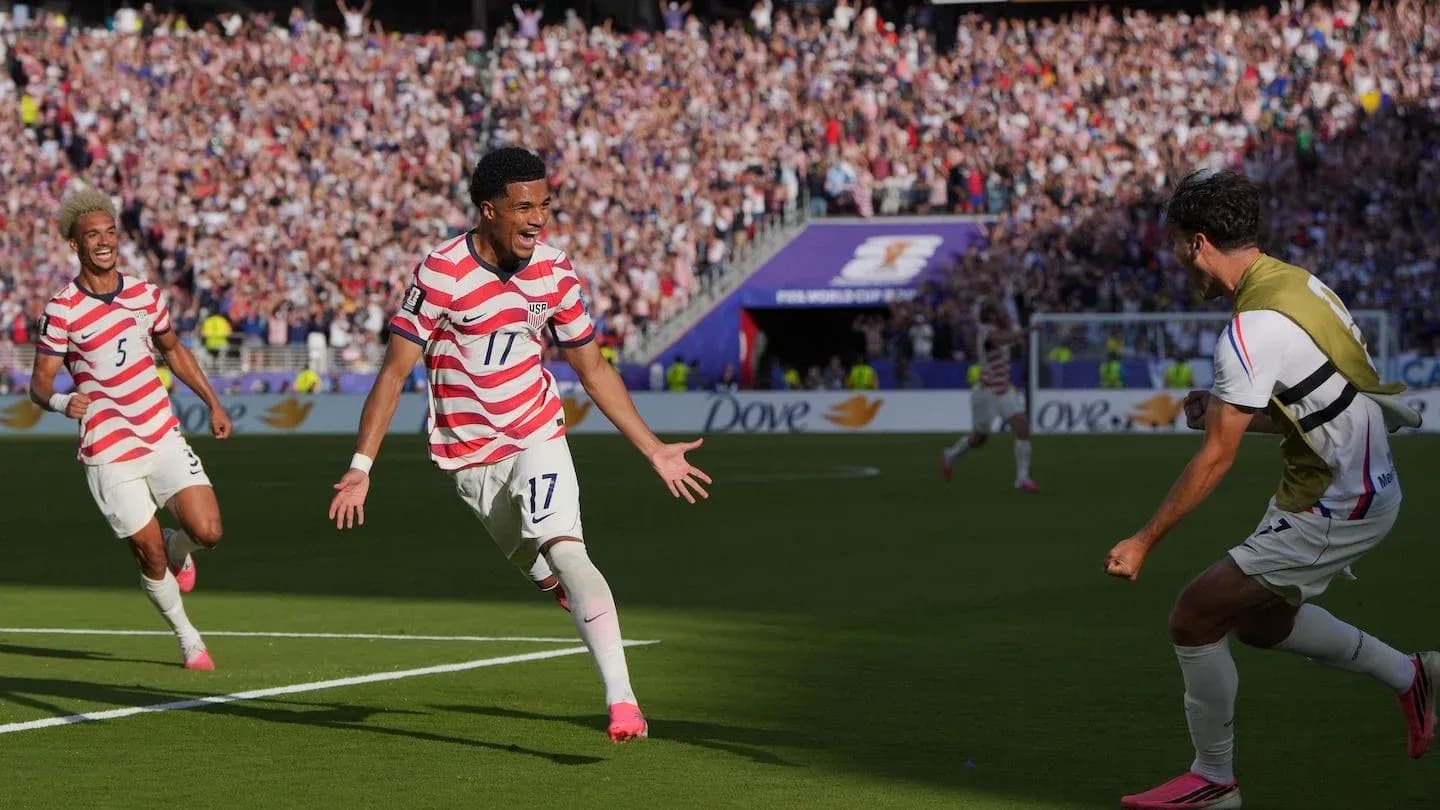
USA vs Bosnia & Herzegovina Round of 32 Tactical Analysis
Under the California night at Levi’s Stadium, the Round of 32 brought together two very different footballing identities. USA arrived as group winners from Group D, carrying 6 points and a goal difference of 4 after 3 matches in total, their form line of WWLW hinting at a side learning fast and winning faster. Bosnia & Herzegovina, third in Group B with 4 points and a total goal difference of -1 from their 3 group games, came in as a dangerous outsider: scarred by defensive leaks, but with enough attacking edge to trouble anyone.
Mauricio Pochettino leaned into the USA’s emerging DNA with a bold 4-3-3. M. Freese started in goal behind a back four of S. Dest, C. Richards, T. Ream and A. Robinson. In front of them, the midfield triangle of W. McKennie, T. Adams and M. Tillman was built to control rhythm and trigger the press. Up front, F. Balogun led the line, flanked by C. Pulisic and Dest pushed high on the opposite side, turning the nominal full-back into an auxiliary winger.
Opposite them, Sergej Barbarez set Bosnia & Herzegovina in a 5-3-2, a shape that told its own story. N. Vasilj was shielded by a back five of A. Dedic, N. Katic, T. Muharemovic, S. Radeljic and S. Kolasinac. The midfield trio of A. Gigovic, I. Sunjic and K. Alajbegovic were tasked with compressing the central lane, leaving E. Dzeko and E. Demirovic up front as the out-balls and penalty-box threats.
Statistical Backdrop
Heading into this game, the statistical backdrop framed the tactical contest clearly. USA had played 4 matches in total this World Cup: 3 at home and 1 on their travels. At home they had scored 8 goals and conceded just 1, an average of 2.7 goals for and 0.3 against per home game. Overall, they had 10 goals for and 4 against, averaging 2.5 scored and 1.0 conceded per match in total. This is a side that overwhelms opponents early and often, while keeping things tight at the back on home soil.
Bosnia & Herzegovina’s numbers painted a different picture. Across 4 matches in total, with 1 at home and 3 away, they had scored 5 goals and conceded 8. On their travels they managed just 2 goals and let in 7, averaging 0.7 scored and 2.3 conceded per away match. In total, they averaged 1.3 goals for and 2.0 against. They had yet to keep a clean sheet anywhere, and had failed to score once at home, underlining a fragility that would be severely tested by USA’s high-tempo front line.
Absences and Bench Strength
The absences only tilted things further. USA were without M. McKenzie (bruised foot) and C. Roldan (muscle bruise), removing two squad options who could have added defensive depth and midfield energy. Yet Pochettino’s bench still brimmed with alternatives: M. Turner and C. Brady in goal, M. Robinson, A. Trusty and J. Scally in defence, and a suite of attacking changes in G. Reyna, B. Aaronson, T. Weah, R. Pepi, H. Wright, A. Zendejas and M. Arfsten. Bosnia & Herzegovina, by contrast, brought a long bench but leaned heavily on their starting spine of Muharemovic, Sunjic and Dzeko to keep them competitive.
Discipline
Discipline loomed as a hidden subplot. USA’s season card profile showed a spread of yellow cards across the middle and later phases: 20.00% between 16-30 minutes, 40.00% between 46-60, and another 20.00% from 76-90, with a further 20.00% in the 91-105 band. Their single red card had come in the 61-75 window, a reminder that their aggression can sometimes spill over just as matches open up. Bosnia & Herzegovina’s yellows were even more back-loaded: 25.00% between 46-60 minutes, 12.50% between 61-75, and a heavy 37.50% from 76-90, plus 12.50% in added time. Their one red card this season arrived in the 76-90 window, exactly when fatigue and desperation collide. In a knockout tie, that late-game volatility was always going to matter.
Player Duels
Within that context, the “Hunter vs Shield” duel was embodied by F. Balogun. Heading into this match, he had scored 3 goals in total at this World Cup from 3 appearances, with 8 shots and 4 on target, and a rating of 7.23. He had drawn 7 fouls and committed 3, operating as a constant irritant between the lines. His disciplinary record was sharp-edged: 1 yellow card and 1 red, making him both a match-winner and a risk. Bosnia & Herzegovina’s “shield” was T. Muharemovic, who had played 3 matches and 260 minutes, with 157 passes at 84% accuracy, 8 interceptions and 1 successful blocked shot. His aerial and positional work would be central to repelling USA’s crosses and through balls.
Engine Room
In the “Engine Room”, T. Adams and W. McKennie were the metronomes and disruptors, tasked with pinning back Bosnia & Herzegovina’s midfield trio. Against them, I. Sunjic’s job was clear: break rhythm, win second balls, and deny Pulisic and Tillman the pockets they thrive in. With USA so dominant at home in both goals scored and defensive solidity, Bosnia & Herzegovina’s best hope lay in compressing the centre, forcing USA wide, and then springing Dzeko and Demirovic into the channels vacated by advancing full-backs.
Late-Game Statistics
Statistically, the late-game window looked decisive. USA’s card spikes around 46-60 and then again late suggested a team that raises intensity after half-time and then rides an emotional wave into the closing stages. Bosnia & Herzegovina, conceding heavily away and accumulating 37.50% of their yellows plus their only red between 76-90, risked being overwhelmed exactly when USA historically apply the most pressure. In a Round of 32 tie where neither side had taken or missed a penalty this tournament, the margins were always likely to be found in open play and discipline rather than from the spot.
Match Conclusion
The 2-0 full-time scoreline in favour of USA ultimately reflected the season-long trajectories. A home side with 3 wins from 3 at home this World Cup, 8 goals for and only 1 against on this soil, simply extended their pattern of controlled aggression and attacking variety. Bosnia & Herzegovina, conceding 8 in total across the competition and still searching for a first clean sheet, could not hold back the tide forever.
From here, the tactical verdict is clear. USA’s blend of a flexible 4-3-3, a ruthless finisher in Balogun, and a midfield that can both press and protect makes them a credible threat deeper into the tournament. Bosnia & Herzegovina leave with lessons: their 5-3-2 can frustrate, but without a more secure away defence and calmer late-game discipline, such knockout nights will continue to slip away in the margins.