AC Milan Dominates Lecce: A 3-0 Statement Victory
The lights have long since dimmed over San Siro, but this 3-0 AC Milan victory over Lecce felt less like a routine home win and more like a statement of identity from Ruben Amorim’s side. In the fifth round of the Serie A regular season, Milan’s evolving 3-4-2-1 showed why they sit 5th with 11 points, unbeaten after 5 matches, while Lecce’s 12th-place standing and fragile defensive record were laid bare.
I. The Big Picture – Milan’s structure vs Lecce’s fragility
Heading into this game, the numbers already hinted at a clash of opposites. Overall this campaign, Milan had scored 10 goals and conceded 4 in 5 matches, a goal difference of +6. At home they had been immaculate: 2 wins from 2, 5 goals scored and none conceded, with an average of 2.5 goals for and 0.0 against. Lecce, by contrast, came in with 6 points from 5 games, 5 goals scored and 10 conceded overall, a goal difference of -5. On their travels they had 1 win and 2 defeats, with just 2 goals scored and 4 conceded, averaging 0.7 goals for and 1.3 against away from home.
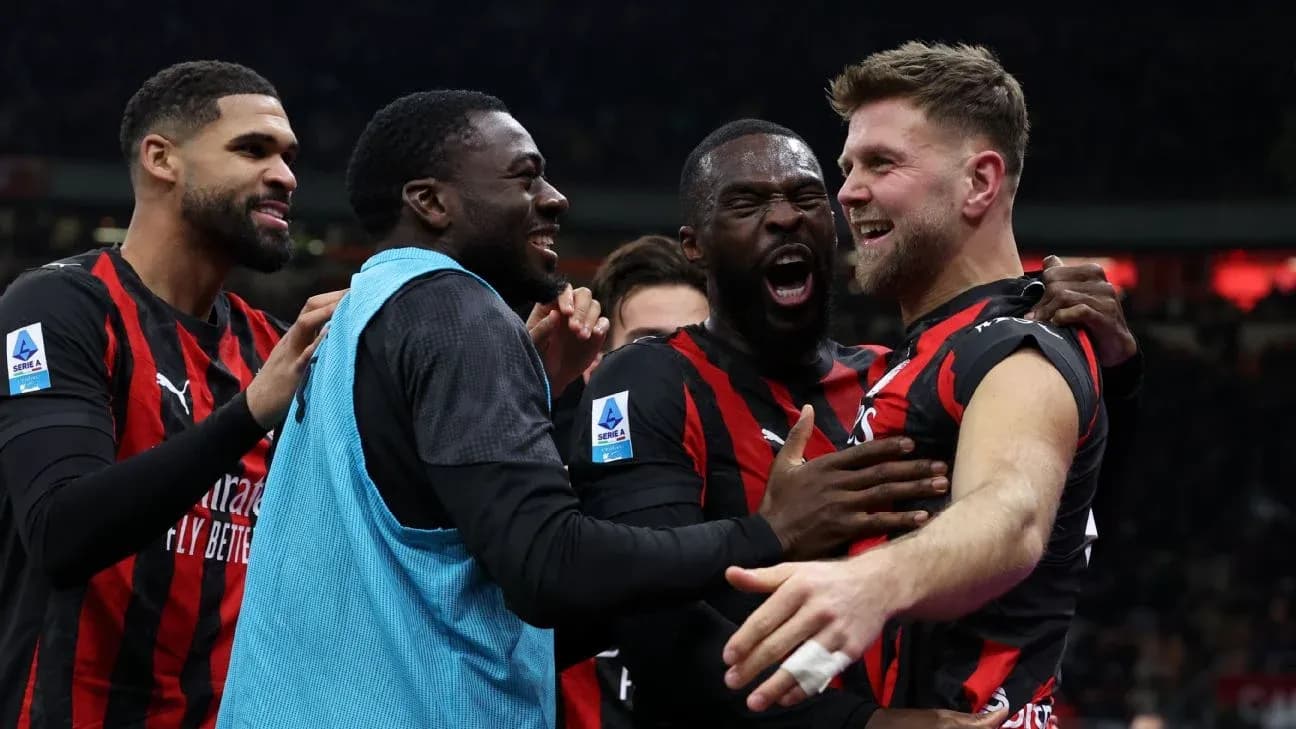
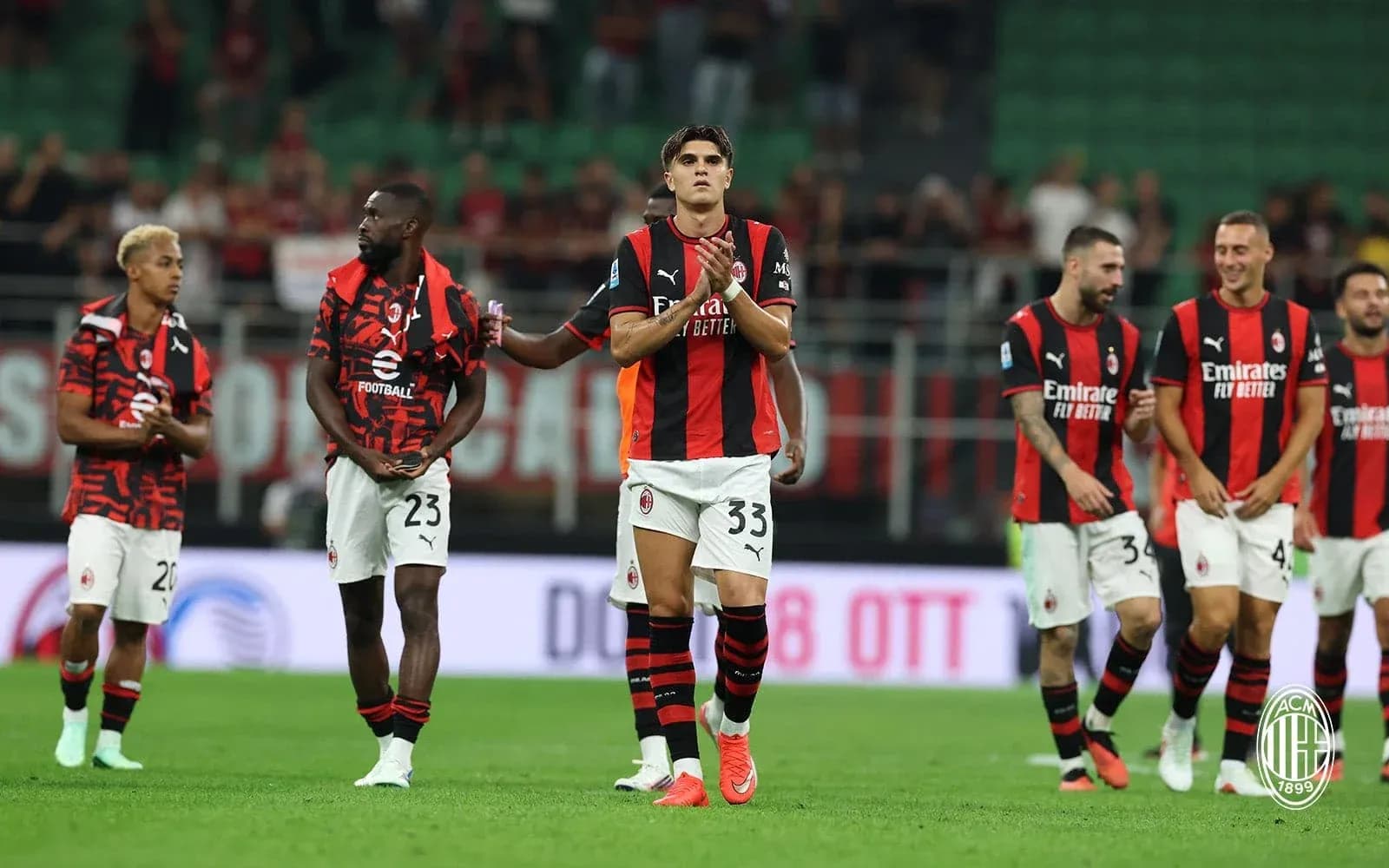
The match itself followed the script. Milan led 1-0 at half-time and accelerated to 3-0 by full-time, extending an already imposing home defensive record and reinforcing the idea that this 3-4-2-1 is built to dominate territory and tempo at San Siro.
Amorim’s system was clearly defined: Mike Maignan behind a back three of M. Gila, K. De Winter and S. Pavlovic, with P. Estupinan and S. Chukwueze as wide midfielders, A. Rabiot and L. Modric orchestrating centrally, and a fluid front trio of C. Pulisic, A. Saelemaekers and G. Ramos. Lecce’s 4-3-3 under Eusebio Di Francesco – W. Falcone in goal, a back four marshalled by K. Gaspar and J. Siebert, with D. Veiga and A. Gallo as full-backs, and a midfield of S. Pierotti, I. Ilic and Y. Maleh behind a front three of L. Coulibaly, N. Stulic and J. Monteiro – never quite found the balance between resisting and threatening.
II. Tactical Voids – Absences and discipline
Lecce arrived depleted in attack. M. Berisha, O. Gandelman, W. Geubbels and Tiago Gabriel were all listed as missing this fixture, through a mix of injury, ankle problems and lack of match fitness. For a side that had already failed to score in 3 of their 5 league games overall, these absences stripped Di Francesco of rotation options and late-game impact.
Milan, by contrast, had a full bench rich in variation: defensive cover in F. Tomori, M. Gabbia and D. Bartesaghi, midfield flexibility through R. Loftus-Cheek, Y. Musah, A. Jashari, C. Comotto and A. Cisse, and attacking threats like D. Moreira, F. Camarda and O. Hutchinson. It allowed Amorim to manage energy without sacrificing control.
From a disciplinary perspective, Milan’s season profile is intriguing. Overall, their yellow cards have been concentrated entirely after the break: 25.00% between 46-60 minutes, another 25.00% between 61-75, 25.00% from 76-90, and 25.00% in added time from 91-105. It paints a picture of a side that pushes intensity in the second half and occasionally flirts with the edge. Lecce’s bookings are more spread, but with 10.00% in the opening 15 minutes and 20.00% in each of the 31-45, 46-60, 76-90 and 91-105 windows, their defensive work often turns reactive as games open up.
Danilo Veiga is the embodiment of that edge for Lecce. With 3 yellow cards already and a place among the league’s top carded players, his aggressive defending on the right flank is both a weapon and a risk. On the Milan side, S. Pavlovic carries 2 yellow cards this season but has yet to cross the red line; his inclusion in both the yellow and red card leaderboards underlines how combative his role is, even if he has not actually been sent off.
III. Key Matchups – Hunter vs Shield, Engine Room battles
The “Hunter vs Shield” duel in this fixture was not about a classic centre-forward, but about the collective weight of Milan’s attack against Lecce’s porous defence. Overall this campaign, Lecce have conceded 10 goals in 5 matches, averaging 2.0 per game. Away from home they have allowed 4 in 3, and their heaviest away defeat was a 3-0 scoreline – a pattern that repeated itself here.
Into that vulnerability stepped Milan’s arsenal. D. Moreira, though a substitute in this game, entered the round as one of Serie A’s most efficient scorers: 3 goals in 3 appearances, from just 4 shots and 3 on target, with a rating of 7.8. Even without starting, his presence on the bench changed the psychology of the contest: Lecce knew that even if they survived the initial onslaught from G. Ramos and the supporting lines of Pulisic and Saelemaekers, there was another proven finisher ready to be introduced.
In midfield, the “Engine Room” confrontation was engrossing. For Milan, A. Rabiot and L. Modric offered a blend of verticality and control. Rabiot came into the match with 2 goals and 2 assists in 5 appearances, 209 passes at 88% accuracy and 4 key passes overall – numbers that mark him as both a runner into the box and a distributor between the lines. Opposite him, Lecce’s axis of I. Ilic and L. Coulibaly carried the creative and combative burden. Ilic had already produced 2 assists with 141 passes at 89% accuracy, while Coulibaly, listed among the league’s top scorers, had 2 goals and 1 assist, plus 50 duels contested and 27 won.
Yet the structure around them made the difference. Milan’s back three and double pivot gave Rabiot the platform to surge into advanced pockets, linking with Pulisic and Saelemaekers between Lecce’s midfield and defence. Lecce’s 4-3-3, stretched horizontally to deal with Chukwueze and Estupinan, left Ilic and Coulibaly chasing shadows rather than dictating.
Defensively, S. Pavlovic was pivotal. Across the season he has made 13 tackles, blocked 2 shots and won 34 of 47 duels, all while completing 374 passes at 92% accuracy. Against a Lecce side that averages just 1.0 goal per game overall and 0.7 on their travels, his anticipation and aggression ensured that Maignan’s goal remained protected, continuing Milan’s perfect home record of 0 goals conceded.
IV. Statistical Prognosis – What this result says about both teams
Following this result, Milan’s statistical profile hardens into that of a genuine contender. Overall, they have 3 wins and 2 draws from 5, with 10 goals for and 4 against. Their xG is not provided in the data, but the underlying metrics we do have are emphatic: they have never failed to score this season, they have 2 clean sheets at home, and their biggest home win – 3-0 – has now been matched again.
Lecce, meanwhile, remain a volatile proposition. They have 2 wins and 3 losses, with 5 goals scored and 10 conceded overall. On their travels, they oscillate between the high of a 0-2 away victory and the low of a 3-0 defeat. They have kept just 1 clean sheet away, and have failed to score in 2 of their 3 away fixtures and 3 of 5 overall.
Neither side has been involved with penalties this season; both have 0 taken, 0 scored and 0 missed, so spot-kicks are not skewing their attacking numbers. This makes Milan’s attacking averages more impressive: 2.0 goals per game overall, 2.5 at home, without the cushion of penalty conversions. Lecce’s defensive issues, conceding 3.0 goals per game at home and 1.3 away, reflect systemic fragilities rather than isolated errors.
Tactically, this match crystallised a broader narrative. Milan’s 3-4-2-1 is now their default – they have used it in all 5 league games – and it offers a stable defensive base with high-technical profiles in the half-spaces. Lecce’s rotation between 4-3-3, 3-5-2 and 4-2-3-1 across the season suggests a coach still searching for a lasting solution.
In the end, the 3-0 scoreline at San Siro felt less like a one-off and more like a confirmation: Milan are building a side whose numbers and structure align, while Lecce, stretched by absences and defensive inconsistency, remain a team whose courage is not yet matched by control.