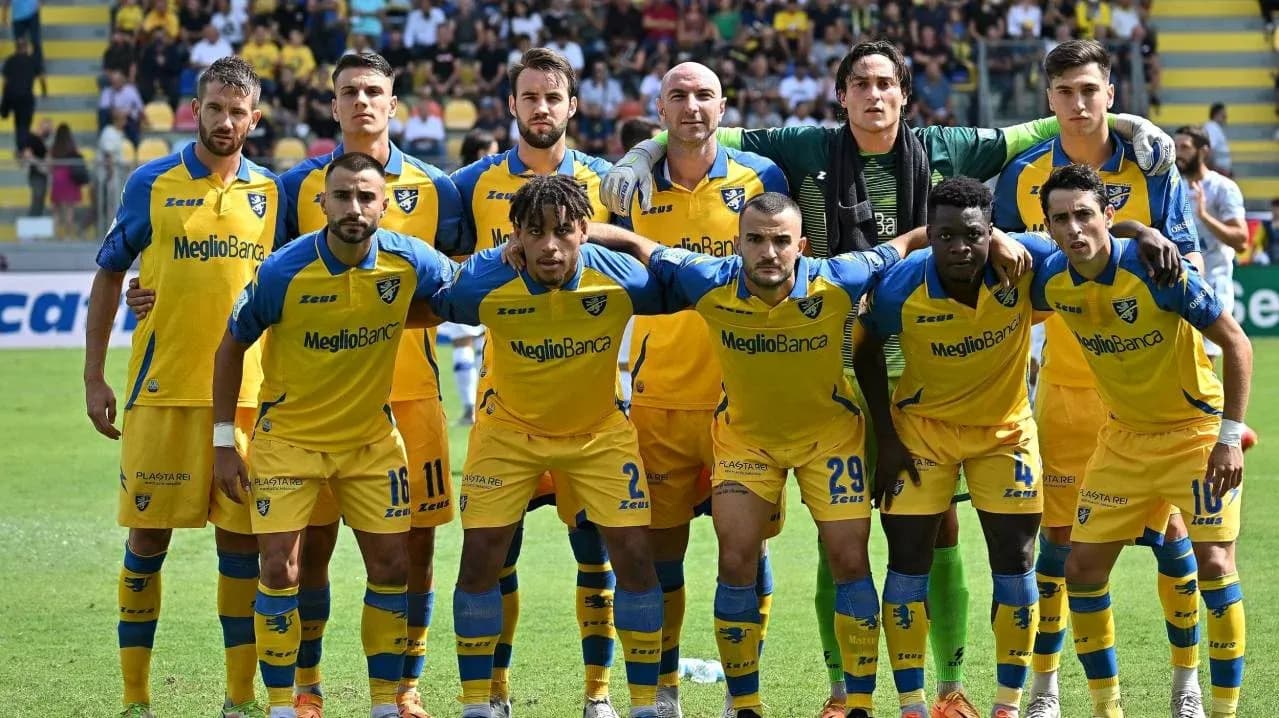
Fiorentina and Napoli Share Points in Tactical Stalemate
Stadio Artemio Franchi exhaled at full time, the scoreboard locked at 1–1, a result that felt less like a conclusion and more like a tactical ceasefire between two sides still discovering who they are in this Serie A season.
I. The Big Picture – Two Paths Crossing in Florence
Following this result, Fiorentina remain a team fighting gravity. Seventeenth in Serie A with 4 points from 5 matches, their overall goal difference of -6 (6 scored, 12 conceded) tells the story of a side still fragile, particularly at home. In Florence they have yet to win: 3 home matches, 0 victories, 1 draw, 2 defeats, with only 2 goals scored and 6 conceded.
Napoli, by contrast, leave with the air of a side that knows it should have done more but will accept the point. Ninth in the table with 7 points from 5 games, they carry a positive overall goal difference of 1 (7 scored, 6 conceded) and a more balanced profile on their travels: away they have played 3, winning 1, drawing 1, losing 1, scoring 5 and conceding 4.
The formations reflected their current identities. Paolo Vanoli trusted his familiar 4-3-3, the same structure Fiorentina have used most frequently this season, while Massimiliano Allegri rolled out a 4-2-3-1 that morphed into a compact 4-4-1-1 without the ball. The draw keeps Fiorentina’s overall scoring average at 1.2 goals per game and their goals conceded at 2.4, while Napoli’s campaign profile remains that of a more controlled side: 1.4 goals scored per game overall, 1.2 conceded.
II. Tactical Voids – The Missing Pieces
Both coaches entered the fixture with clear absences that shaped their tactical choices.
For Fiorentina, the flanks were thinned by the double loss of F. Parisi and R. Sottil, both ruled out with a knee and back injury respectively. Their absence pushed Vanoli towards a back four anchored by L. Ranieri and R. Dragusin in the centre, with A. Jimenez and Viery as full-backs. Without Sottil’s direct running or Parisi’s overlapping thrust, Fiorentina’s width had to come from deeper starting positions, forcing the front three to work harder to stretch Napoli’s block.
Napoli’s list of absentees was longer and more structurally significant. A. Buongiorno, Alisson Santos, Giovane, L. Marianucci, S. McTominay, A. Meret and L. Spinazzola were all unavailable. That cluster of injuries in defence and midfield forced Allegri into a reshaped spine: V. Milinkovic-Savic in goal instead of Meret, R. Marin and M. Olivera as the left-sided defensive axis, and a double pivot of B. Gilmour and S. Lobotka to compensate for the missing physicality and verticality that someone like McTominay might have provided.
Disciplinary patterns from the season added a subtle layer of tension. Fiorentina’s yellow cards are heavily concentrated between 61–75 minutes (33.33%) and then 16–30 and 76–90 minutes (both 22.22%), a sign of a team that often tackles desperation and fatigue in the final half-hour. Napoli’s cautions, meanwhile, cluster just before the interval: 50.00% of their yellows arrive between 31–45 minutes, with 25.00% between 46–60 and 25.00% in the closing 76–90 stretch. It is in these windows that the game’s emotional temperature predictably rose.
III. Key Matchups – Hunter vs Shield, Engine Room vs Orchestrator
The headline narrative for Fiorentina was always going to run through Franco Mastantuono. Officially listed as a midfielder in the season data but deployed here as part of the front line, the 18-year-old arrived at kickoff as Fiorentina’s standout attacking reference: 3 goals in 5 league appearances, 17 shots (8 on target), and a rating of 7.18. His blend of dribbling (23 attempts, 9 successful) and creative passing (10 key passes from 122 total) made him the natural “Hunter” in Vanoli’s plan.
Napoli’s “Shield” against him was a layered structure rather than a single player. Out of possession, G. Di Lorenzo and R. Marin pinched in from the right and left respectively, while B. Gilmour and S. Lobotka screened the half-spaces. Napoli’s away defensive record heading into this match – 4 goals conceded in 3 away games, an average of 1.3 per away match – underlined their relative solidity on their travels compared to Fiorentina’s leaky home defence (6 conceded in 3, an average of 2.0 per home game).
The engine room duel was equally compelling. For Fiorentina, N. Fagioli and C. Ndour had to blend progression and protection in a midfield three completed by A. Atta. Their task was to press without being pulled apart by Napoli’s central maestro, K. De Bruyne, operating as the advanced playmaker behind R. Hojlund.
De Bruyne’s presence, flanked by M. Politano and N. Lang, gave Napoli a three-lane creative structure. Lobotka dropped to orchestrate the first phase, Gilmour stepped higher to contest second balls, and De Bruyne found pockets between the lines. Fiorentina’s response was to keep their midfield compact and ask their front three – Mastantuono, M. Pellegrino and A. Njie – to curve their pressing runs, forcing Napoli’s build-up wide rather than through the centre.
At the back, Fiorentina’s pairing of Dragusin and Ranieri were tasked with containing Hojlund’s runs into the channels. Given Fiorentina’s overall defensive numbers – 12 goals conceded in 5, with no clean sheets home or away – their ability to hold Napoli to a single goal will be seen internally as a step towards stability.
IV. Statistical Prognosis – A Draw That Fits the Numbers
Overlaying the season’s numbers on this 1–1 feels almost inevitable. Fiorentina’s attack at home has been blunt (0.7 goals per home game heading into the match), while Napoli’s away attack has been solid but not explosive (1.7 goals per away match). On the other side of the ball, Fiorentina’s home defence has been vulnerable (2.0 goals conceded per home game), whereas Napoli’s away defence has been relatively tight (1.3 conceded per away game).
Put together, the profiles pointed towards a match where Napoli were likelier to edge the xG battle through higher-quality chances, but Fiorentina, driven by Mastantuono’s individual threat and Vanoli’s 4-3-3 familiarity, had enough to land at least one decisive blow. The fact that neither side has taken nor missed a penalty this season removed one of the usual high-variance levers from the equation.
Following this result, Napoli will feel they left two points on the table but can take comfort from maintaining a positive goal difference and a balanced away record. Fiorentina, still winless at home and with a negative goal difference of -6, will frame this as a foundation: a point against a stronger roster, a defensive performance that did not collapse, and further evidence that their young talisman Mastantuono can keep them afloat while the rest of the structure catches up.
In Florence, this 1–1 is not a turning point yet. But it might be the moment when Fiorentina stopped falling and started learning how to survive.