AS Roma vs Inter: Tactical Clash in Serie A
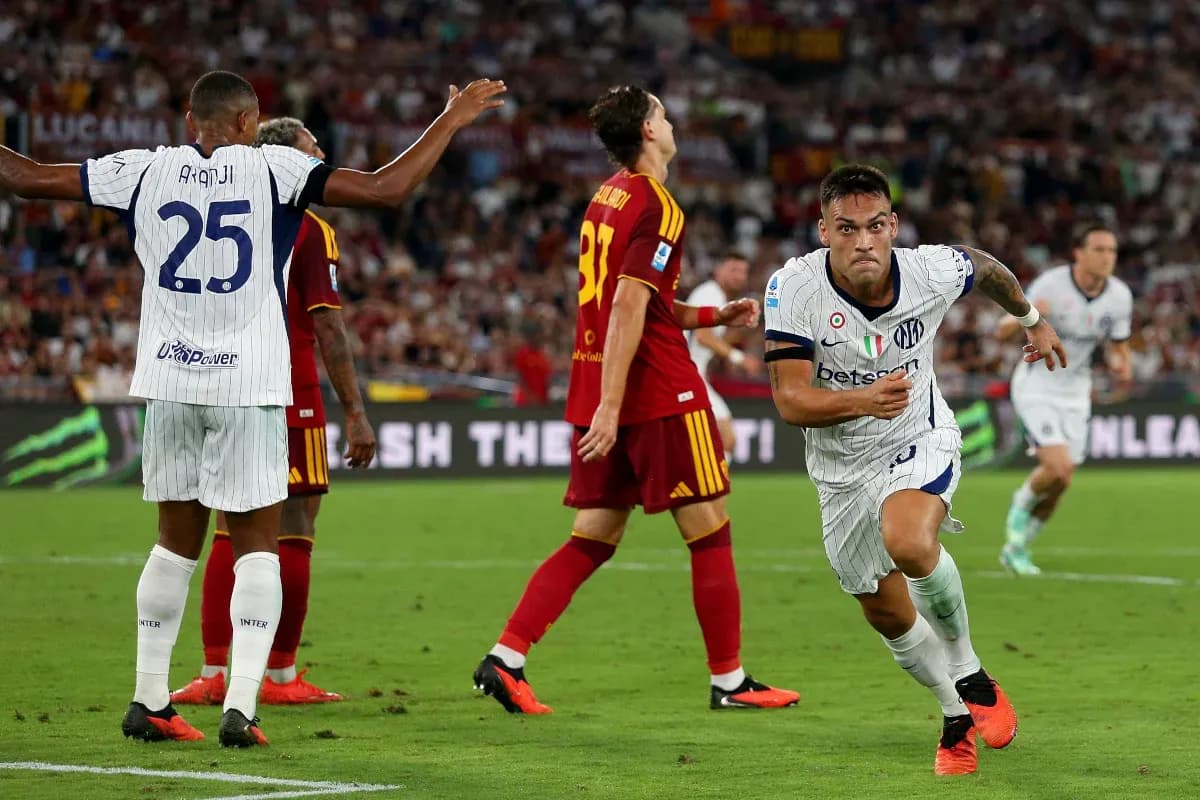
The Stadio Olimpico had the feel of a title-stage dress rehearsal: first against second in Serie A, both unbeaten after five matches, both on 13 points, both carrying the swagger of sides that expect to decide the season rather than be shaped by it. Over 90 minutes, AS Roma and Inter staged a tactical arm wrestle that finished 2–2, but the real story lay in how their evolving identities clashed.
Heading into this game, Roma’s numbers were those of a side playing with a champion’s authority. Overall they had scored 14 and conceded 3 in 5 league matches, a goal difference of +11, with 4 wins and 1 draw. At home they had been ruthless: 8 goals scored and 3 conceded in 3 matches, averaging 2.7 goals for and 1.0 against. Inter arrived with a similarly imposing profile: 15 goals for and 8 against overall, a goal difference of +7, also 4 wins and 1 draw. At San Siro they had been devastating in attack (12 goals in 3 home games, an average of 4.0), while on their travels they were more pragmatic, scoring 3 and conceding 2 in 2 away matches.
I. The Big Picture – Structures and Seasonal DNA
Roma’s 3-4-2-1 under Piero Gasperini Gian was the clearest expression yet of their new edge. M. Svilar anchored a back three of G. Mancini, L. Balerdi and Mario Hermoso, all comfortable stepping into midfield. The wing lanes belonged to Wesley Franca and N. Molina, with B. Cristante and M. Kone forming a double pivot that could both screen and circulate. Ahead of them, P. Dybala and M. Soule floated as dual creators behind lone striker D. Malen, Serie A’s leading scorer with 6 goals from 5 appearances.
Inter answered with a 3-1-4-2 under Cristian Chivu, a shape that can look like a back five without the ball and a front five with it. J. Martinez stood behind a defensive trio of Y. Bisseck, M. Akanji and A. Bastoni. In front, P. Zielinski operated as the single pivot, with a line of four—A. Diouf, N. Barella, C. Jones and F. Dimarco—stretching Roma horizontally. Up top, the pairing of L. Martinez and M. Thuram brought a mix of penalty-box instinct and channel running that has already yielded 6 league goals between them this season.
Both sides came in with perfect defensive records in one sense: neither had lost a match. But stylistically, their defensive profiles diverged. Roma’s 3 goals conceded in 5 fixtures spoke to control and compactness; Inter’s 8 conceded in the same span pointed to a more open, risk-tolerant approach, especially at home. On their travels, though, Inter had tightened, allowing just 2 goals in 2 away games.
II. Tactical Voids – Absences and Discipline
The absentees subtly reshaped the chessboard. Roma were without M. Bah through a knee injury, a missing piece in the wing-back rotation that placed even greater physical demands on Wesley Franca and Molina to cover the entire flank for 90 minutes.
Inter’s absences cut closer to the core of their identity. H. Calhanoglu’s muscle injury removed their primary metronome and long-range threat from deep, forcing Zielinski into a more central organizing role. The injuries to D. Spence and J. Stones reduced options for Chivu to shift between a back three and back four mid-game, effectively locking Inter into their three-centre-back structure.
Discipline loomed as an undercurrent. Roma’s season-long yellow card distribution showed a clear late-game spike: 37.50% of their cautions had arrived between 61–75 minutes and 25.00% between 76–90, a pattern of increasing aggression or fatigue as matches wore on. Inter’s bookings peaked between 46–60 minutes, with 50.00% of their yellows arriving just after half-time. In a fixture of such intensity, those windows of volatility were always likely to frame the contest’s turning points.
III. Key Matchups – Hunter vs Shield, Engine Room Battles
The headline duel was “Hunter vs Shield”: D. Malen against Inter’s back line. Malen’s 6 goals from 16 shots (10 on target) this season, supported by 7 key passes and 15 dribble attempts, made him the league’s most dangerous vertical threat. His movement between the lines and into the left half-space targeted the channels either side of Akanji, Inter’s most active defender. Akanji, for his part, arrived as a statistical pillar: 309 completed passes at 94% accuracy, 9 tackles, 2 blocked shots and 8 interceptions, but also 2 yellow cards and a place among the league’s top red-carded profiles. His aggression is a weapon, but against Malen’s acceleration and Dybala’s timing, it is also a risk.
Behind Malen, Dybala and Soule formed Roma’s creative axis. Dybala, with 4 assists and 23 key passes in 5 appearances, is the league’s leading provider, his left foot the scalpel that opens low blocks. Soule adds thrust and unpredictability: 2 goals, 1 assist, 12 shots (8 on target) and 13 dribble attempts with 8 successes. Their task was to drag Inter’s midfield line out of shape, forcing Barella and Jones into awkward decisions about when to jump and when to hold.
For Inter, the “Engine Room” battle revolved around A. Diouf and Barella against Cristante and Kone. Diouf’s 3 assists, 13 key passes and 91% pass accuracy made him the primary conduit between build-up and final third. If he could receive between Roma’s lines, Inter’s front two would find space. Barella’s box-to-box energy, combined with Dimarco’s wide-left surges, aimed to pin Wesley Franca deep, blunting Roma’s right-sided counter threat.
Up front, L. Martinez, with 4 goals from 16 shots and a combative 34 duels contested, squared off against a Roma back three marshalled by Hermoso. The Spaniard’s numbers—13 tackles, 16 interceptions, 2 blocked shots and 2 yellow cards—paint the picture of an aggressive front-foot defender. His willingness to step out on Lautaro risked leaving space for Thuram to attack diagonally into the left channel, especially when Roma’s wing-backs were caught high.
IV. Statistical Prognosis – Where the Game Tilted
On the balance of seasonal trends, this always looked like a match in which both attacks would land blows. Roma’s overall scoring average of 2.8 goals per game, combined with Inter’s 3.0, pointed towards a high-event contest, even against two unbeaten records. Roma’s defensive solidity—just 0.6 goals conceded per game overall, with 3 clean sheets—suggested they were better equipped to manage transitions, but Inter’s away profile (1.5 goals scored and 1.0 conceded per game on their travels) hinted at a side comfortable grinding out results in hostile environments.
The 2–2 final scoreline ultimately reflected that equilibrium. Roma’s structure and star power in the half-spaces gave them the platform to race into a first-half lead, as the 2–0 half-time score underlined. Inter’s resilience, fuelled by the Diouf–Barella axis and the relentless movement of Lautaro and Thuram, dragged them back after the break.
From a predictive standpoint, the underlying patterns still favour Roma as the more stable long-term proposition: their goal difference of +11 from 5 matches, combined with an unbeaten run and zero penalties missed or conceded, speaks to control in both boxes. Inter’s more open defensive profile keeps them thrilling but vulnerable, particularly if disciplinary issues around players like Akanji flare in high-stress moments.
Yet this draw at the Olimpico also confirmed that Chivu’s Inter can match Roma blow for blow in the league’s most demanding arena. If these two are to define the title race, this 2–2 felt less like a conclusion and more like the first chapter of a rivalry that will be decided in the smallest of tactical margins.