Frosinone vs Como: Tactical Analysis of a Statement Win
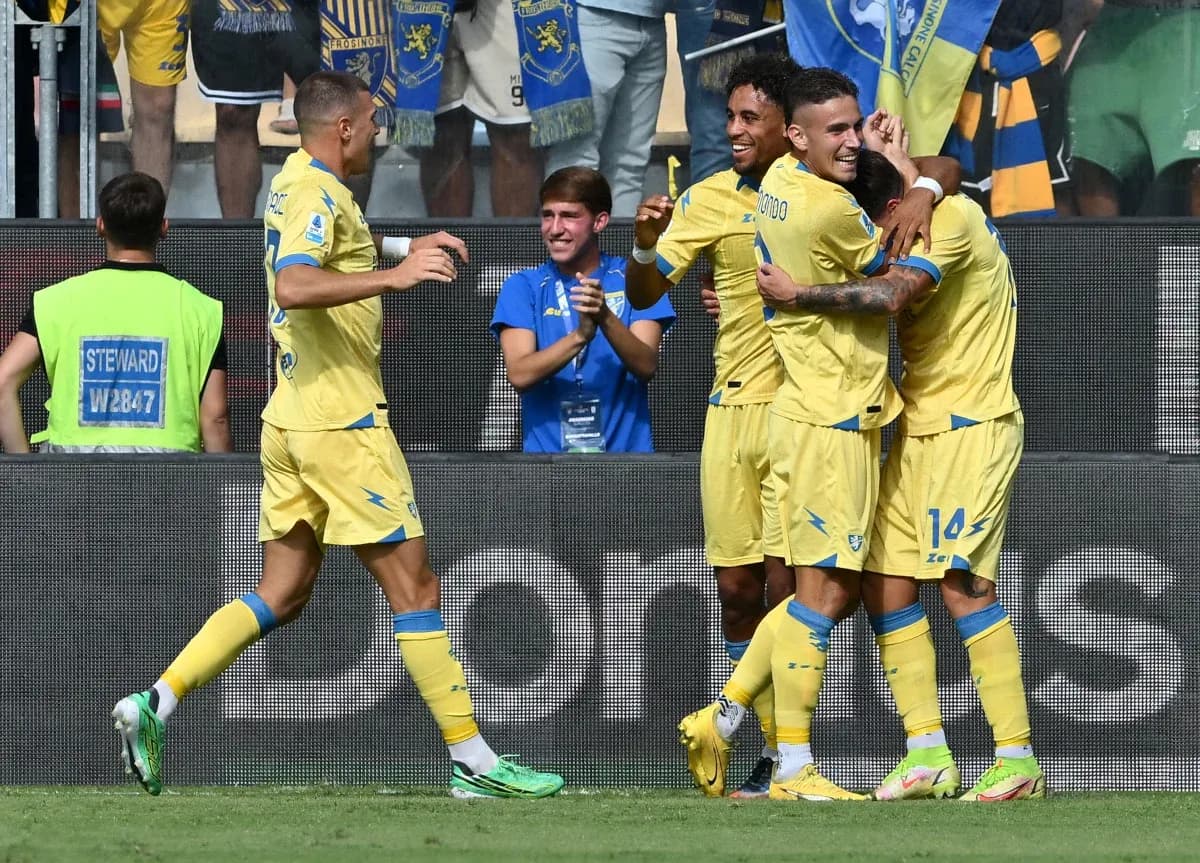
Under a bright afternoon sky at Stadio Benito Stirpe, Frosinone delivered a statement win in Serie A’s early-season traffic jam. In a meeting of two ambitious sides level on 10 points heading into this game, Massimiliano Alvini’s team imposed their 4-2-3-1 structure on Cesc Fabregas’ similarly shaped Como, emerging 2–0 winners and tightening their grip on the league’s upper reaches.
Both clubs arrived with identical overall records: 3 wins, 1 draw, 1 defeat in 5 matches. Frosinone’s overall goal difference of +5 (9 scored, 4 conceded) hinted at a more balanced side, while Como’s +3 (9 scored, 6 conceded) suggested a slightly looser back line, especially on their travels. On their travels, Como had been productive – 7 goals scored and 5 conceded in 4 away fixtures – but this time they ran into a Frosinone unit that is quietly becoming one of the most coherent collective structures in the league.
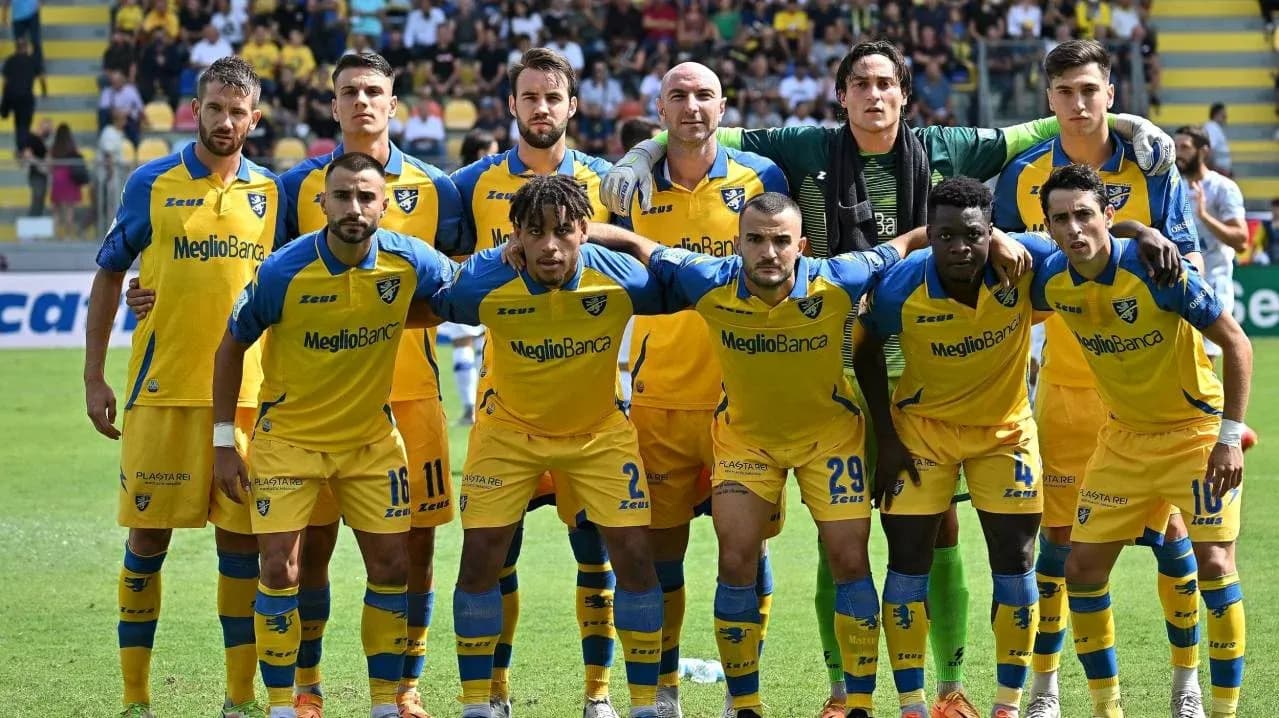
Alvini stayed loyal to his preferred 4-2-3-1, and the starting XI reflected a clear internal hierarchy. In goal, L. Palmisani sat behind a young but increasingly authoritative back four: A. Oyono at right-back, G. Calvani and I. Monterisi in central defence, and G. Bracaglia on the left. Ahead of them, the double pivot of G. Calo and P. Masini formed the platform for a fluid band of three – F. Ghedjemis, R. Schmid, and G. Kvernadze – tasked with feeding lone striker A. Raimondo.
The tactical identity is evident in the season data. Overall, Frosinone average 1.8 goals scored and only 0.8 conceded per match. At home, they score 1.7 and concede 1.0 on average, numbers that speak to controlled, rather than frantic, contests. The clean-sheet count – 2 overall, split evenly between home and away – underlines a defensive structure that is beginning to trust itself.
Key Storylines
The first key storyline is the “Hunter vs Shield” dynamic built around Antonio Raimondo. Heading into this game, he already had 4 league goals from 10 shots, 6 of them on target. He is not merely a finisher: 49 duels contested and 3 tackles show a centre-forward willing to engage in the dirty work, while 1 blocked shot hints at his defensive contribution from the front. Against a Como side conceding an overall 1.2 goals per match, and 1.3 on their travels, his presence as a constant reference point pinned back T. Chalobah and J. Ramon, forcing Como’s back line to defend deeper than Fabregas would have liked.
Behind him, the true conductor is Giorgi Kvernadze. His overall output – 3 goals, 1 assist, 9 shots (5 on target), and 12 key passes from 77 total passes at 85% accuracy – paints the picture of a high-volume, high-impact creator. From the left side of the three behind the striker, he repeatedly attacked the half-space between Y. Couto and Chalobah, exploiting the same corridor that has been problematic for Como away from home. His 30 dribble attempts with 16 successful underline how often he carries the ball into pressure; in this match, that ball-carrying forced Como’s midfield shield of L. Milla and L. Da Cunha into reactive positions, reducing their ability to launch transitions.
On the opposite flank, Assane Diao offered Como their main counter-threat. With 2 goals, 1 assist, 13 key passes and 11 successful dribbles from 22 attempts this season, he has been Fabregas’ primary outlet. Yet against Frosinone, he ran into a defensive triangle that has quietly become one of the league’s more combative units: Bracaglia, Calvani, and the covering Masini.
Bracaglia, in particular, embodies Frosinone’s defensive edge. With 7 successful blocks and 5 interceptions overall, plus 43 duels contested and 22 won, he is both aggressive and sacrificial in the last line. His disciplinary profile – 3 yellow cards already – is a warning sign, but it also reveals a defender willing to step into challenges rather than retreat. That front-foot mentality was vital in containing Diao’s direct running and forcing him away from central zones.
Calvani complements him with a slightly different profile: 11 tackles, 6 blocks, and 7 interceptions overall, and an impressive 30 duels won from 45. Together, they form a centre-back pairing that is increasingly comfortable defending space, which is crucial against a Como attack that had been thriving in transition, especially away from home where they score 1.8 goals per match.
Midfield Duel
In midfield, the “Engine Room” duel revolved around Romano Schmid and Martin Baturina. Schmid, with 3 assists and 130 passes at 70% accuracy, is Frosinone’s rhythm-setter. His tendency to drift between lines and receive on the half-turn gave Frosinone an extra passing angle against Como’s double pivot. He also brings edge: 8 fouls committed and 2 yellow cards show he is not afraid to break play when needed, a trait that helped disrupt Como’s attempts to find Baturina between the lines.
Baturina, for his part, arrived as Como’s creative brain: 2 goals, 1 assist, 140 passes at 89% accuracy, and 4 key passes overall. But with Masini and Calo screening, and Kvernadze and Schmid collapsing inwards without the ball, his influence was stifled. Frosinone’s compact 4-4-1-1 out of possession often left him receiving with his back to goal, far from the zones where he usually threads passes into A. Douvikas.
Discipline was another subtle battleground. Frosinone’s yellow-card distribution shows a spread of cautions across all phases, with a notable 25.00% of their yellows coming between 46–60 minutes. That pattern hints at a side that can be over-aggressive early in second halves, yet in this fixture their game management was mature. Como, by contrast, tend to pick up cards in multiple late-game windows – 25.00% between 31–45, 46–60, 76–90 and 91–105 minutes each – a profile that often reflects frustration and chasing games. Once Frosinone established their two-goal cushion by half-time, that psychological trend favoured the hosts.
The only cloud over Frosinone’s afternoon remains the continued absence of F. Grillitsch through a thigh injury. His profile as a deep organiser would, in theory, add another layer of control. Yet the current double pivot has adapted impressively, and the team’s overall defensive numbers – just 4 goals conceded in 5 matches – suggest the structure is compensating well.
Statistically and tactically, this felt like a result consistent with the underlying trends. Frosinone’s overall attacking output of 1.8 goals per match and defensive concession of 0.8 are the hallmarks of a side built on balance and structure, not volatility. Como’s more open away profile – 1.8 scored, 1.3 conceded – met a defensive block that is increasingly comfortable in its own skin. In that collision, the home side’s organisation, the Raimondo–Kvernadze axis, and the Bracaglia–Calvani wall made the difference, turning a meeting of equals in the table into a quietly authoritative home win.