Netherlands vs Germany: A New Era in Amsterdam
The Nations League rarely feels like a friendly. Not when it’s Netherlands vs Germany. Not when both dugouts are starting over.
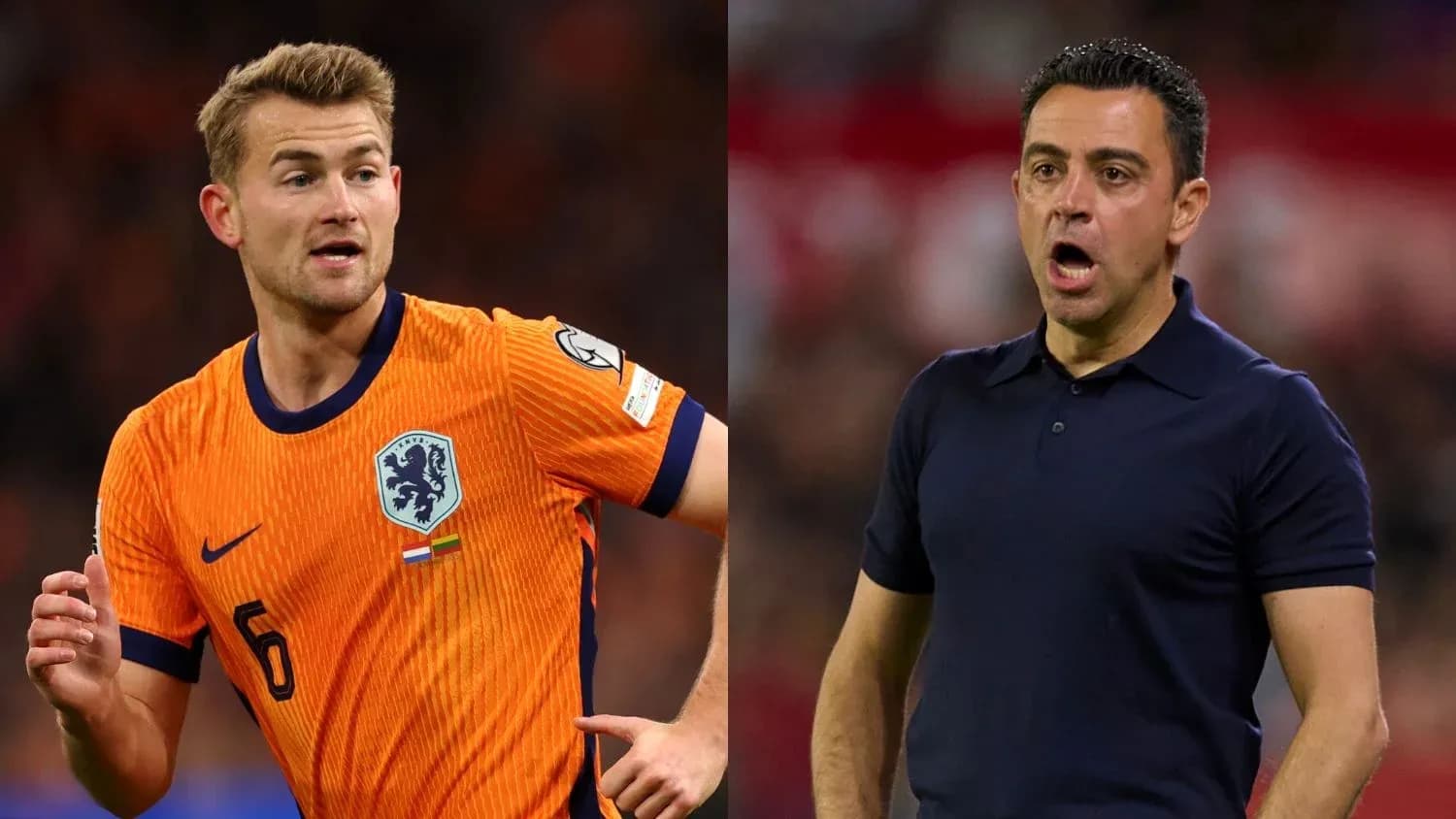
On 24 September 2026, at 14:45 EST and 18:45 GMT, Amsterdam becomes the stage for two of football’s biggest experiments: Xavi’s Oranje against Jürgen Klopp’s rebuilt Die Mannschaft.
Xavi’s Oranje, Without Their Record Scorer
A World Cup exit to Morocco ended Ronald Koeman’s second spell and opened the door for a bold, unexpected appointment. Xavi, the iconic Barcelona and Spain midfielder, now wears the orange tracksuit and has wasted no time making hard calls.
The headline decision is brutal and clear: Memphis Depay, the country’s all-time leading scorer, is out of the squad. No sentiment, no soft landing. Xavi has chosen a different path up front and is ready to live with the consequences.
His projected XI is adventurous and aggressive. Bart Verbruggen starts in goal. Denzel Dumfries and Nathan Ake flank a centre-back pairing of Virgil van Dijk and Micky van de Ven, a blend of authority and raw pace. In midfield, Ryan Gravenberch, Joey Veerman, and Tijjani Reijnders offer passing range and energy rather than a pure destroyer.
Up front, the shape is clear: speed and power. Jeremie Frimpong and Cody Gakpo operate either side of Brian Brobbey, a front three built to run at defenders and punish space.
There are issues, though. Justin Kluivert and Donyell Malen have both withdrawn injured, trimming Xavi’s attacking options and putting even more weight on Brobbey and Gakpo to deliver.
Brobbey the Battering Ram
If Xavi wanted a focal point, he has one. Brian Brobbey arrives in camp with form and menace.
The 24-year-old hit a hat-trick for Sunderland in a wild 5-3 defeat to Manchester City, and he bullied Arsenal’s back line in another recent outing. He might not have Memphis’ catalogue of international moments, but he brings something different: relentless running, physical duels, chaos in the box.
Germany will have watched those games closely. Klopp’s centre-backs cannot afford to lose a single first contact against him. One slip, and Brobbey turns a hopeful ball into a chance.
Klopp’s Germany: High Energy, High Risk
Across the halfway line, a familiar silhouette in a black cap starts a new chapter. Jürgen Klopp, the Liverpool legend, has replaced Julian Nagelsmann after Germany’s stuttering World Cup campaign.
His brief is simple and brutal: restore edge, restore belief, restore fear.
He has not eased his way in. Klopp has named two separate 22-man squads to tackle four September and October fixtures – Netherlands, a double-header against Greece, and Serbia – a clear sign that he wants to look at as many players as possible, as quickly as possible.
For Amsterdam, the expected XI is a mix of established names and fresh faces. Alexander Nübel is tipped to start in goal, with Marc-André ter Stegen back in the squad but still needing to reclaim the shirt he chased for years behind Manuel Neuer.
The projected back four reads from right to left: Joshua Kimmich, Nico Schlotterbeck, Jonathan Tah, and Nathaniel Brown. Kimmich at right-back again hints at Klopp’s desire for control in build-up and aggression in the press, while Tah and Schlotterbeck bring aerial strength and progressive passing.
In front of them, Felix Nmecha and Nadiem Amiri are expected to anchor and link midfield, while Lennart Karl and Serge Gnabry provide width and running. Jamal Musiala floats between the lines, with Kai Havertz leading the line.
It’s an unconventional squad on paper. Alongside the headline names sit less familiar ones: Finn Dahmen, Hennes Behrens, Max Rosenfelder, Philipp Treu, Nathaniel Brown, Josha Vagnoman, Yann-Aurel Bisseck, Yannik Engelhardt, Anton Stach, Bambasé Conté, Chris Führich, Younes Ebnoutalib, Kevin Schade. Klopp has clearly opened the door to a new generation.
One enforced change: Brajan Gruda has pulled out injured. No other absences are currently flagged.
Ter Stegen’s Second Chance
For years, Marc-André ter Stegen lived in Neuer’s shadow. Now, with Neuer out of the picture and ter Stegen back from serious injury, the Barcelona goalkeeper finally has a clear run at being Germany’s undisputed number one.
But there’s a twist. Klopp has not simply handed him the gloves. Nübel, now at Besiktas, is pushing hard and could start in Amsterdam. The message is obvious: reputation alone will not secure a place in this Germany side.
Every training session matters. Every Nations League minute will, too.
Form Lines and Fine Margins
Both teams arrive with scars from the World Cup, but their recent records tell slightly different stories.
Netherlands have three wins, one draw, and one loss from their last five matches in all competitions. They smashed Sweden 5-1 at their best, but their most recent outing ended in frustration: a 1-1 draw with Morocco that turned into elimination on progression terms. Eleven goals scored, six conceded. Dangerous going forward, occasionally loose at the back.
Germany’s numbers are sharper in attack, more uneven in results. Across their last five, they’ve taken two wins, two defeats, and that painful 1-1 World Cup draw with Paraguay that knocked them out. They hammered Curacao 7-1, edged Ivory Coast 2-1, but lost to Ecuador and then again to Paraguay when it mattered most. Thirteen goals scored, five conceded. Plenty of firepower, but not always the right answers under pressure.
One bright spark for Klopp: Jamal Musiala. The Bayern Munich playmaker has three goal contributions in his last three games for his club and walks into this international break as Germany’s most unpredictable weapon.
Old Rivalry, New Chapters
History between these two never really sits quietly.
The last meeting came in October 2024, a Nations League tie that Germany edged 1-0. A month earlier, the sides had shared a 2-2 draw in the same competition in the Netherlands. Across the last five head-to-head games, Germany have two wins, Netherlands one, with two draws and 11 goals between them.
Those numbers don’t just speak of rivalry. They speak of balance. Of games that tilt on a single moment.
Group Stakes in the Background, Pressure in the Foreground
This isn’t a dead rubber dressed up as a reboot. In UEFA Nations League Group 2, Germany sit top. Netherlands are third. The table demands a response from the hosts.
Xavi’s side need a result to close the gap. A win at home against the group leaders would do more than improve their position; it would validate his early decisions, including the Memphis omission, and send a message that Oranje are ready to evolve.
For Klopp, this is about more than points. It’s about setting a tone. About proving that his Germany can carry the same intensity, clarity, and emotional charge his club sides have lived on for years.
Amsterdam will feel that from the first whistle. Two giants in transition, two managers with defined ideas, one Nations League game that looks and feels much bigger than that.
Which project lands its first real blow?