Tottenham's Season in Crisis: A Look at Their Struggles
Tottenham’s season is already on the brink, and it’s still only September.
A 3-2 defeat to Aston Villa on Saturday left Spurs marooned in the Premier League relegation zone, winless after five games and stripped of the optimism that followed last year’s escape. The scoreline flattered them. The pattern did not.
They started well. Again.
They pressed high, moved the ball sharply and carved out chances in the opening spell, looking like a side intent on finally kicking their campaign into life. Villa were second best for half an hour as Tottenham dictated the tempo and found space between the lines.
Then the familiar collapse arrived.
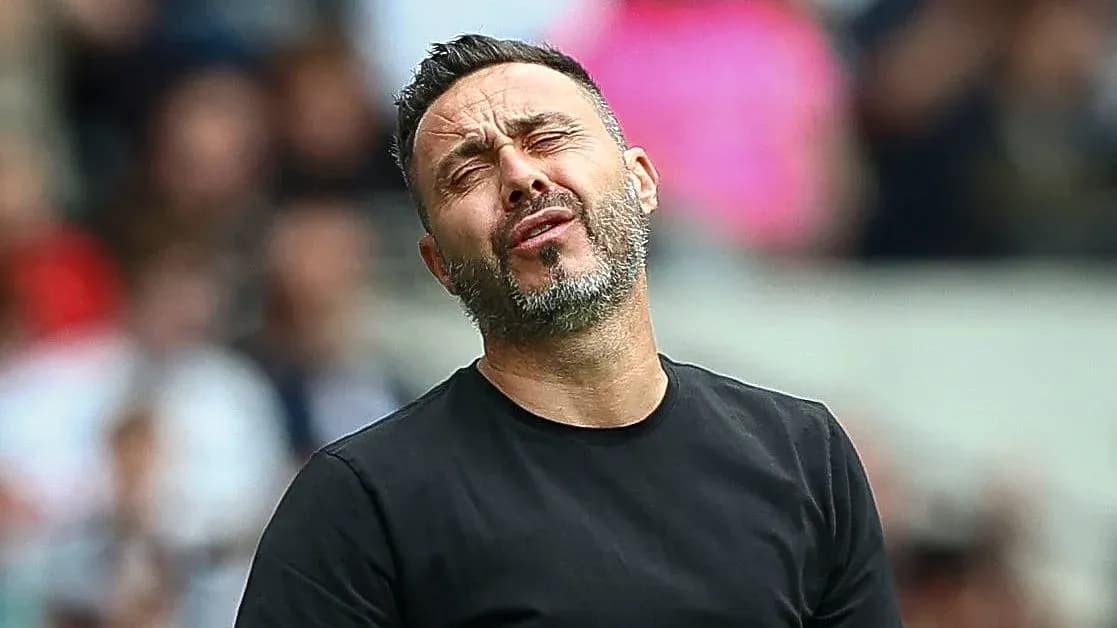
Once Villa landed their first serious punch, Spurs folded with an alarming predictability that has already become the defining theme of Roberto De Zerbi’s second season in charge. Control turned to chaos, structure to panic. The team that had bossed the early exchanges suddenly looked like it didn’t trust itself to see out even the next phase of play, let alone the full 90 minutes.
De Zerbi, speaking to talkSPORT after the game, did not sugarcoat what he had just watched.
"It's difficult to explain because, in my career, 14 years as a coach, I've never seen one team like us," he said, his frustration cutting through every word. "So fragile, so inconsistent. You're good, or you're bad. You can't be very good in the first 30, 40 minutes, and then concede like this in this way. It's tough to accept for me."
Tottenham’s problem is no longer just about tactics or missed chances. It’s psychological. It’s about a side that can look slick and confident for a spell, then crumble the moment something goes against them.
When asked what triggers such drastic swings in performance, De Zerbi was blunt about his own confusion.
"Listen, I'm a coach, but I do not have all the answers...for your question, I have no answer," he admitted. "I can say what I think, what I've seen today and I saw my team in the first half play very well, we had chances to score. We didn't score and then we conceded the first goal...we have to stay closer and stay stronger, more compact."
The turning point came after the break. Tottenham briefly rallied, with Kudus finding the net to drag them back into the contest. That should have been the moment to reset, to dig in, to show resilience.
Instead, the energy drained away.
"In the second half, after Kudus' goal, I don't know if the players lost energy...now we have to explain another defeat," De Zerbi said, sounding less like a man searching for excuses and more like one running out of patience.
The Villa loss was not an isolated collapse. It slotted neatly into a growing catalogue of Spurs implosions this season. Bright starts against Newcastle, Liverpool and Everton have all ended the same way: control surrendered, leads squandered or chances wasted, and a team unable to steady itself once the tide turns.
For De Zerbi, the root cause is clear enough: a vacuum of leadership on the pitch.
"Maybe the communication between the players [is the problem], maybe the leaders have to be stronger," he said. "We need leaders to drive and lead the team. With Newcastle it was the same, in Liverpool it was the same, with Everton it was the same... we have to find the solutions."
The pattern is brutal. Spurs open brightly, impose themselves, and look every inch a mid-table or better side. Then a setback hits, and the façade cracks. No one grabs the game, slows it down, pulls team-mates into position or demands calm. The structure De Zerbi drills all week evaporates in the heat of the contest.
Last season, the Italian arrived and did enough to drag Tottenham clear of danger, instilling a style and a sense of direction. That credit is evaporating fast. Five league games, no wins, and a place in the bottom three have turned this campaign into a test of character as much as quality.
De Zerbi now faces the hardest task of his Spurs tenure: not reshaping the system, but rewiring the mentality. Urgent talks with the squad are planned as he tries to confront what he calls “fragility” and force a response from a dressing room that keeps shrinking when the pressure rises.
The question is no longer whether Tottenham can play well in spells. They can. They do. The question is whether anyone inside that dressing room is ready to lead when those spells end and the fight really begins.