Mahmoud Bentaieb Considers Switching Nationality to Egypt
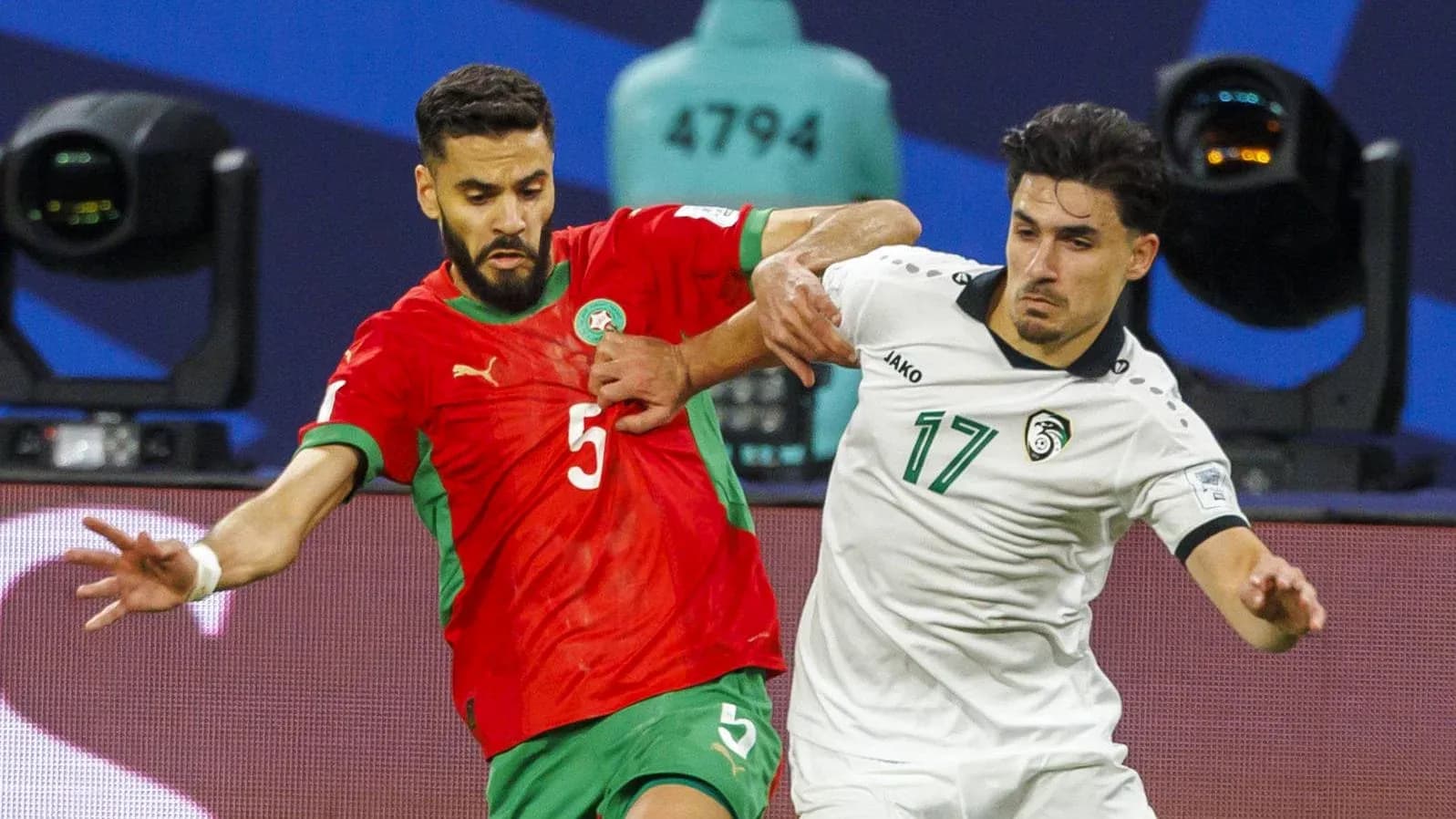
Mahmoud Bentaieb, the Zamalek defender who broke into the Morocco national team last year, is at the heart of a storm that stretches far beyond the white lines of Cairo and Casablanca.
He is seriously weighing up a switch of sporting nationality to represent Egypt. The question is simple. The answer, legally, is anything but.
From denial to confirmation
For days, Egyptian outlets pushed the story: Bentaieb wants to play for Egypt, not Morocco. On the other side of the border, Moroccan reports pushed back and dismissed the idea.
Then his agent spoke.
Youssef Massaad, in comments to Moroccan newspaper Al-Omk, confirmed that the defender is indeed considering the move. The trigger, he said, was the surprise decision by Morocco coach Mohamed Ouahbi to leave the Zamalek player out of the latest national team squad.
Bentaieb had always prioritised Morocco, his home country. But when his name disappeared from Ouahbi’s list, another door creaked open. According to Massaad, Egyptian officials floated the idea: represent the Pharaohs instead.
The player is now studying that option.
FIFA, paperwork and a tight legal corner
This is not just a matter of preference or form. It is a matter of law.
Lebanese legal expert Ralph Charbel laid out the framework in comments to Kooora. FIFA’s rules are clear: for a player to represent a national team other than the country of his own nationality, and having never played for that nation’s youth sides, he must first obtain that new nationality and then satisfy at least one strict condition.
- he was born in the country,
- or his father or mother was born there,
- or a grandparent was born there,
- or he has lived in that country for a set period: at least three years if he moved there before the age of ten, at least five years if he arrived after turning ten.
On paper, Bentaieb is a long way from ticking those boxes.
He was born in Casablanca to Moroccan parents. No Egyptian father, no Egyptian mother, no Egyptian grandparent. His only link to Egypt beyond football is his marriage: he is married to an Egyptian woman, the daughter of Zamalek board member Ahmed Suleiman. Marriage alone, though, does not satisfy FIFA’s sporting eligibility criteria.
His residency is also an issue. The 26-year-old only moved to Egypt in the summer of 2024, when he joined Zamalek from Saint-Étienne in France. That gives him roughly two years in the country. Under FIFA rules, he would need at least five years of continuous residence in Egypt, given he moved well after the age of ten.
Despite that, reports indicate Bentaieb has already taken a formal step. He has contacted FIFA to ask about the possibility of changing his sporting nationality and is waiting for an answer.
The Arab Cup twist
Even if he could one day meet the residency requirement and secure Egyptian nationality, another obstacle stands in his way: his appearances for Morocco’s senior team.
Charbel underlined the second layer of the rulebook. For a player to switch, he must not have played more than three matches for his current senior national team, and at least three years must have passed since his last appearance.
Bentaieb fails on both counts.
He never represented Morocco at youth level, which would normally simplify things. But he did break into the senior side at the 2025 Arab Cup in Qatar. He played four matches in that tournament, all as a substitute, against Saudi Arabia, Syria, the UAE and Jordan. Morocco won every time he stepped onto the pitch.
He also sat on the bench for the opening two games against Comoros and Oman, both of which ended in draws, before becoming part of a winning run that carried Morocco to the title under coach Tarik Sektioui, now in charge of Oman.
Those minutes matter. A lot.
Charbel stressed that since 2021, FIFA has officially recognised the Arab Cup as a competition under its umbrella. That means Bentaieb’s caps there are fully official senior internationals, even if Morocco used a second-string squad without their Europe-based stars.
Four caps, not three. An official FIFA tournament. The path narrows sharply.
A door almost shut – but not locked
Taking the facts together, Charbel believes the defender faces a very difficult task if he wants to wear the Egypt shirt any time soon. The residency clock is far from the five-year mark, and the Arab Cup appearances exceed the permitted threshold for a switch.
Yet the lawyer stopped short of declaring the case dead.
He admitted he cannot be certain FIFA will reject Bentaieb’s request, because he does not know the exact legal arguments or documents the player might present. Football law, like football itself, has room for nuance, for appeals, for special readings of the rulebook.
For now, though, Mahmoud Bentaieb stands in limbo: a Morocco international, a Zamalek defender, a man married into Egyptian football power, and a player whose international future may ultimately be decided not on a pitch, but in a FIFA office.