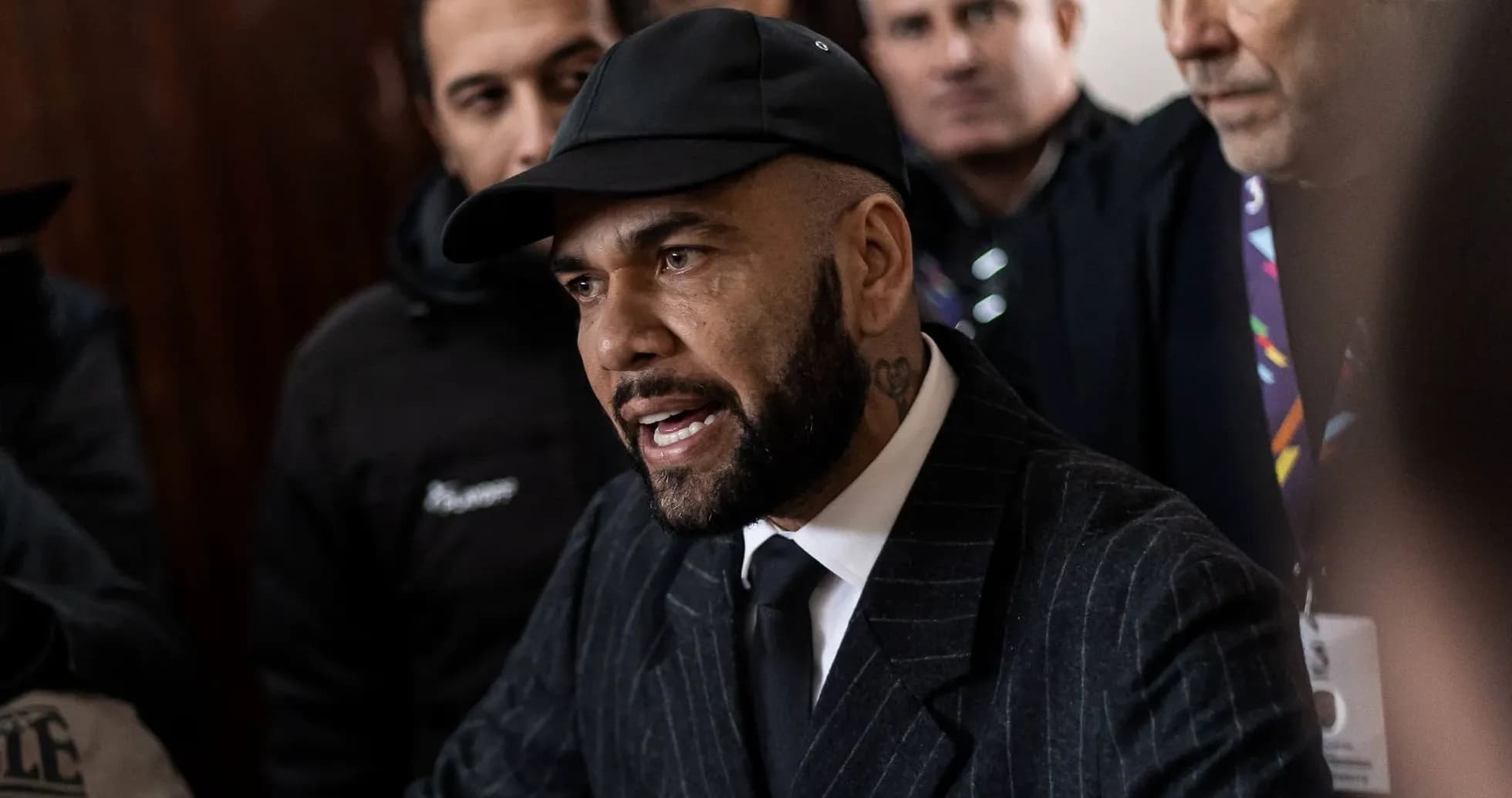
Swiss Supreme Court Orders Dani Alves to Pay £1.7m to Pumas
Dani Alves has lost his final legal battle with Pumas UNAM. Switzerland’s Federal Supreme Court has rejected the former Brazil defender’s appeal and upheld a ruling from the Court of Arbitration for Sport (CAS), leaving him on the hook for a hefty compensation bill.
The decision, taken on June 11 and reported by ESPN Brazil, is now legally binding. Alves must pay the Mexican club £1.7 million ($2.3m) after a long-running dispute sparked by the termination of his contract in January 2023.
Pumas Win Long Legal Fight
Pumas went in hard from the start. The club initially demanded $5m in compensation, plus an extra $1m related to image rights they said had already been paid to the player. Their case hinged on a breach-of-contract clause triggered when Alves was arrested in Barcelona on sexual assault charges.
FIFA’s Football Tribunal first sided with the player, throwing out Pumas’ claim. The Mexican side refused to let it go. They took the matter to CAS, overturned the initial outcome, and have now seen that verdict reinforced at the highest level of the Swiss legal system.
The pressure finally told in Switzerland. With the Supreme Court’s dismissal of his appeal, Alves has no further room to manoeuvre in this case.
Extra Costs Add to Financial Blow
The financial damage does not stop at the main compensation figure. On top of the £1.7m payment, the 43-year-old must also meet 17,000 Swiss francs in legal costs and a further 19,000 Swiss francs in procedural expenses.
It closes a turbulent chapter for Alves, who served 14 months in prison before a Spanish court overturned his conviction and released him in March 2025. For Pumas, the ruling is more than a balance sheet win; it stands as a clear statement on the enforcement of disciplinary clauses in player contracts.
New Role in Europe, Old Bill to Pay
Alves has already stepped away from the pitch. The former Sevilla and Barcelona right-back has turned his attention to the boardroom, moving into football administration and club ownership in Europe.
He recently completed a takeover of Portuguese third-tier side Sporting Clube de Sao Joao de Ver, a modest but symbolic start to his new life in the game. The timing, though, is stark. As he tries to build a future as an owner and executive, he must first honour a past obligation and settle his debt to Pumas under the Swiss court’s ruling.
The next phase of his career begins with a reminder that, in football as in law, the contracts always come back around.