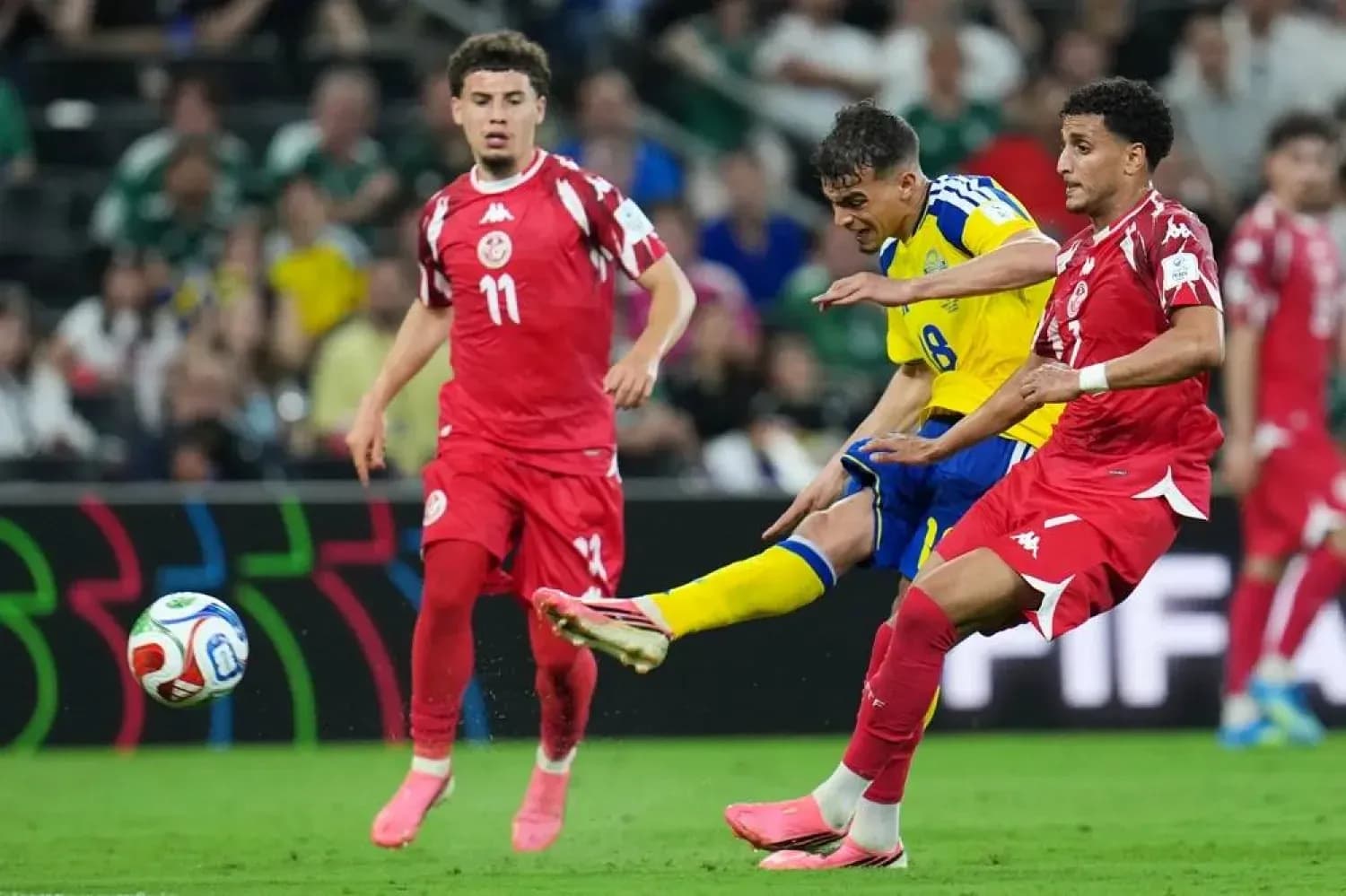
Sweden Dominates Tunisia 5-1 in World Cup Opener
Under the lights of Estadio BBVA in Monterrey, Sweden’s World Cup campaign opened with the kind of statement performance that can reshape a group. In a Group F clash that was supposed to test Graham Potter’s new-look side, Sweden dismantled Tunisia 5-1, turning an even-on-paper contest into a tactical showcase. Following this result, Sweden sit top of the group in 1st place with 3 points and a goal difference of +4 (5 goals for, 1 against), while Tunisia drop to 4th with 0 points and a goal difference of -4 (1 goal for, 5 against).
This was not just a win; it was a manifesto. Sweden’s season numbers now underline that dominance: in total this campaign they have played 1 match, winning 1, scoring 5.0 goals on average and conceding 1.0 at home. Tunisia, by contrast, have played 1 match on their travels, losing it, with an away average of 1.0 goal scored and 5.0 conceded. One game is a tiny sample, but the contrast in clarity of ideas was stark.
I. The Big Picture: Structure and Intent
Potter’s 3-1-4-2 was bold for a World Cup opener. K. Nordfeldt stood behind a back three of G. Lagerbielke, I. Hien and V. Lindelof, with J. Karlstrom acting as the single pivot in front of them. Ahead of Karlstrom, a fluid quartet of G. Gudmundsson, Y. Ayari, B. Nygren and A. Bernhardsson stretched Tunisia horizontally, feeding the strike partnership of V. Gyökeres and A. Isak.
The shape did two things simultaneously: it guaranteed numerical superiority in Sweden’s first phase of build-up (3+1 against Tunisia’s front two) and created constant overloads between the lines. Ayari, operating as an interior playmaker, became the reference point for progression, while Gyökeres and Isak alternated between running channels and dropping short.
Tunisia, under Sabri Lamouchi, lined up in a 5-3-2: A. Chamakh in goal, a back five of Y. Valery, O. Rekik, M. Talbi, M. Ben Hamida and A. Abdi, with a midfield trio of R. Khedira, E. Skhiri and H. Mejbri behind E. Saad and A. Slimane. On paper, the 5-3-2 should have given Tunisia defensive stability and counter-attacking lanes. In practice, it became a reactive low block that struggled to adjust to Sweden’s rotations.
II. Tactical Voids: Where the Game Was Lost
The absence sheet offers no excuses for either side, so the voids were structural, not personnel-driven.
For Tunisia, the first major gap appeared between their midfield and defensive lines. Khedira and Skhiri were dragged sideways by Sweden’s wide midfielders, leaving Mejbri isolated as the central presser. Whenever Sweden broke Tunisia’s first line, Ayari found himself receiving in acres of space. His performance – 2 goals from 2 shots on target, 27 passes with 2 key passes and 3 tackles – epitomised how Sweden exploited that central pocket.
Sweden’s back three, meanwhile, were rarely exposed. Lindelof, Hien and Lagerbielke enjoyed the security of Karlstrom screening in front of them, and Tunisia’s front two of Saad and Slimane were often outnumbered 3v2. Without aggressive wing-back support, Tunisia’s pressing never really bit.
Disciplinary data adds another layer: Tunisia’s only recorded yellow card this campaign came in the 46-60 minute window, a period where their frustration peaked and their structure frayed. Sweden, by contrast, have yet to receive a card in any time band, underlining a controlled, composed performance even at high intensity.
III. Key Matchups: Hunter vs Shield, Engine Room vs Enforcer
Hunter vs Shield was decisively tilted in Sweden’s favour. Heading into this game, there was no established World Cup scoring record for either side, but following this result Sweden’s forwards have exploded onto the scene.
Isak, with 1 goal and 2 assists from 2 shots on target and 17 completed passes at 82% accuracy, operated as both finisher and facilitator. Gyökeres matched him for menace, with 1 goal, 1 assist, 4 shots (2 on target) and 4 key passes from 19 total passes at 84% accuracy. Against a Tunisian defence that has now conceded 5 goals on their travels, the Swedish front two looked like a mismatch in both movement and physicality.
On Tunisia’s side, the “shield” of Talbi, Rekik and Ben Hamida never established the compactness a back three within a five-man line requires. Sweden repeatedly found ways to pin the wing-backs, isolating the central trio and forcing them into emergency defending rather than proactive control of depth.
In the engine room, the duel between Ayari and Tunisia’s midfield trio was decisive. Ayari’s 8.6 rating is backed by substance: 2 goals, 2 key passes, 3 tackles and an interception. Khedira and Skhiri, usually reliable screeners, were constantly forced into lateral shuttling, leaving Mejbri to firefight centrally. Without the ball, Tunisia’s midfield became a chasing unit; with it, they lacked the structure to progress through Sweden’s compact central block.
Potter’s bench management added yet another layer. M. Svanberg stepped in from the bench to score once in just 13 minutes, while L. Bergvall contributed an assist in 25 minutes, completing 6 passes at 83% accuracy and adding 1 tackle and 1 interception. Sweden’s ability to maintain tempo and threat with substitutes hints at depth that will matter deeper into the tournament.
IV. Statistical Prognosis: What This Tells Us Going Forward
Following this result, Sweden’s overall attacking profile is frighteningly efficient: 5 goals from their only match, with no penalties taken and none missed, and no games where they have failed to score. Defensively, they have conceded 1 goal in total, with no clean sheets yet, but the structure of the 3-1-4-2 suggests that as automatisms sharpen, the balance can tilt further in their favour.
Tunisia’s early numbers are more alarming. On their travels they are averaging 1.0 goal scored and 5.0 conceded, with no clean sheets and no matches where they have failed to score – a sign that their attack can at least threaten, but that their defensive block is far too porous at this level.
Projecting forward, any Expected Goals model would likely reward Sweden’s volume and quality of chances generated by their front three of Isak, Gyökeres and Ayari, supported by a deep bench that already includes productive contributors like Svanberg and Bergvall. Tunisia, meanwhile, will need to recalibrate their 5-3-2 into something more aggressive and compact, or risk their defensive metrics dragging them out of contention early.
The story of Monterrey, then, is of a Sweden side whose tactical identity arrived fully formed on the biggest stage – and a Tunisia team that must quickly bridge the gap between a conservative game plan and the brutal realities of elite tournament football.