Cabo Verde Shocks Spain in World Cup Draw — Crypto Bettors React
Spain dropped points. Cabo Verde made history. But on Monday night, some of the most dramatic action around this World Cup stalemate played out far from the pitch — on a crypto prediction market where one anonymous trader walked away with roughly $9 million, and another burned almost $1 million chasing what looked like a sure thing.
A Goalless Draw, a Giant Upset
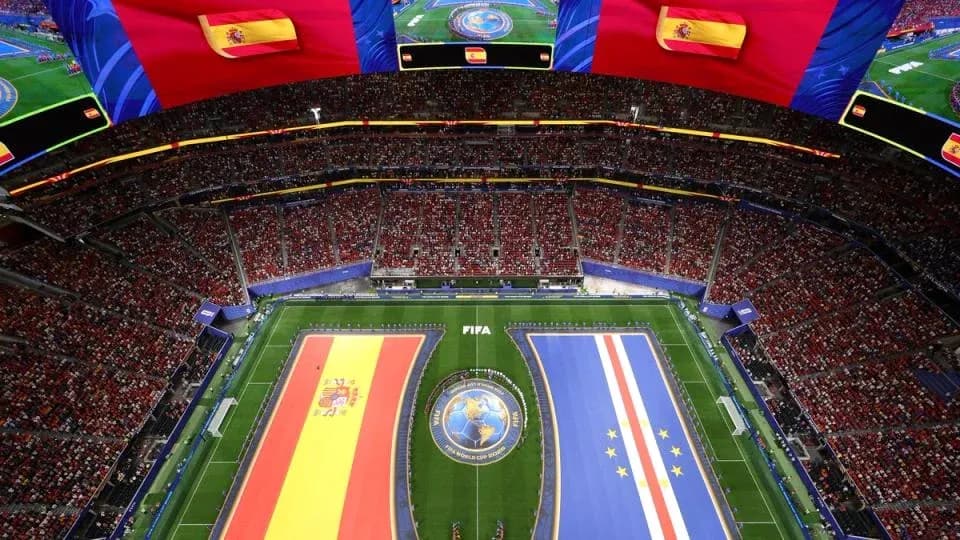
On paper, this was a mismatch. Cabo Verde, making their FIFA World Cup debut, arrived with no big-name professionals and a 40-year-old goalkeeper, Vozinha, anchoring the side. Spain, reigning European champions and one of the pre-tournament favourites, were priced at around 1:10 to win. The script felt pre-written.
It didn’t survive contact with reality.
Cabo Verde dug in, defended with discipline, and refused to be overawed. Spain probed, rotated, recycled possession, but couldn’t find a way through. As the minutes ticked by, tension rose — not just in the stadium, but in trading rooms and on phones around the world.
When the final whistle blew on a 0-0 draw, Vozinha was named player of the match. Cabo Verde claimed a point that will live long in their footballing story. And in the shadows of that result, the numbers on Polymarket exploded.
‘fishalive’ Hits the Jackpot
On the crypto-based prediction platform Polymarket, where users trade on real-world outcomes using USDC on a public blockchain, the Spain–Cabo Verde match turned into one of the tournament’s wildest rides.
A newly created wallet, operating under the pseudonym ‘fishalive’, went hard against the favourites. According to on-chain analytics firm Lookonchain, the account placed two key positions:
- Spain would not win the match outright.
- Cabo Verde would stay within 2.5 goals in a spread bet.
It was a bold stance against a team the market priced as overwhelmingly likely to win. The wallet staked roughly $4 million across those outcomes.
The match stayed tight. No early Spanish goal to calm nerves. No late surge to break resistance. Every missed chance and every save from Vozinha pushed the odds further towards the underdog.
When the game ended goalless, both of ‘fishalive’s’ bets landed. Polymarket’s public trading record shows the wallet redeemed about $4.7 million on the Spain market and another $8.5 million on the spread. In a matter of hours, the new account had turned its positions into a profit of around $9 million.
For Cabo Verde, it was a famous point. For ‘fishalive’, it was a windfall.
A Costly Lesson for ‘betoor619’
On the other side of the same market, the story turned brutal.
Another trader, using the handle ‘betoor619’, piled in on Spain to win when the market had the favourites priced at roughly 92% implied probability. It was the kind of bet that looks safe until it isn’t: almost $1.1 million staked for a potential gain of only about $85,000.
Thin reward. Enormous risk.
The bet relied on Spain doing what Spain usually do in these group-stage mismatches: control, dominate, and eventually break through. They never did.
When the referee blew for full time at 0-0, ‘betoor619’s’ position was wiped out. Nearly $1 million gone on a single match that was supposed to be routine.
Polymarket records reviewed by CoinDesk show that this was a dramatic escalation for the account. Before this, it had never won or lost more than about $9,000 on one event. The Spain bet was a step up into high-stakes territory — and the timing could not have been worse.
Polymarket’s Biggest World Cup Night
The shock result didn’t just reshape individual balances. It underlined how big this World Cup has become for Polymarket itself.
Roughly $64 million traded on the Spain–Cabo Verde match alone, a staggering figure for a single group-stage fixture. Across the tournament, Polymarket’s market on the eventual World Cup winner has drawn about $2.4 billion in volume, making this competition its largest event since last year’s U.S. election and pushing it past the roughly $1.4 billion wagered on this year’s Super Bowl.
On the platform, users trade shares that reflect real-world outcomes, with prices acting as implied odds. Settlement happens in USDC on a public blockchain, and traders operate through crypto wallets and pseudonyms rather than verified identities. That anonymity and lack of traditional background checks has drawn criticism from lawmakers, who argue it sidesteps standards imposed on regulated sportsbooks.
Yet the flow of money keeps rising, and nights like this explain why. One match, one upset, and the market turns into a high-speed redistribution of millions.
A New Kind of World Cup Drama
For Cabo Verde, the draw with Spain is a football story first: a debutant nation standing firm against royalty, an ageing goalkeeper turning back time, and a scoreline that no bookmaker or algorithm truly expected.
For Polymarket, it was something else entirely — a showcase of the razor-thin line between fortune and disaster when near-certainties fail to deliver.
Spain walk away with questions. Cabo Verde walk away with belief. And somewhere behind two wallet addresses, one trader is counting a $9 million win, while another is left to decide whether this was a one-off misstep or the moment their betting game changed for good.