Sunderland's Tactical Mastery Over Everton in 1-3 Defeat
Everton’s 1-3 home defeat to Sunderland at Hill Dickinson Stadium unfolded as a study in how structural control can be overturned by game-state management and sharper use of transitions. Both sides lined up in a 4-2-3-1, but the way those shapes behaved across the 90 minutes was markedly different either side of half-time.
First Half
In the first half, Leighton Baines’ Everton imposed the cleaner positional framework. With 49% possession overall, their share before the break was likely higher, built on a double pivot of Tim Iroegbunam and James Garner offering secure circulation in front of the back four. Everton’s 406 passes, 346 accurate (85%), reflected a side comfortable building from Jordan Pickford through James Tarkowski and Michael Keane, then out to Vitaliy Mykolenko and Jake O’Brien to progress.
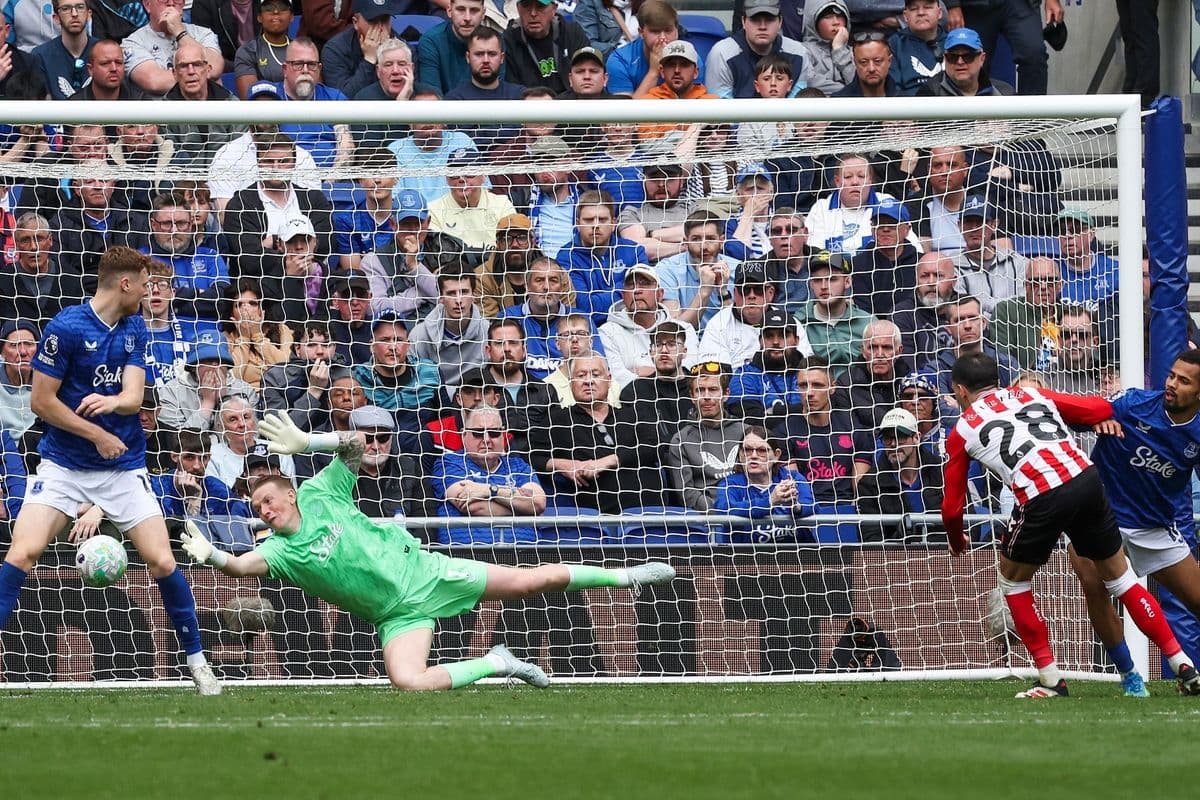
The key attacking mechanism was the use of the three behind Beto to overload Sunderland’s midfield line. M. Rohl operated as the advanced midfielder, with K. Dewsbury-Hall and I. Ndiaye rotating between half-spaces. The 43rd-minute opener – M. Rohl (Everton) assisted by M. Keane – encapsulated this: Keane stepping into midfield to break a line and find Rohl between Sunderland’s double pivot and centre-backs. That pattern, centre-back aggression into midfield combined with a high 10, was Everton’s most consistent route to chance creation, reflected in their higher xG of 1.07 from 10 total shots (6 inside the box).
Defensively, Everton’s line was relatively high, with the full-backs encouraged to step into midfield when the ball was on their side. That helped compress space against Sunderland’s 4-2-3-1, but it also increased the demand on Iroegbunam’s covering work. His 25th-minute yellow card (Tim Iroegbunam — Foul) underlined how often he was asked to extinguish transitions in large spaces. Once booked, his capacity to aggressively step in was reduced, subtly weakening Everton’s ability to counter-press Sunderland’s first passes out.
Regis Le Bris’ Sunderland, despite finishing with 51% possession and 430 passes, 365 accurate (85%), were more conservative in the first phase. G. Xhaka and N. Sadiki formed a disciplined double pivot, rarely both venturing ahead of the ball at the same time. The back four, with N. Mukiele and O. Alderete central and R. Mandava and L. Geertruida wide, held a slightly deeper line than Everton’s, prioritising compactness over proactive pressing. Sunderland allowed Everton to have the ball in front of them, confident that their structure could funnel play into less dangerous areas and that R. Roefs, who made 3 saves and posted 0.02 goals prevented, would handle the few clear sights of goal that emerged.
Second Half
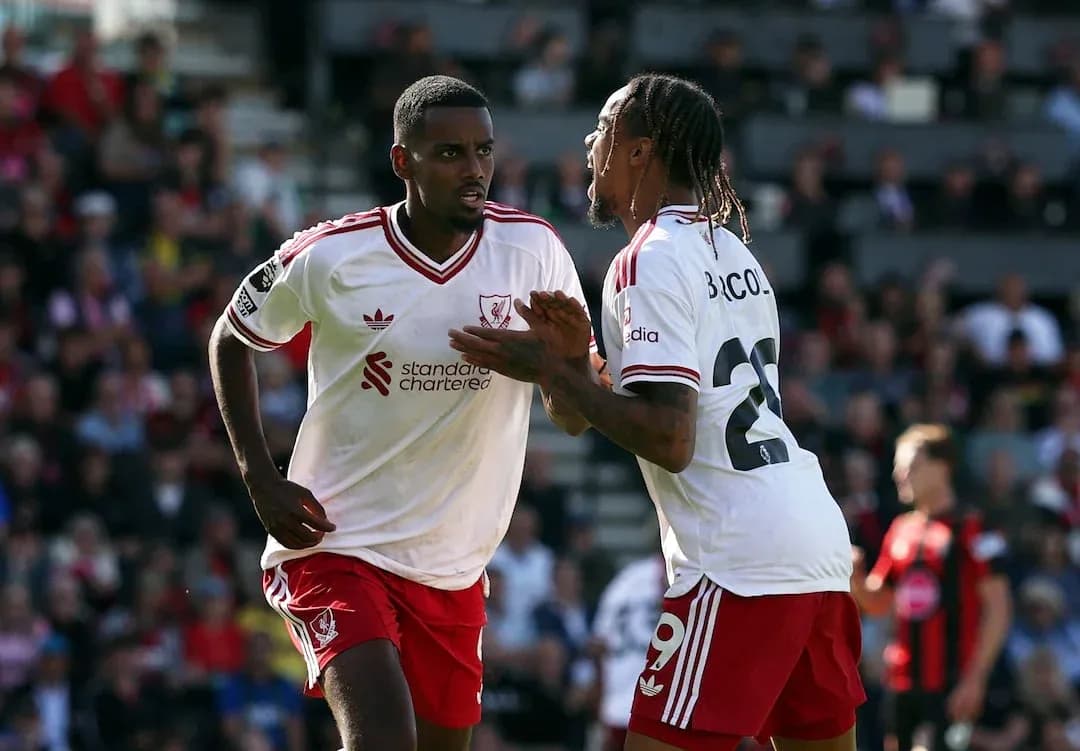
The second half pivoted on Sunderland’s more assertive use of their attacking midfielders and the timing of their substitutions. The equaliser at 59' – B. Brobbey (Sunderland) assisted by E. Le Fee – came from precisely the kind of vertical punch Le Bris had been looking for. Xhaka and Sadiki drew Everton’s midfield line forward, creating a seam for Le Fee to receive between the lines and feed Brobbey running across the front of Tarkowski and Keane. With Everton’s full-backs advanced, the centre-backs were exposed to direct, central runs; Sunderland’s first shot on target of the half was ruthlessly converted.
Immediately after, Sunderland reshaped their attacking line. At 60', T. Hume (IN) came on for O. Alderete (OUT), with Hume adding more mobility and progressive passing from deeper zones. The triple substitution at 77' further tilted the game: C. Rigg (IN) came on for N. Angulo (OUT), H. Diarra (IN) came on for N. Sadiki (OUT), and W. Isidor (IN) came on for B. Brobbey (OUT). Rigg’s introduction was particularly significant; within four minutes he assisted Sunderland’s second. At 81', E. Le Fee (Sunderland) — assisted by C. Rigg — finished a move that again exploited the space in front of Everton’s back line. As Everton’s structure stretched in search of a winner, Rigg found pockets between Garner and the centre-backs, allowing Le Fee to arrive from midfield with late, untracked runs.
Baines’ response at 73' was double-edged. T. George (IN) came on for T. Iroegbunam (OUT), and T. Barry (IN) came on for Beto (OUT). Removing the booked Iroegbunam was understandable, but it also removed Everton’s most natural defensive screen in front of the centre-backs. George brought more attacking thrust, Barry more movement than Beto, but the double change effectively shifted Everton further towards a 4-1-4-1 in possession, with Garner left to cover huge spaces alone. When Sunderland broke, they consistently found room either side of him.
Late changes – S. Coleman (IN) for J. O’Brien (OUT) and D. McNeil (IN) for M. Rohl (OUT) at 88' – only underlined Everton’s reactive posture once behind. By then, Sunderland had full control of game state, protecting their lead and waiting for further transition moments. The third goal, at 90', W. Isidor (Sunderland) — assisted by H. Diarra, came from exactly that dynamic: Everton committing numbers forward, Diarra springing a break, and Isidor attacking the space behind a disorganised back line.
Discipline also mirrored the tactical story. Everton collected three yellow cards, all for “Foul” and all tied to being stretched without the ball: Tim Iroegbunam at 25', Jake O’Brien at 47', and James Garner at 90+6'. Sunderland, by contrast, finished without a booking, reflecting both their more compact defensive shape and their success in controlling the tempo once ahead.
Statistically, the match underlines Sunderland’s efficiency. Everton led in Total Shots (10 to 7), Shots on Goal (4 to 3), and xG (1.07 to 0.73), yet Sunderland scored three times from their three efforts on target. R. Roefs’ 3 saves contrasted sharply with Jordan Pickford’s zero, not because Pickford played poorly, but because Sunderland’s finishing left him no realistic chance. Both teams posted identical pass accuracy (85%), but Sunderland’s slightly higher volume and their ability to convert possession into high-impact attacking actions in the second half proved decisive.
From a broader tactical lens, Everton’s 4-2-3-1 produced promising first-half patterns but lacked in-game defensive recalibration once chasing the match. Sunderland’s identical base shape, under Le Bris, was more adaptable: deeper early on, then increasingly vertical and substitution-driven after the break. The final 1-3 scoreline at Hill Dickinson Stadium was less about sustained dominance and more about Sunderland’s superior management of space, risk, and momentum once the game opened up.