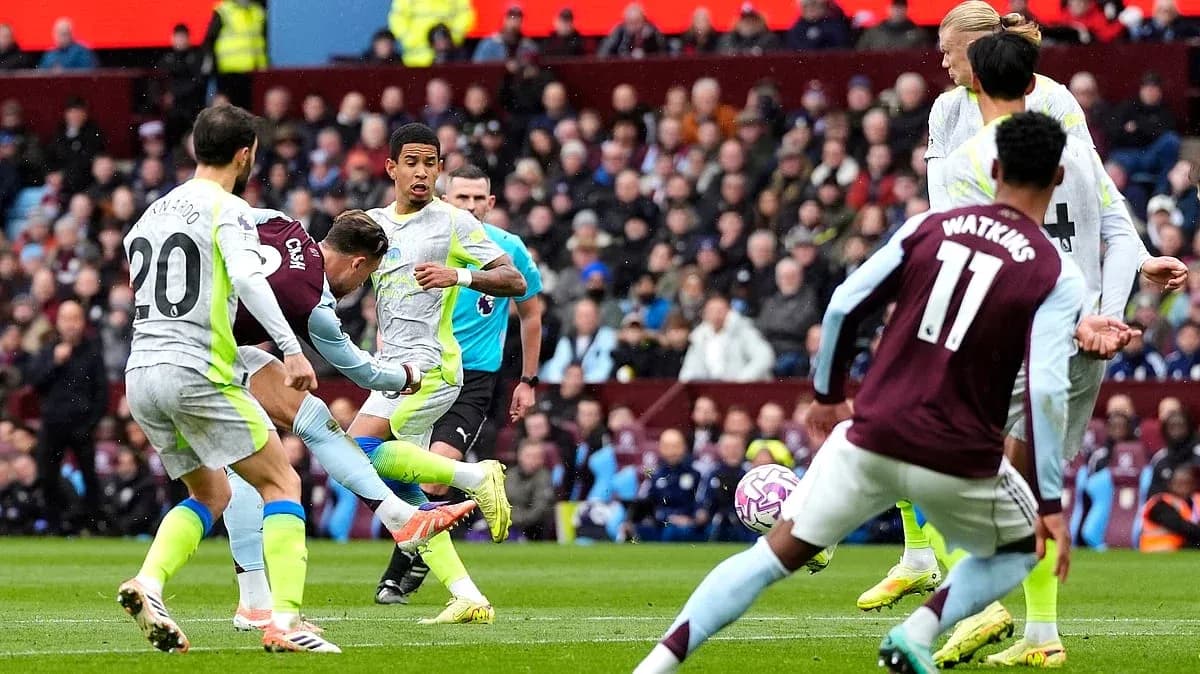
Manchester City vs Aston Villa: Premier League 2025 Final Match Analysis
Under a grey Manchester sky at the Etihad Stadium, the final act of the 2025 Premier League season ended with a twist. Manchester City, chasing perfection at home, fell 2-1 to Aston Villa despite leading 1-0 at half-time. Following this result, the table underlines how fine the margins were: City close out the campaign in 2nd with 78 points and a goal difference of 42 (77 scored, 35 conceded in total), while Villa’s 2-1 triumph cements a 4th-place finish on 65 points with a total goal difference of 7 (56 for, 49 against).
Across the season, City’s identity was clear. At home they were a machine: 14 wins from 19, scoring 45 and conceding only 14, an average of 2.4 goals for and 0.7 against at the Etihad. Villa, by contrast, arrived as one of the league’s more volatile travellers: 7 away wins, 6 draws and 6 defeats, scoring 24 and conceding 27 on their travels, with averages of 1.3 goals for and 1.4 against. On paper, this was a heavyweight home juggernaut against a dangerous but imperfect counter-puncher. On the grass, Villa’s structure and resilience flipped the script.
Tactical Voids and Selection Gambles
The team sheets told their own story. Pep Guardiola departed from his more familiar single-striker or false-nine systems to roll out a 4-2-2-2. J. Trafford started in goal behind a back four of R. Lewis, J. Stones, R. Dias and N. Ake. Ahead of them, Nico and B. Silva formed a double pivot, with A. Semenyo and Savinho operating as narrow attacking midfielders, funnelling play into a front pair of P. Foden and T. Reijnders.
The shape was bold but subtly risky. City’s season-long numbers show they are comfortable in a variety of structures, yet their most-used setups were 4-1-4-1 (13 times) and 4-3-2-1 (8 times). The 4-2-2-2 had been used only twice across the campaign, so this was a late-season roll of the dice. It offered more direct presence up front but slightly loosened the protective screen in front of the back four.
Unai Emery, by contrast, leaned into Aston Villa’s core identity. The 4-2-3-1 that had underpinned 34 league matches returned again: M. Bizot replaced the absent E. Martinez in goal, with a defensive line of A. Garcia, V. Lindelof, T. Mings and I. Maatsen. L. Bogarde and Douglas Luiz held the double pivot, while L. Bailey, R. Barkley and E. Buendia supported lone striker O. Watkins.
Villa’s absentees were significant. E. Martinez (finger injury), B. Kamara (knee injury) and Alysson (muscle injury) were all listed as missing fixtures. Losing Martinez removed an elite shot-stopper and vocal organiser; Kamara’s absence stripped away a natural screening midfielder. Emery compensated by trusting Bogarde and Douglas Luiz to absorb pressure centrally and by keeping the back four compact.
Disciplinary trends framed the risk profiles. Over the season, City’s yellow-card distribution showed a late-game edge: 20.90% of their bookings arrived in the 76-90 minute window, with another 16.42% between 91-105. Villa, meanwhile, were most combustible just after half-time, with 29.31% of their yellows between 46-60 minutes and their only red card of the league campaign coming in the 61-75 range. This match never boiled over into red, but the data hints at how both sides walk the line when intensity spikes.
Key Matchups – Hunter vs Shield, Engine Room vs Enforcer
The narrative of the season placed two forwards in the spotlight, even if one was absent from the starting XI. E. Haaland, City’s spearhead across the campaign, finished with 27 league goals and 8 assists, supported by 102 total shots and 59 on target. His penalty record was excellent but not flawless: 3 scored, 1 missed, so any future spot-kick is not a guaranteed conversion. In this fixture, the responsibility instead fell to a fluid front of Foden and Reijnders. Foden’s season as a creative force – 7 goals, 5 assists, 56 key passes – suggested he would drift between the lines rather than operate as a pure penalty-box striker.
For Villa, O. Watkins embodied the “Hunter” role. Across the season he delivered 16 goals and 3 assists, with 60 shots and 38 on target. His duel volume – 283 contested, 116 won – underlines how often he battles centre-backs, not just runs in behind them. Up against Stones and Dias, this was a classic clash: Watkins’ relentless movement and willingness to run channels versus a City pairing accustomed to defending high with minimal cover.
Behind the forwards, the “Engine Room” battle was nuanced. For City, B. Silva is the tempo-setter and tactical chameleon. Over the season he produced 2 goals, 4 assists, 47 key passes and 53 successful tackles, while committing 37 fouls and collecting 10 yellow cards. He is both creator and disruptor, and in a double pivot he has to moderate his aggression to avoid exposing transitions.
Villa’s answer lay in Douglas Luiz and the absent Kamara. With Kamara out, Douglas Luiz and Bogarde had to collectively fill the enforcer role. The creative thread for Villa, however, has increasingly run through M. Rogers over the season: 10 goals, 6 assists, 47 key passes and 441 duels (158 won). Even though he did not start here, his season profile explains how Villa have learned to build attacks through a dynamic midfielder, a pattern echoed in Buendia’s central role between the lines.
Statistical Prognosis and Tactical Lessons
Following this result, the numbers sketch a compelling tactical lesson. City close a campaign with 77 goals in total at an average of 2.0 per game and only 35 conceded at 0.9 per match, yet a home defeat to a side that shipped 49 in total shows how structure can trump raw firepower on the day. Villa’s 56 goals at 1.5 per game and 49 conceded at 1.3 suggest a more open, end-to-end profile, but at the Etihad they leaned into compactness, counter-attacks and the intelligence of Watkins’ movement.
From an Expected Goals perspective – even without raw xG values – the underlying patterns are clear. City’s volume and variety of chance creation, powered by Foden, Savinho and the passing lanes of B. Silva and Nico, typically generate high xG at home. Villa, with a lower average of 1.3 goals on their travels, tend to rely on fewer, higher-quality breaks. In this match, Villa’s 2-1 comeback suggests they maximised a smaller shot count with better shot locations and transition moments, while City’s structure in 4-2-2-2 perhaps produced more possession than penetration.
Defensively, City’s season-long record – 16 clean sheets overall, 9 at home – shows an elite unit, but the tweak away from their most-used formations reduced their margin for error. Villa, with only 9 clean sheets in total and just 3 away, found an exceptional level on the day, aided by Bizot’s presence and a disciplined back four.
In narrative terms, this was a meeting of a refined system and a resilient challenger, with Villa’s 4-2-3-1 – their default across 34 league outings – ultimately outmanoeuvring City’s experimental 4-2-2-2. The season’s numbers say City remain the more complete side. The match itself is a reminder that in 90 minutes, structure, absences and execution can tilt even the most data-backed prediction on its head.