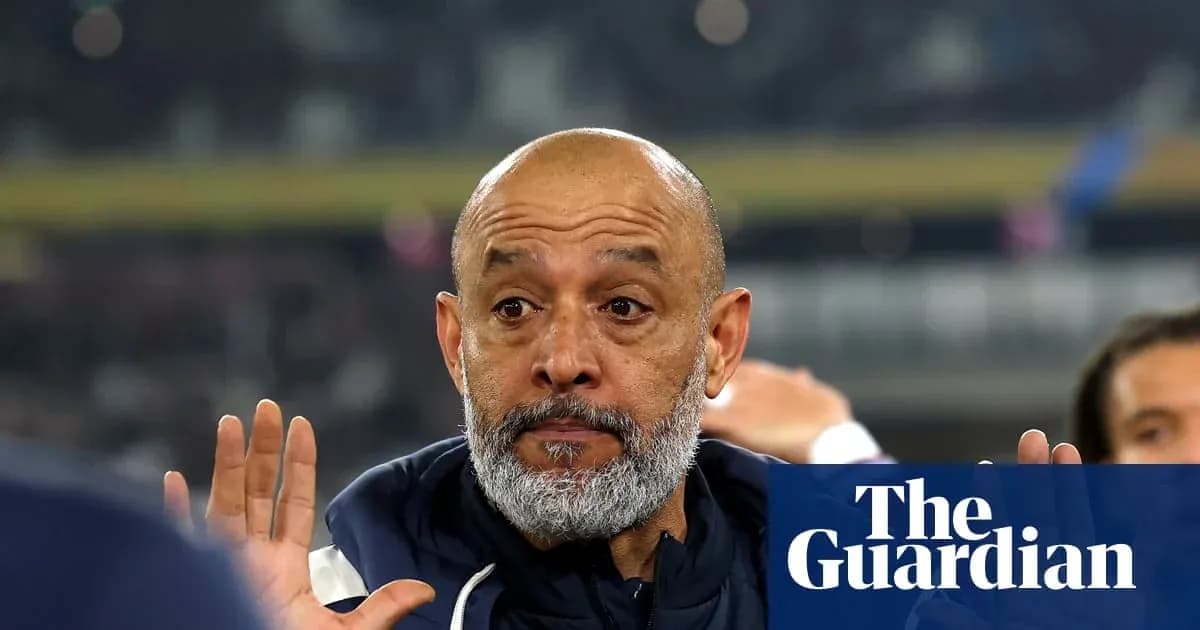
West Ham Boardroom Split Over Nuno's Future Amid Relegation
Relegation has dragged West Ham out of the Premier League and straight into a battle over who actually runs the club – and who should lead them back.
Nuno Espírito Santo was summoned for crisis talks on Monday, his future on the line after failing to keep West Ham up. A decision is expected before the end of the week. On the surface, it looks simple: the club go down, the manager goes with them. Inside the boardroom, it is anything but.
Boardroom Divide
The board is split.
Daniel Kretinsky, the Czech billionaire and second-largest shareholder, wants Nuno to stay. He sees value in continuity, even in the Championship. David Sullivan, the long-time powerbroker and largest shareholder, is far less convinced.
That divide matters because the ownership structure is about to change. Kretinsky has a deal in place to increase his stake and move level with Sullivan’s control of the club. Both men are poised to buy into the Gold family’s 25.1% holding, a move that would leave them sharing power and reshaping the dynamic at the top of West Ham.
Relegation Complications
Relegation complicates everything. It is expected to hit the value of that deal and has already intensified scrutiny on Sullivan, who has been the dominant figure at the club for 16 years. Supporters turned on him during last Sunday’s win over Leeds, blaming him for the slow, unmanaged slide towards the Championship.
One source has put the chances of Sullivan selling up after relegation at 50-50. Yet his hands-on role in the talks with Nuno tells a different story. The 77-year-old is still in the room, still involved, and still central to discussions over how to rebuild the squad for an immediate promotion push.
Nuno’s Position
Nuno’s own position is unusually precarious and powerful at the same time. He arrived last September on a three-year contract after replacing Graham Potter, but the deal was written with an escape hatch on both sides. West Ham can dismiss the 52-year-old without paying compensation. Nuno, for his part, can also walk away for nothing.
That mutual clause now hangs over every conversation. His willingness to stay and manage in the Championship will weigh heavily in the final call. If he decides he has no appetite for the second tier, West Ham’s dilemma resolves itself. If he wants to fight on, the board must decide whether they trust him to lead a promotion campaign.
Potential Candidates
Names are already circling in the background. Scott Parker, who has experience of getting out of the Championship, is on the list. So is Slaven Bilic, a familiar face in east London, and Gary O’Neil, whose stock has risen after steady work elsewhere. None of them will move until West Ham decide whether they are ending the Nuno project after just one season.
For now, the club stand at an awkward crossroads: a manager with a get-out clause, an ownership split down the middle, and a fanbase demanding a clear plan. The next decision from that fractured boardroom will shape not just who sits in the dugout, but who truly holds the reins at West Ham as they try to claw their way back.