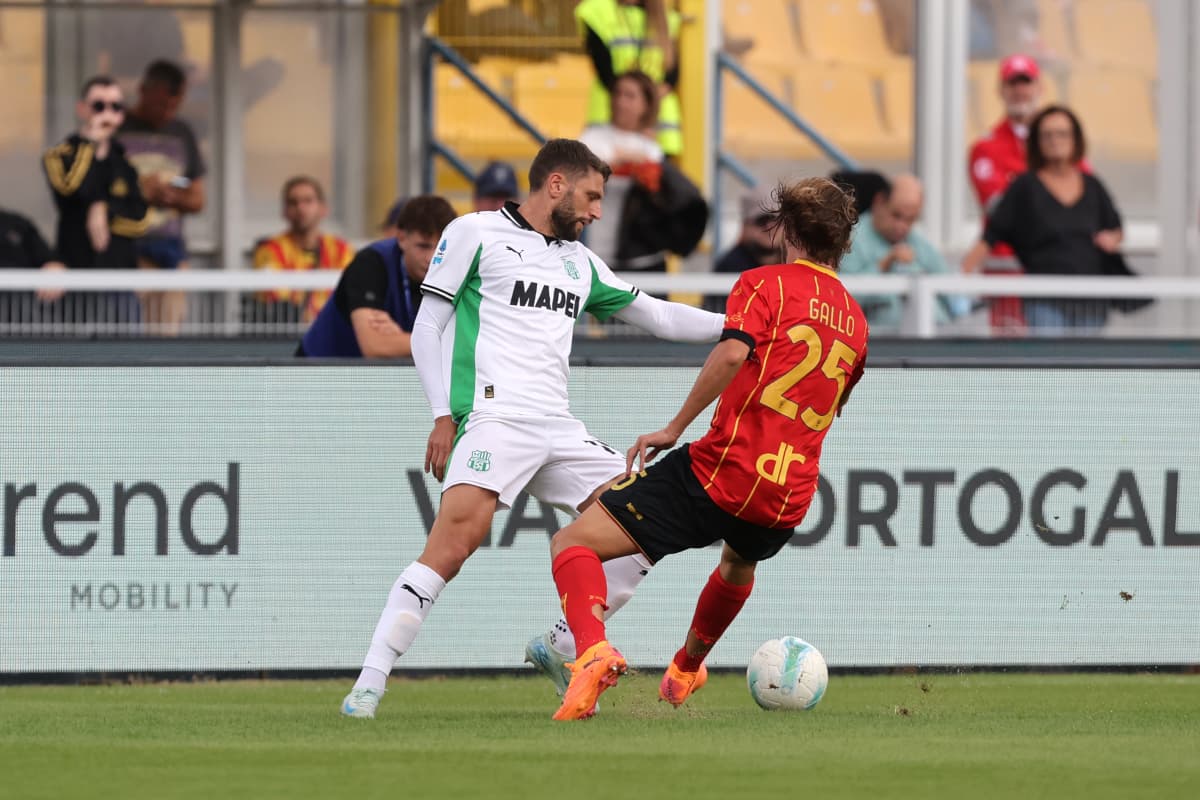
Sassuolo vs Lecce: Late-Season Serie A Drama Unfolds
On a warm May evening at MAPEI Stadium – Città del Tricolore, Sassuolo and Lecce staged exactly the kind of late‑season Serie A drama their numbers had been hinting at all year. The 3–2 away win to Lecce, sealed in regular time under the watch of referee Federico La Penna, did more than shuffle points; it crystallised the contrasting identities of an 11th‑placed side flirting with mid‑table comfort and a 17th‑placed visitor fighting to stay clear of the trapdoor.
Heading into this game, Sassuolo’s season had been defined by volatility. Overall they had taken 49 points from 37 matches, with a goal difference of -3 (46 scored, 49 conceded). At home, the numbers painted a team that could thrill and implode in the same breath: 9 wins, 2 draws and 8 defeats in 19 outings, with 25 goals for and 26 against. An average of 1.3 home goals for and 1.4 against underlined the tightrope Fabio Grosso’s 4‑3‑3 walks – expansive enough to hurt opponents, fragile enough to keep them interested.
Lecce arrived as survival specialists by necessity rather than design. Seventeenth with 35 points and a goal difference of -23 (27 for, 50 against), they have lived most of the season in the thin air just above the relegation zone. Their away profile is paradoxical: 5 wins, 3 draws and 11 losses on their travels, with 15 goals scored and 26 conceded. An average of 0.8 away goals for and 1.4 against speaks of a side that rarely overwhelms but is capable of stealing games in moments – exactly what a 3–2 win in Reggio Emilia represents.
I. The Big Picture: Shapes and Season DNA
Grosso doubled down on Sassuolo’s season‑long identity, rolling out the familiar 4‑3‑3. S. Turati anchored a back four of W. Coulibaly, Pedro Felipe, T. Muharemovic and U. Garcia. In front of them, Nemanja Matić and K. Thorstvedt were paired with I. Kone, a midfield blend of control, physicality and vertical running. Up front, the trio of D. Berardi, M. Nzola and Armand Laurienté gave Sassuolo their trademark width and shooting threat.
Across the halfway line, Eusebio Di Francesco’s Lecce leaned into a 4‑2‑3‑1 that has been their structural backbone all season (21 league uses). W. Falcone stood behind a defence of Danilo Veiga, J. Siebert, Tiago Gabriel and A. Gallo. Ylber Ramadani and O. Ngom formed the double pivot, screening the back line and launching transitions. Ahead of them, S. Pierotti and L. Banda flanked L. Coulibaly in the band of three, with W. Cheddira alone up top as the reference point.
The half‑time score of 2–1 to Lecce, and a final 3–2 away victory, mirrored both clubs’ statistical DNA: Sassuolo’s tendency to play open, high‑variance football, and Lecce’s capacity to hang in, absorb pressure and strike.
II. Tactical Voids: Absences and Discipline
Sassuolo entered this fixture without a full defensive and rotational spine. D. Boloca (muscle injury), F. Cande and E. Pieragnolo (both knee injuries), F. Romagna and A. Vranckx (inactive), and S. Walukiewicz (leg injury) all missed out. For a side already conceding 1.3 goals per game overall and 1.4 at home, the absence of depth in central defence and midfield narrowed Grosso’s options to protect leads or change the game state from the bench.
Lecce’s list was shorter but still significant. M. Berisha (thigh injury) and R. Sottil (back injury) were unavailable, trimming Di Francesco’s attacking and creative alternatives in a squad that has already failed to score in 19 league matches overall.
From a disciplinary standpoint, this fixture brought together two of the league’s more combustible groups. Sassuolo’s yellow‑card timing distribution shows a late‑game surge: 29.63% of their bookings arrive between 76–90 minutes, with another 14.81% in 91–105. Lecce mirror that curve, with 29.85% of their yellows also in the 76–90 window and 13.43% in 91–105. It is no coincidence that a match with five goals and high stakes became increasingly stretched as the minutes ticked away; both teams are statistically at their most frantic and foul‑prone in the closing stages.
Individually, the warning lights were clear. Matić came in with 7 yellows and 1 red this season, while Thorstvedt had 8 yellows. On Lecce’s side, Ramadani and Danilo Veiga each carried 9 yellows, and Lameck Banda combined 6 yellows with 1 red. This is a game that was always likely to be decided on the edge of the law as much as on the tactical board.
III. Key Matchups: Hunter vs Shield, Engine Room
The headline duel was Sassuolo’s attacking trident against Lecce’s statistically porous defence. Overall, Sassuolo average 1.2 goals per match, and at home that climbs to 1.3. Berardi’s 8 league goals and 4 assists, coupled with Laurienté’s 7 goals and 9 assists, give Grosso two high‑end creators who can both finish and supply. Laurienté’s 54 key passes and 79 dribbles attempted, with 29 successful, mark him as the primary line‑breaking outlet.
Lecce’s shield, by contrast, is more about volume and resilience than clean numbers. They concede 1.4 goals per game overall and 1.4 away, but Ramadani’s 90 tackles, 11 blocked shots and 46 interceptions, supported by Danilo Veiga’s 95 tackles and 14 blocks, form a rugged barrier in front of Falcone. In this match, their task was to close the central lanes where Berardi likes to drift inside and where Laurienté drives diagonally from the left.
In the engine room, Matić versus Ramadani was the defining axis. Matić has completed 1,699 passes at 86% accuracy, with 20 key passes and 43 tackles, acting as Sassuolo’s metronome and first line of rest‑defence. Ramadani answered with 1,412 passes at 80% accuracy and a more destructive brief. The balance of that duel went Lecce’s way often enough to disrupt Sassuolo’s rhythm and open the channels that Banda and Pierotti attacked in transition.
Out wide, Banda’s raw chaos was always going to be a problem for W. Coulibaly and Pedro Felipe. With 83 dribbles attempted and 32 successful, plus 4 goals and 4 assists, Banda represents Lecce’s most direct threat. His presence on the left forced Sassuolo’s right side into constant recovery runs, stretching a back line already missing depth options like Walukiewicz and Romagna.
IV. Statistical Prognosis and xG‑Style Verdict
Even without explicit xG values, the shot and goal profiles suggest a game tilted towards high‑quality chances at both ends. Sassuolo’s season‑long averages – 1.2 goals scored and 1.3 conceded overall, with 8 clean sheets and 11 games failed to score – mark them as a side that rarely plays to a stalemate. Lecce’s 0.7 goals scored and 1.4 conceded per match overall, plus 9 clean sheets and 19 blanks, usually point to low‑scoring contests, but their 5 away wins and capacity to ride out pressure hinted at an ability to turn a chaotic game to their advantage.
A 3–2 scoreline is, in effect, the logical extreme of these tendencies intersecting. Sassuolo created enough to score twice, as their home average would imply, but their structural looseness and injury‑hit depth allowed Lecce – a team that typically scores 0.8 away goals – to overshoot their usual output. The decisive edge lay in Lecce’s defensive resolve in key moments and their ruthlessness on the break, powered by Banda’s dribbling, Ramadani’s ball‑winning and Cheddira’s presence up front.
Following this result, the statistical story is clear: Sassuolo remain the league’s great entertainers, but their negative goal difference of -3 is no accident. Lecce, meanwhile, continue to live on the margins, but nights like this in Reggio Emilia show why they are still above the line – not through dominance, but through an ability to bend without breaking, then strike with precision when the game opens up.