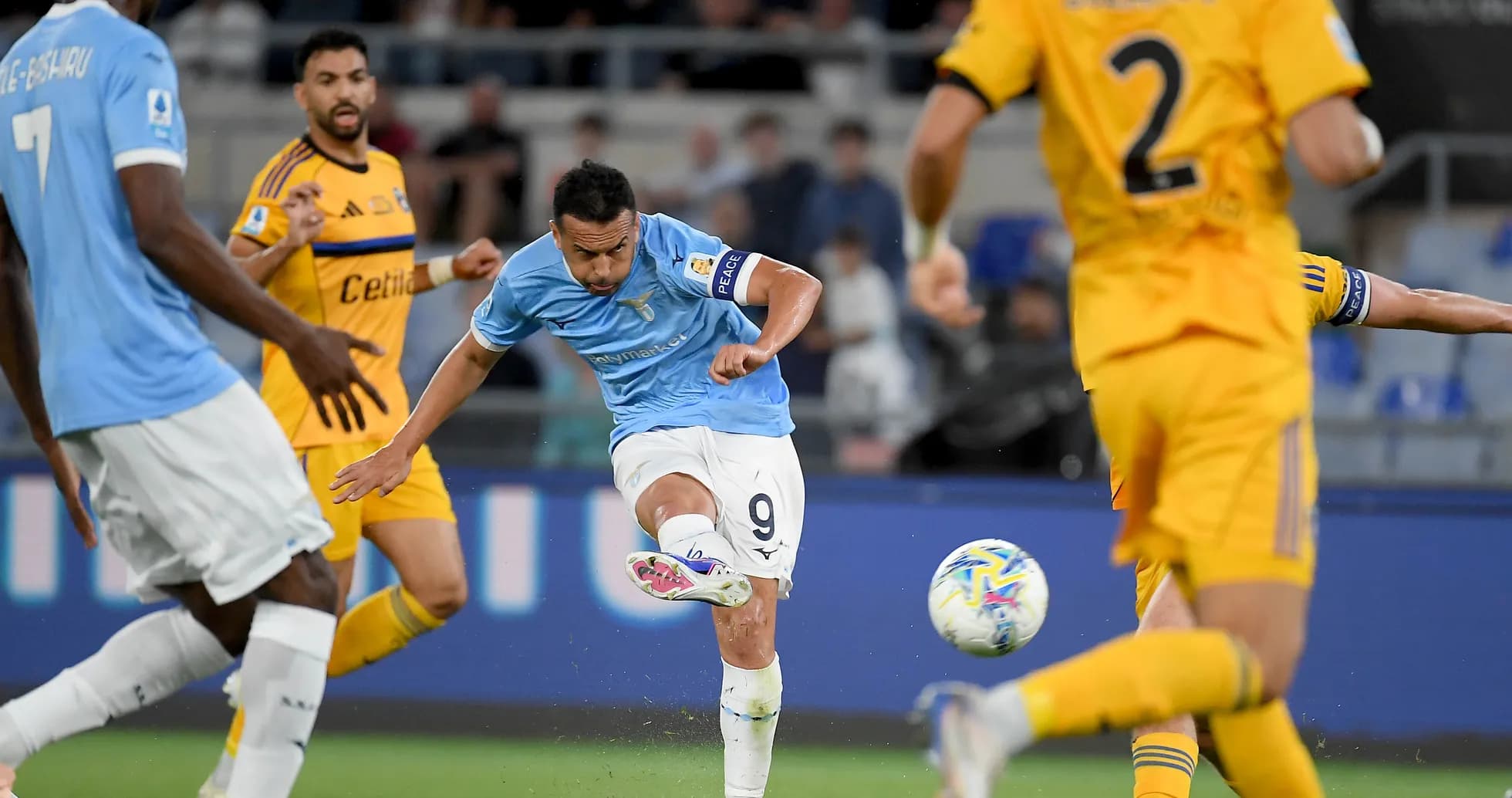
Lazio's Season Finale: Tactical Insights from the 2–1 Win Over Pisa
Under the floodlights of Stadio Olimpico, Lazio closed their Serie A season with a 2–1 win over Pisa, a result that crystallised the very different realities of ninth against twentieth in the final table. Following this result, Lazio finished on 54 points with a goal difference of 1, their overall 41 goals for and 40 against reflecting a campaign defined by fine margins rather than dominance. Pisa, marooned in twentieth with 18 points and a goal difference of -45 (26 scored, 71 conceded), bowed out of the division with a performance that summed up their year: brave in moments, but structurally fragile.
Maurizio Sarri stayed loyal to Lazio’s seasonal DNA, sending his side out in a 4‑3‑3 that has started 36 of their 38 league fixtures. Opposite him, Oscar Hiljemark leaned on Pisa’s most-used shape, the 3‑5‑2, trying to crowd central zones and protect a defence that on their travels has leaked 45 goals at an average of 2.4 per match. The first half’s 2–1 scoreline held through to full time, but the tactical story underneath was richer than the numbers alone.
Tactical Voids and Absences
Lazio arrived with a significant list of absentees that reshaped the squad’s spine. First-choice goalkeeper I. Provedel was out with a shoulder injury, handing the gloves to A. Furlanetto. In front of him, the midfield rotation was disrupted by N. Rovella’s suspension for a red card, while N. Tavares and K. Taylor were both sidelined through yellow-card accumulation. The absence of M. Zaccagni, out with a knee injury, removed one of Lazio’s most incisive wide threats and a player who had already experienced the disciplinary edge of this season with a red card and a missed penalty on his record.
These gaps forced Sarri into a slightly more workmanlike midfield trio of F. Dele‑Bashiru, T. Basic and R. Belahyane, and a front line of M. Cancellieri, T. Noslin and Pedro. Without Zaccagni’s one‑v‑one dynamism, Lazio leaned more on structured combinations and late surges from midfield rather than isolated dribbling duels.
Pisa’s own absences were equally telling. At the back, A. Caracciolo, their most card‑prone defender with 10 yellows this season, was suspended. His 71 tackles, 24 successful blocks and 50 interceptions had been central to Pisa’s defensive resistance; without him, Hiljemark had to trust a back three of A. Calabresi, S. Canestrelli and R. Bozhinov. Higher up, the injuries to F. Coppola, D. Denoon, M. Marin and M. Tramoni stripped depth and variety from midfield and attack, while Lorran’s exclusion by coach’s decision underlined a late‑season narrowing of options.
Disciplinary trends framed the emotional tone of the contest. Heading into this game, Lazio had shown a late‑game spike in yellow cards, with 25.64% of their cautions coming between 76‑90 minutes and a worrying 55.56% of their reds in the same window. Pisa mirrored that volatility: 25.64% of their yellows also arrived in the final quarter‑hour, with red cards spread across first‑half and early second‑half phases. This was always likely to be a match that frayed at the edges as fatigue set in.
Key Matchups
Hunter vs Shield
With no league top‑scorer data available, the “Hunter” role for Lazio was shared across the front three. The system itself is the true striker: heading into this game, Lazio averaged 1.4 goals at home, and their most dangerous attacking window was the final 15 minutes of matches, where they scored 33.33% of their league goals. Against that, Pisa’s “Shield” was historically porous. On their travels they conceded 2.4 goals per match, and their defensive minute distribution showed a glaring weakness exactly where Lazio are strongest: 26.76% of Pisa’s goals against came in the 76‑90 minute band, with another 22.54% shipped between 31‑45.
That intersection – Lazio’s late surge against Pisa’s late collapse – hung over the second half even as the scoreboard froze at 2–1. The presence of aerially dominant centre‑backs like A. Romagnoli and Mario Gila, both comfortable stepping into the opposition box, added another layer. Gila, who has blocked 17 shots this season and won 134 of 203 duels, is emblematic of Lazio’s ability to turn defensive solidity into set‑piece threat, particularly against a Pisa back line missing Caracciolo’s 24 blocks and penalty‑box presence.
Engine Room
The midfield battle pitted Lazio’s improvised trio against Pisa’s crowded five. For the visitors, M. Aebischer and E. Akinsanmiro formed the technical core. Aebischer’s 1,530 passes at 85% accuracy and 34 key passes marked him as Pisa’s primary organiser, while his 65 tackles and 6 blocks underlined his two‑way responsibility. Around him, I. Vural and S. Angori offered legs and width, with M. Leris tasked with stretching Lazio’s back four from the right.
Lazio’s response was structural rather than star‑driven. Without M. Guendouzi’s usual presence – a player whose season has blended 735 passes at 87% accuracy with 6 blocks and 11 interceptions – the burden fell on Basic to recycle possession and on Dele‑Bashiru to break lines with carries and late runs. Belahyane, sitting deeper, acted as the pivot shielding Romagnoli and Gila, whose combined 37 blocks (20 for Romagnoli, 17 for Gila) and calm passing (Romagnoli at 93% accuracy) allowed Lazio to build patiently from the back and draw Pisa’s 3‑5‑2 into uncomfortable pressing decisions.
Statistical Prognosis and Tactical Verdict
Following this result, the underlying season profiles of both teams felt vindicated. Lazio’s overall averages of 1.1 goals for and 1.1 against per match, combined with 15 clean sheets and 17 matches where they failed to score, describe a side that lives on the edge of tight margins. Their penalty record – 4 taken, 4 scored, 0 missed – shows a ruthlessness from the spot that Pisa, with 6 scored from 6, also shared, even if neither side needed that weapon on the night.
For Pisa, the numbers are more brutal. Overall they averaged just 0.7 goals for per match, failing to score in 21 of 38 fixtures. Defensively, the 71 goals conceded, with heavy clusters between 31‑45 (22.54%) and 76‑90 (26.76%), tell of a side that struggled with concentration and game management at precisely the moments when Lazio, with their 33.33% late‑goal surge, are most alive.
From a tactical lens, this match played out as the meeting of a structured, possession‑driven mid‑table side and a relegated team whose system could not mask individual and collective shortcomings. Lazio’s 4‑3‑3, even weakened by injuries and suspensions, still offered clear roles, safe passing lanes and a platform for wide forwards like Cancellieri and Pedro to attack the half‑spaces. Pisa’s 3‑5‑2, by contrast, often collapsed into a back five under pressure, leaving forwards S. Moreo and F. Stojilkovic isolated and reliant on transitional moments that rarely materialised.
The 2–1 scoreline was narrow, but the broader prognosis is clear. Lazio close the season as a side with a stable identity and room to grow, especially if they can turn their late‑game dominance into more consistent control earlier in matches. Pisa depart Serie A as a team whose effort could not compensate for structural fragility: too open when chasing games, too blunt when protecting them, and statistically overwhelmed in the very windows where matches are most often decided.