Hellas Verona vs Roma: Season Finale Analysis
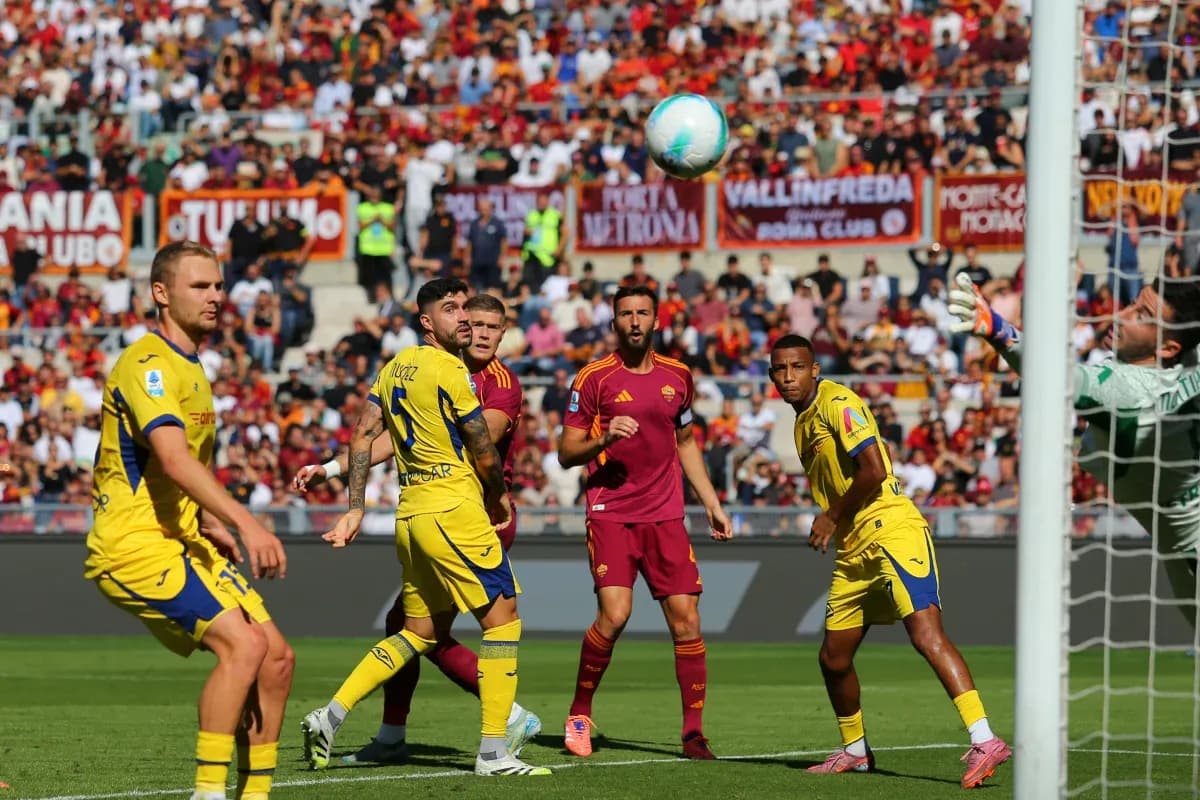
Under the Verona dusk at Stadio Marcantonio Bentegodi, the final act of Hellas Verona’s Serie A season unfolded with a grim inevitability. Roma arrived chasing perfection in the run‑in; Verona, already condemned in 19th with 21 points and a goal difference of -36, were playing for little more than pride. The 2‑0 full‑time scoreline reflected the gulf between a side heading for Serie B and one sealing 3rd place on 73 points, built on 59 goals for and only 31 against overall.
I. The Big Picture – Systems, Context, Trajectories
Paolo Sammarco doubled down on Verona’s seasonal identity, rolling out the familiar 3‑5‑2. L. Montipo stood behind a back three of N. Valentini, A. Edmundsson and V. Nelsson, with M. Frese and R. Belghali as the wide outlets. Inside, J. Akpa Akpro, S. Lovric and A. Harroui formed a narrow, industrious midfield trio, while T. Suslov and K. Bowie were tasked with stretching Roma’s back line.
The shape mirrored Verona’s broader campaign: structurally conservative, numerically dense in midfield, yet chronically short of punch. Heading into this game, they had scored only 25 goals in total across 38 matches, with a meagre 12 at home – an average of 0.6 at home and 0.7 overall. At the other end they had conceded 61 overall, 28 of those at home at an average of 1.5 per home game. Six clean sheets in total underlined that when Verona stayed in contests, it was usually through resistance rather than ambition.
Opposite them, Piero Gasperini Gian stayed loyal to Roma’s season‑defining 3‑4‑2‑1, the framework that had underpinned a powerful late surge – five straight wins in their form line heading into this fixture. M. Svilar was shielded by a back three of M. Hermoso, D. Ghilardi and G. Mancini. The wing‑backs, Z. Celik and D. Rensch, gave width outside a double pivot of B. Cristante and N. Pisilli. Ahead, the creative tandem of M. Soule and P. Dybala floated behind lone striker D. Malen.
Roma’s season numbers painted a side comfortable dictating games. Overall they averaged 1.6 goals for and only 0.8 against, with a particularly stingy home record but still a solid 26 goals on their travels at 1.4 per away game. Seven away clean sheets and just 21 goals conceded away at 1.1 per away match suggested a unit adept at controlling risk even when pushed.
II. Tactical Voids – Absences and Discipline
Verona came into this without their most combative midfielder, R. Gagliardini, suspended through yellow cards. His 10 bookings in the league and 73 tackles, plus 13 successful blocks and 54 interceptions, mark him as the natural shield in front of the back three. Removing that presence forced Sammarco to lean more heavily on Akpa Akpro and Lovric to plug central gaps. Akpa Akpro, himself a magnet for cards with 9 yellows, brought energy and bite, but without Gagliardini the midfield lost its primary enforcer and organiser.
The injury list further thinned Verona’s options: D. Mosquera, G. Orban, D. Oyegoke, J. Peci and S. Serdar all absent. Orban’s absence in particular stripped Verona of a direct outlet; his 7 goals and 2 assists this season had been a rare bright attacking spark. Instead, the burden fell on Suslov and Bowie, both willing runners but without Orban’s penalty‑box craft.
Roma’s own absentees were high‑profile but better absorbed. L. Pellegrini, E. Ndicka, E. Ferguson, K. Tsimikas and B. Zaragoza were all out, while Wesley Franca was suspended after a red card – a significant loss given his 5 goals, relentless pressing and 6 yellows plus one straight red that typified Roma’s aggressive midfield edge. Yet the depth on the bench – A. Dovbyk, S. El Shaarawy, Angelino, N. El Aynaoui – meant Gasperini could still rotate threats without compromising the structure.
Disciplinary trends framed the risk landscape. Verona’s yellow‑card distribution showed a heavy cluster between 31‑60 minutes, with 21.35% of yellows arriving from 31‑45 and 24.72% from 46‑60, plus a late spike of 15.73% from 76‑90. Their red‑card profile was even more telling: 40.00% of reds between 46‑60 and another 40.00% between 76‑90, underlining a tendency to lose control as legs tire and pressure mounts. Roma, by contrast, concentrated their yellows in the second half too – 22.06% from 46‑60 and 23.53% in both the 61‑75 and 76‑90 windows – but with fewer reds and generally better game‑state management.
III. Key Matchups – Hunter vs Shield, Engine Room
The headline duel was always going to be D. Malen against Verona’s fragile defensive record. Malen arrived as one of Serie A’s most efficient finishers: 14 goals and 2 assists in 18 appearances, from 49 shots with 31 on target. His three penalties scored were tempered by one miss, so Roma could not claim perfection from the spot, but his movement between the lines and ability to run channels was a direct threat to a Verona side that had conceded 61 goals overall.
The “shield” was collective rather than individual. Valentini, Edmundsson and Nelsson formed a back three that needed protection from a midfield missing Gagliardini. Without their primary ball‑winner, Verona were forced to drop Lovric deeper, reducing their ability to connect quickly with Suslov and Bowie on transitions – crucial for a side that had failed to score in 11 home games and 20 matches overall.
In the engine room, B. Cristante was the quiet conductor for Roma. His partnership with Pisilli allowed Dybala and Soule to float into pockets where Verona’s system was most vulnerable – the half‑spaces outside Akpa Akpro and Lovric, and in front of the outside centre‑backs. Dybala’s creative profile – 6 assists, 55 key passes and 54 dribble attempts with 19 successes – meant that any lapse in Verona’s compactness risked being punished by a disguised through ball or a quick combination with Malen.
Soule, too, was a constant “third man” threat. With 6 goals, 5 assists and 46 key passes, plus 95 dribble attempts and 35 successes, he offered Roma a second playmaker who could carry the ball through Verona’s midfield line rather than just playing around it. For Frese and Belghali, this created a brutal two‑way assignment: track wing‑backs Celik and Rensch, yet also narrow in to help the centre‑backs against Soule and Dybala drifting inside.
IV. Statistical Prognosis – xG Logic and Defensive Solidity
Even without explicit xG values, the season data sketched the underlying probabilities. Verona’s attack, at 0.7 goals on average overall and 0.6 at home, facing a Roma defence conceding just 0.8 overall and 1.1 on their travels, suggested a low likelihood of the hosts generating sustained, high‑quality chances. Their 20 matches failing to score underscored how often their attacks fizzled out before reaching dangerous zones.
Roma, by contrast, brought a balanced offensive profile: 1.6 goals per game overall, with 1.4 on their travels, against a Verona defence shipping 1.6 overall and 1.5 at home. The intersection of Malen’s ruthless finishing, Soule’s dribbling gravity and Dybala’s chance creation with Verona’s missing enforcer and late‑game disciplinary volatility pointed towards a steady accumulation of chances rather than a chaotic shoot‑out.
Following this result, the 2‑0 away win felt like the logical expression of those trends. Roma’s structure, depth and attacking variety gradually wore down a Verona side that could not compensate for its absentees or season‑long scoring drought. The Bentegodi curtain fell on a campaign that, in statistical and tactical terms, always seemed destined to end this way: Verona squeezed, Roma clinical, and the table reflecting the story the numbers had been telling for months.