Pisa vs Napoli: A Tale of Two Divisions in Serie A
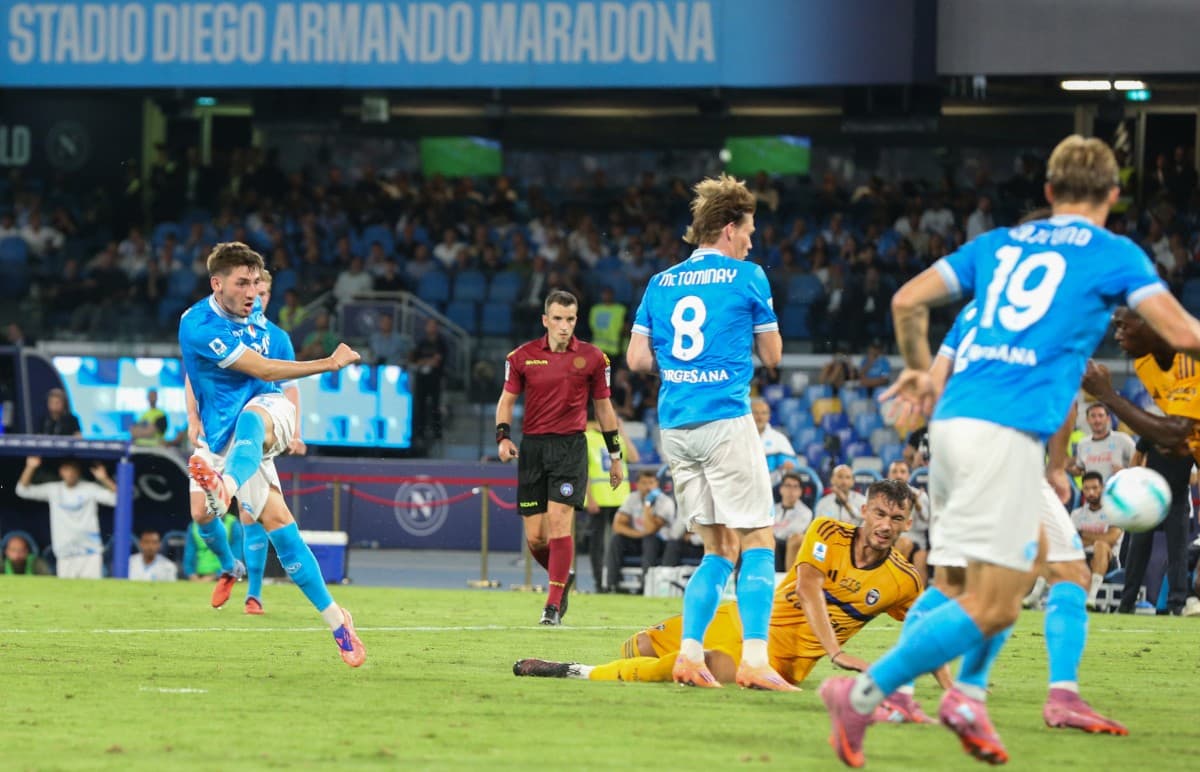
In the late-season glare of Serie A, the Arena Garibaldi – Stadio Romeo Anconetani hosted a meeting that felt like two different divisions sharing the same pitch. Pisa, rock bottom in 20th with 18 points and already engulfed by relegation inevitability, stood in stark contrast to a Napoli side travelling as title-chasers, sitting 2nd on 73 points. Following this result, the 3–0 away win simply underlined the gulf in class and structure between a side clinging to damage limitation and one tuned for Champions League football.
Oscar Hiljemark doubled down on Pisa’s season-long identity, rolling out the familiar 3-5-2 that has been his most-used shape (20 league appearances in that structure). Antonio Conte, meanwhile, leaned into Napoli’s muscular, vertical 3-4-3, a variant of the three-at-the-back systems that have defined their campaign (with 3-4-2-1 their primary template).
The seasonal DNA made the scoreline feel almost pre-written. Heading into this game, Pisa had scored just 25 goals in total across 37 league matches, with only 9 at home – an average of 0.5 at home and 0.7 overall. They had failed to score in 21 of those 37 fixtures and shipped 69 goals in total, 26 of them at home at an average of 1.4 per match. Their goal difference of -44 told the story succinctly. Napoli, by contrast, arrived with 57 goals in total, split as 32 at home and 25 on their travels, averaging 1.5 overall and 1.3 away, while conceding only 36 in total (18 home, 18 away, 1.0 per match overall). One team survives by organisation and ruthlessness; the other survives, if at all, by hanging on.
The absences list only deepened Pisa’s tactical void. They were without R. Bozhinov and F. Loyola through red-card suspensions, and stripped of attacking and creative depth by injuries to F. Coppola, D. Denoon, M. Tramoni and the “inactive” Lorran. For a side already so blunt, losing multiple forward and midfield options narrowed Hiljemark’s choices to pragmatism and graft. The bench, heavy on unproven or utility pieces like B. Bettazzi, G. Piccinini and R. Durosinmi, offered energy but little proven end-product.
Napoli’s absences were of a different flavour: David Neres (ankle), R. Lukaku (hip) and M. Politano (suspension for yellow cards) removed three high-profile attacking weapons, but Conte could absorb those losses. His squad still boasted elite quality in every line: A. Meret in goal, a back three of S. Beukema, A. Rrahmani and A. Buongiorno, the double pivot anchored by S. Lobotka, and a front line featuring E. Elmas, R. Hojlund and Alisson Santos. Even the bench carried heavyweight alternatives such as K. De Bruyne, F. Anguissa and Juan Jesus.
On the pitch, Pisa’s 3-5-2 was built around survival. A. Semper sat behind a back three of A. Calabresi, S. Canestrelli and Antonio Aldo Caracciolo, the latter a card magnet and rugged organiser who has accumulated 10 yellow cards this season, alongside 71 tackles and 24 successful blocks. His job was clear: step out, contest duels (261 total, 139 won) and try to break Napoli’s rhythm before it reached the box.
Ahead of them, the five-man midfield was more shield than springboard. Michel Aebischer, one of Pisa’s standout performers this season, operated as the metronome and firefighter. With 1,490 passes at 85% accuracy, 64 tackles and 35 interceptions, he was asked to both connect and contain, a near-impossible double role against Napoli’s press. Around him, M. Hojholt, E. Akinsanmiro and S. Angori were tasked with closing lanes and shuttling wide, while M. Leris provided the only consistent outlet on the flank.
The front pair of S. Moreo and F. Stojilkovic were left to feed on transitions. With Pisa averaging just 0.5 home goals heading into the match and having failed to score in 12 of 19 home fixtures, their remit was less about sustained pressure and more about making a single counter or set piece count.
Napoli, by contrast, constructed a layered, aggressive structure. The “Hunter vs Shield” duel centred on R. Hojlund, their 11-goal striker, against a Pisa defence that had conceded 69 in total and 43 on their travels to other sides, signalling systemic fragility. Hojlund’s 44 shots (23 on target) and 31 key passes this season illustrate a forward who not only finishes but also links play, supported here by the drifting creativity of E. Elmas and the direct running of Alisson Santos.
Behind them, the “Engine Room” battle featured S. McTominay and S. Lobotka against Aebischer and company. McTominay’s season has been a blend of late runs and relentless physicality: 10 goals, 3 assists, 71 shots, 28 tackles and 21 interceptions, plus 312 duels with 164 won. He also embodies Napoli’s edge: he has drawn 68 fouls and even missed a penalty this season, a reminder that Napoli’s perfect 4-from-4 team penalty record in the league hides individual blemishes. Lobotka, the quiet regulator, ensured Napoli’s passing rhythms stayed clean, allowing the wing-backs G. Di Lorenzo and L. Spinazzola to push Pisa’s wide midfielders deep and pin the back five in place.
Discipline loomed as a hidden subplot. Pisa’s yellow-card timing shows a late-game surge, with 25.97% of their bookings arriving between 76–90 minutes and significant spikes also in the 31–45 and 61–75 ranges (both 18.18%). Under pressure, they lunge. Napoli, meanwhile, concentrate their cautions in the 61–75 window (30.61%), when Conte’s side typically ramps up intensity. With Pisa often chasing games and Napoli upping the tempo after the break, the second half was always likely to tilt further towards the visitors.
The 3–0 scoreline ultimately mirrored the statistical prognosis. Napoli’s away average of 1.3 goals against a Pisa defence conceding 1.4 at home pointed to a multi-goal away haul; Pisa’s anaemic 0.5 home scoring rate against a Napoli back line allowing just 0.9 goals per away match suggested a home blank was more likely than not. Add Napoli’s 8 away clean sheets and Pisa’s 21 total matches without scoring, and the tactical script was clear.
Following this result, the story is less about the surprise of Napoli’s dominance and more about the structural truths of both squads. Pisa’s season-long struggle – brittle at the back, toothless up front, reliant on the defensive toil of Caracciolo and the all-round graft of Aebischer – was laid bare by a Napoli side whose spine, from Meret through Rrahmani and Lobotka to Hojlund and McTominay, is built for far bigger stages. In a league table that rarely lies, this was a performance that simply confirmed what the numbers had been saying all along.