
Klopp's Controversial Remark Sparks Debate in Germany
Germany had just put seven past Curacao, the kind of World Cup statement win that usually drowns out everything else. Yet as the players walked off, much of the country was still talking about a single word uttered hours earlier in a TV studio.
“Still.”
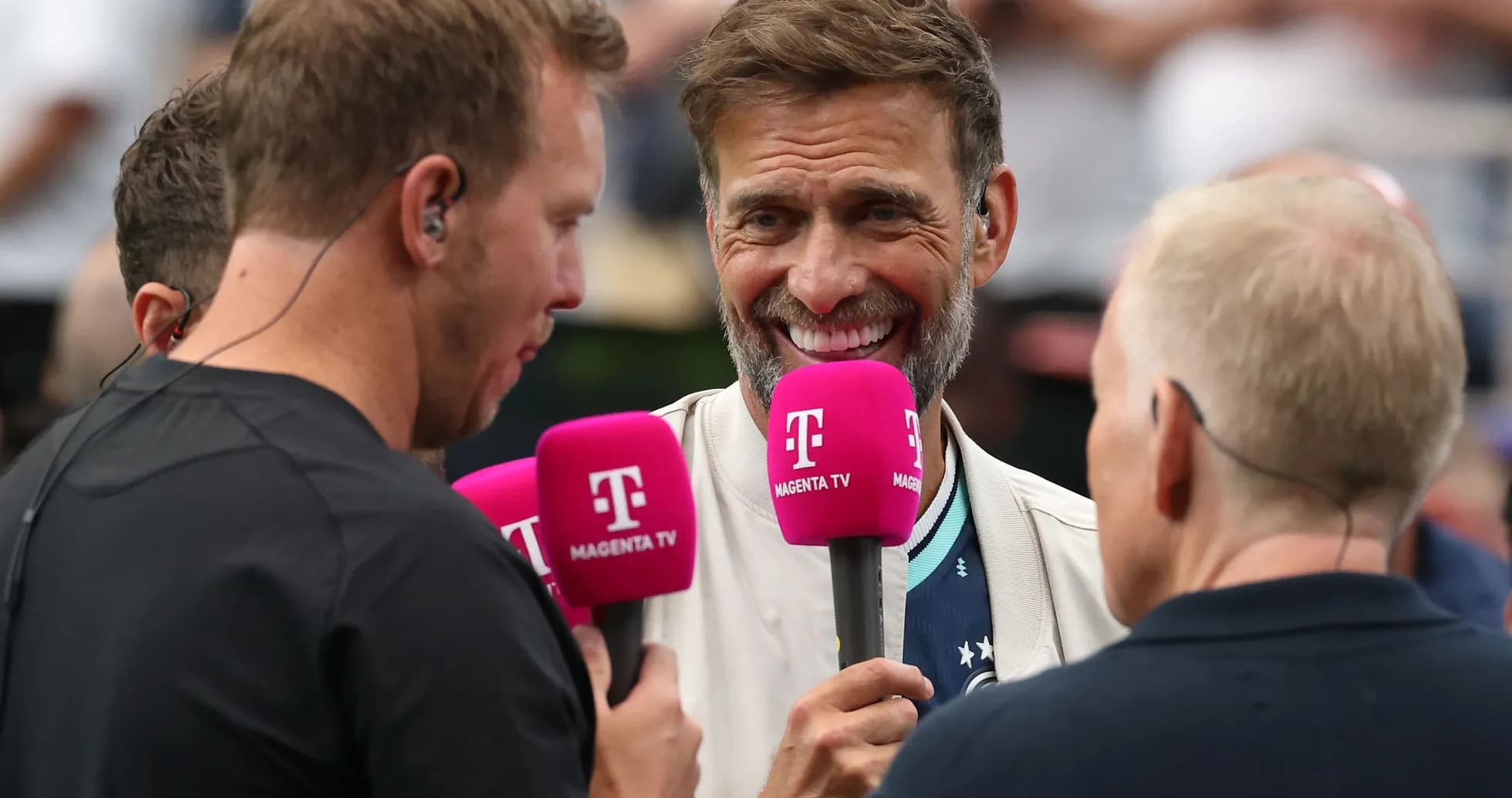
Jürgen Klopp, sitting alongside Thomas Müller as a pundit for MagentaTV, had been asked about Germany’s line-up before the opener. With a grin, he replied: “Luckily, Julian Nagelsmann is still picking the team.”
It was a throwaway line in delivery, but not in impact. In a country where Klopp is routinely tipped as the next Bundestrainer, “still” sounded loaded. To many viewers and pundits, it hinted that Nagelsmann’s grip on the job was temporary, fragile, already under the shadow of his most obvious successor.
The reaction was instant. And fierce.
Lothar Matthäus, never shy of a verdict, criticised the remark, and the discussion quickly spilled beyond social media into mainstream debate. Was Klopp, even unintentionally, undermining the man currently in charge?
Klopp clearly realised he had stepped on a landmine.
After Germany’s 7-1 demolition of the Caribbean side, he used the post-match show to address Nagelsmann directly, live on air. No dodging, no PR gloss.
“I’ve already found the most hated word of the year: ‘Still’,” Klopp admitted. “I could have punched myself in the face for that, but it was already too late and I was on TV. It just slipped out so casually and has absolutely no relevance.”
It was classic Klopp: self-criticism wrapped in humour, the attempt to defuse tension by making himself the punchline. He leaned into that again as the conversation continued, conscious that his status and timing had turned a bit of studio banter into a national talking point.
“There’s one more thing I have to say… we still need to make time for this,” he told Nagelsmann. “We’re also informally part of the team, we’re absolutely on your side. What I’ve realized is: I’ll be 59 the day after tomorrow and I’m still an idiot. We are completely on your side, whatever you do. Nothing was intended to come of it to disrupt the process here.”
The message was clear: this was a lapse, not a power play.
Klopp, days away from his 59th birthday, blamed a moment of poor judgement rather than any agenda against the current coaching staff. He knows exactly how quickly a comment from him can become a headline, especially in a World Cup month and with his name constantly orbiting the national job.
The context around the remark had hardly helped. Sitting next to him in the studio, Müller had joined in the pre-match joking, including a tongue-in-cheek suggestion that Nagelsmann should drop Jamal Musiala, Bayern Munich’s young star and one of Germany’s brightest attacking sparks.
Müller also teased Klopp by pretending he had mixed up the calendar, joking that the former Liverpool manager was behaving as if it were already September – the month some analysts have floated as a possible moment for Klopp to take over the national side.
Inside the studio, it was light-hearted. Outside, it landed very differently.
For Matthäus and several other prominent voices, the exchange crossed a line. They argued it looked unprofessional, piling needless pressure on Nagelsmann at a time when Germany needed calm, not background noise about succession plans.
Nagelsmann, for his part, could point to the most compelling answer a coach can give: the football.
Germany’s 7-1 win over Curacao was ruthless. The performance suggested a squad fully tuned in to their current boss, not distracted by what a future one might or might not have said on television. The patterns were sharp, the finishing clinical, the intent unmistakable. Whatever was swirling in the punditry booth, it did not seep onto the pitch.
That matters, because the real tests now loom.
Curacao were overwhelmed. Ecuador and Ivory Coast will not be. The level of opposition in this North American World Cup steps up sharply from here, and so does the scrutiny. Germany’s next stop is Toronto on Saturday, where they will face an Ivory Coast side built on power, pace and a long history of troubling European heavyweights.
Nagelsmann can at least go into that assignment with the scoreboard, and the public backing of Klopp, firmly in his corner. The word that caused the storm has been owned, dissected and apologised for. The former Borussia Dortmund coach has made it plain he does not want his presence on the microphone to become a sideshow to Germany’s pursuit of a fifth world title.
The cameras will still find him. The speculation will not vanish. But after a 7-1 opening statement and an on-air mea culpa, the stage now belongs, unmistakably, to the man actually picking the team.




