Spain vs Cape Verde Islands Match Report: Goalless Draw Analysis
Spain 0-0 Cape Verde Islands at Mercedes-Benz Stadium leaves Group H finely poised, with both sides moving to 2 points from two draws and maintaining identical records of 0 goals scored and 0 conceded. Spain stay top on rank 1, while Cape Verde Islands remain second on rank 2, but the failure of the European favourites to convert territorial and chance dominance into a win keeps qualification to the Round of 32 open for the remaining group fixtures.
Match Report
The match unfolded as a story of Spanish control against Cape Verde Islands’ disciplined resistance, without a decisive moment in either penalty area.
On 16', the first major incident came when Sidny Lopes Cabral (Cape Verde Islands) received a yellow card for roughing, underlining the physical edge required from the underdogs to disrupt Spain’s rhythm.
The game remained goalless into the second half, and Cape Verde Islands made a triple substitution on 61' to inject fresh energy into their defensive block and counter threat: Willy Semedo replaced Jovane Cabral (Cape Verde Islands), Nuno Da Costa replaced Dailon Rocha Livramento (Cape Verde Islands), and Deroy Duarte replaced Laros Duarte (Cape Verde Islands). All three changes signalled a shift towards more pace and legs higher up the pitch while preserving the compact 4-1-4-1 structure.
Spain responded on 71' with a double change aimed at adding more line-breaking runs and late-box arrivals: Mikel Merino replaced Fabián Ruiz (Spain), and Lamine Yamal replaced Gavi (Spain). The intention was clear – more verticality and creativity against a tiring low block – but the scoreboard still refused to move.
Cape Verde Islands continued to rotate their outfielders to maintain intensity. On 76', Joao Paulo replaced Sidny Lopes Cabral (Cape Verde Islands), refreshing the left side after the booked full-back’s long defensive shift. Three minutes later, on 79', Telmo Arcanjo came on as Jamiro Monteiro was replaced (Cape Verde Islands), adding fresh midfield legs to help close central spaces against Spain’s increasingly aggressive positional play.
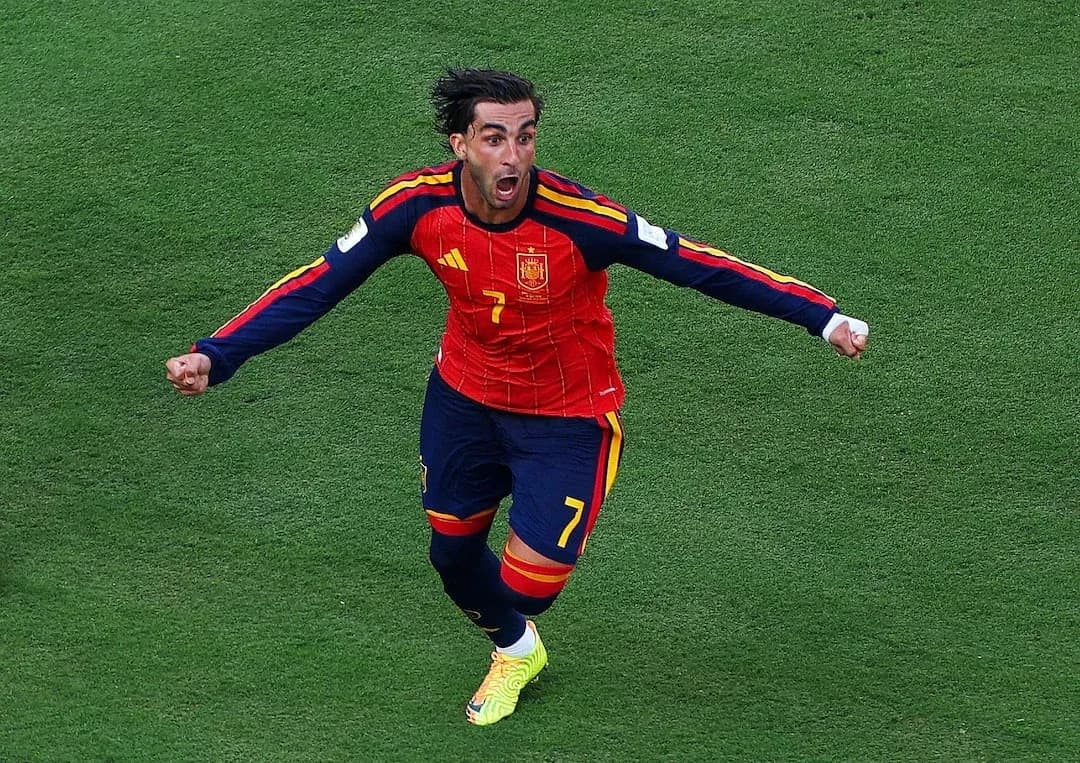
Spain’s final attacking reshapes came late. On 81', Dani Olmo replaced Ferran Torres (Spain), offering more between-the-lines play and shooting threat from the half-spaces. Then on 87', Nico Williams replaced Rodri (Spain), an explicitly attacking gamble that removed the holding midfielder in favour of another winger, leaving Spain with a very offensive structure for the closing minutes.
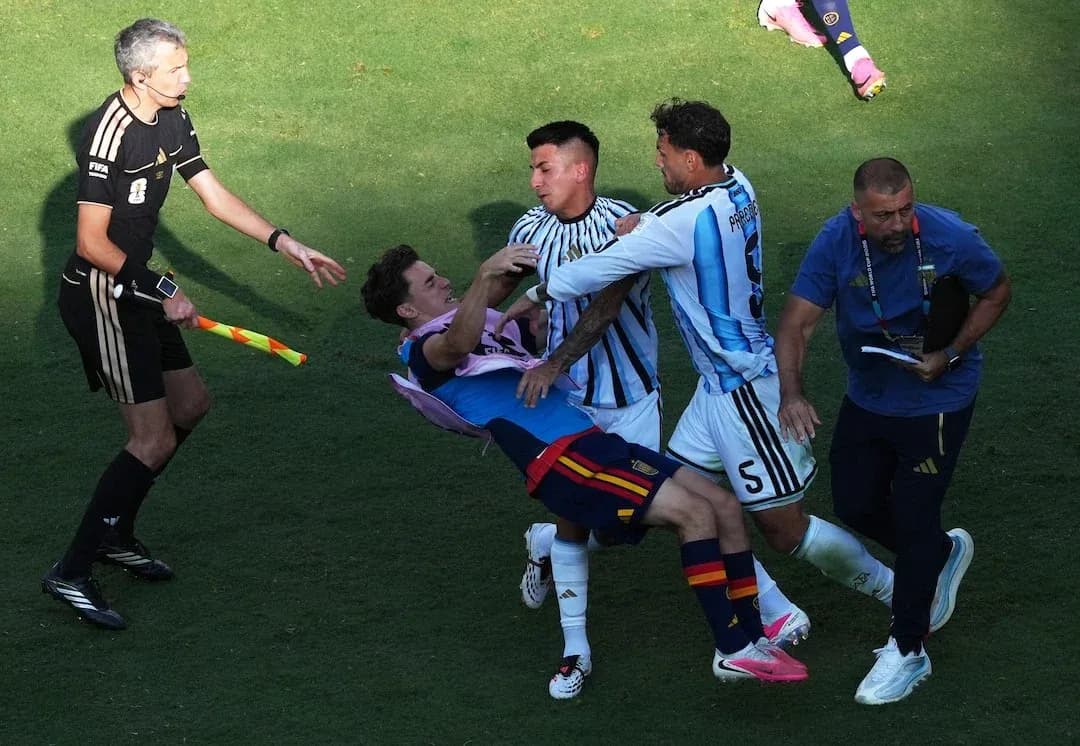
Deep into stoppage time, at 90+3', Pedri (Spain) collected a yellow card for holding, a sign of Spain’s frustration as they tried to counter-press immediately after losing the ball. No goals were scored in any phase, and the match finished 0-0 with all decisive moments coming via cards and substitutions rather than the scoreboard.
Fixture Statistics & Tactical Audit
- xG: Spain 2.29 vs 0.3 Cape Verde Islands
- Possession: Spain 74% vs 26% Cape Verde Islands
- Shots on Target: Spain 7 vs 1 Cape Verde Islands
- Goalkeeper Saves: Spain 1 vs 7 Cape Verde Islands
- Blocked Shots: Spain 8 vs 2 Cape Verde Islands
The underlying numbers paint a clear picture: Spain were dominant in chance creation and territory (2.29 xG, 27 total shots, 74% possession), but lacked the finishing edge and final-third precision to translate that control into goals. Cape Verde Islands’ game plan was based on a compact defensive block and deep field position, reflected in their modest attacking output (0.3 xG, 6 shots, just 1 on target) but also in their volume of last-ditch interventions (7 saves by Vozinha and 2 blocked shots by outfielders). Spain consistently worked the ball into promising zones (16 shots inside the box), yet the combination of imprecise finishing and strong goalkeeping meant their structural superiority never turned into a breakthrough. Conversely, Cape Verde Islands accepted attacking limitations in exchange for defensive security and were largely successful in suppressing clear, uncontested finishes, making the goalless draw more understandable when viewed through shot quality and goalkeeper impact.
Standings Update & Seasonal Impact
With the draw, Spain move to 2 points in Group H, with new totals of 0 goals for, 0 against and a goal difference of 0 after two matches. They remain in 1st place and stay on course for the Round of 32, but their inability to score in either game increases the pressure to find attacking fluency in the final group fixture to secure top spot outright.
Cape Verde Islands also advance to 2 points, with 0 goals for, 0 against and a goal difference of 0, consolidating 2nd place in the group. For a side already in a Round of 32 qualification position pre-match, this result is significant: they have held the group favourites twice and ensured that a win in their final group game would almost certainly see them progress. The table remains compressed, but both teams retain full control of their qualification destiny.
Lineups & Personnel
Spain Starting XI
- GK: Unai Simón
- DF: Marcos Llorente, Pau Cubarsí, Aymeric Laporte, Marc Cucurella
- MF: Fabián Ruiz, Rodri, Pedri
- FW: Ferran Torres, Mikel Oyarzabal, Pablo Gavi
Cape Verde Islands Starting XI
- GK: Vozinha
- DF: Steven Moreira, Pico, Diney Borges, Sidny Lopes Cabral
- MF: Kevin Lenini, Ryan Mendes, Laros Duarte, Jamiro Monteiro, Jovane Cabral
- FW: Dailon Rocha Livramento
Post-Match Verdict
This was a dominant Spanish display in terms of control and volume (74% possession, 27 shots, 2.29 xG) but not in outcome, as a lack of cutting edge in the box turned structural superiority into a second consecutive stalemate. The 4-3-3 consistently pinned Cape Verde Islands back, with Spain circulating the ball at high accuracy (92% pass completion) and creating numerous shooting situations, yet too many of those efforts were either blocked (8) or placed within reach of Vozinha, whose 7 saves underlined a standout goalkeeping performance anchored by a goals-prevented figure of 1.46.
For Cape Verde Islands, this was a disciplined and resilient performance (only 6 shots conceded on their own goal frame despite 27 attempts overall) built on a compact 4-1-4-1 that prioritised central protection and aggressive box defending. Their limited attacking threat (0.3 xG, 1 shot on target) reflects how deeply they were forced to defend, but within that context the tactical plan was successful: reduce the game to set-pieces, blocks and goalkeeper interventions, and trust their defensive structure to secure a point. Spain leave with questions about their efficiency in the final third, while Cape Verde Islands depart with a valuable draw and proof that their defensive organisation can withstand sustained pressure at World Cup level.