Juventus vs Fiorentina: A Tactical Crossroads at Allianz Stadium
Under a hard Turin light at Allianz Stadium, this felt like a crossroads rather than just “Regular Season - 37”. Juventus, sitting 6th on 68 points with a goal difference of 27 (59 scored, 32 conceded overall), had spent the campaign carving out the identity of a controlled, defensively sound Europa League side. Fiorentina arrived 15th on 41 points, goal difference -9 (40 for, 49 against overall), a team of streaks and survival instincts rather than fluency. Following this result, a 0-2 home defeat, the narrative of both seasons sharpened: Juventus’ solidity cracked at precisely the wrong moment, and Fiorentina finally looked like a side whose numbers had long suggested they could be more than relegation flirts.
Luciano Spalletti rolled out a 4-2-3-1 that spoke of balance and hierarchy. M. Di Gregorio behind a back four of P. Kalulu, Bremer, L. Kelly and A. Cambiaso was the latest iteration of a defence that, heading into this game, had conceded just 16 goals at home in 19 matches, an average of 0.8 per game. In front, M. Locatelli and T. Koopmeiners formed a double pivot designed to dictate tempo and shield transitions, while a line of three – F. Conceicao, W. McKennie and the league’s breakout creator K. Yıldız – floated behind D. Vlahovic.
Across from them, Paolo Vanoli’s Fiorentina chose a bold 4-3-3. D. de Gea anchored a back line of Dodo, M. Pongračić, L. Ranieri and R. Gosens. The midfield trio – C. Ndour, N. Fagioli and M. Brescianini – was more about energy and second balls than pure artistry, while the front three of F. Parisi, R. Piccoli and M. Solomon promised constant diagonal movement rather than a classic reference striker. It was, on paper, a shape built to frustrate a possession-heavy favourite and spring into the spaces behind their full-backs.
The tactical voids were few but meaningful. Fiorentina’s only listed absentee was M. Kean, out with a calf injury, an intriguing subplot given his history in Turin and the extra vertical threat he might have offered in transition. Instead, Vanoli leaned heavily on the discipline of Pongračić and Ranieri, two defenders whose season-long card profiles tell a story of aggressive, line-holding defenders who live on the edge. Pongračić, with 12 yellow cards overall, and Ranieri, with 8 yellows and 1 red, came into this fixture as walking tightropes.
On the Juventus side, the disciplinary backbone was equally stark. Locatelli’s 9 yellows overall reflect his role as the team’s tactical brake pedal, the man who stops counters even at the cost of a booking. The club’s season card distribution heading into this game showed a clear pattern: a yellow-card surge between 61-75 minutes (22.00%) and 76-90 minutes (20.00%), mirroring the phases where Juventus often raised the press and took more risks. Fiorentina, by contrast, were even more volatile late on, with 25.30% of their yellows arriving between 76-90 minutes and 15.66% between 91-105. This match, though, never needed extra time; it simply lived inside those familiar margins of tension.
Hunter vs Shield
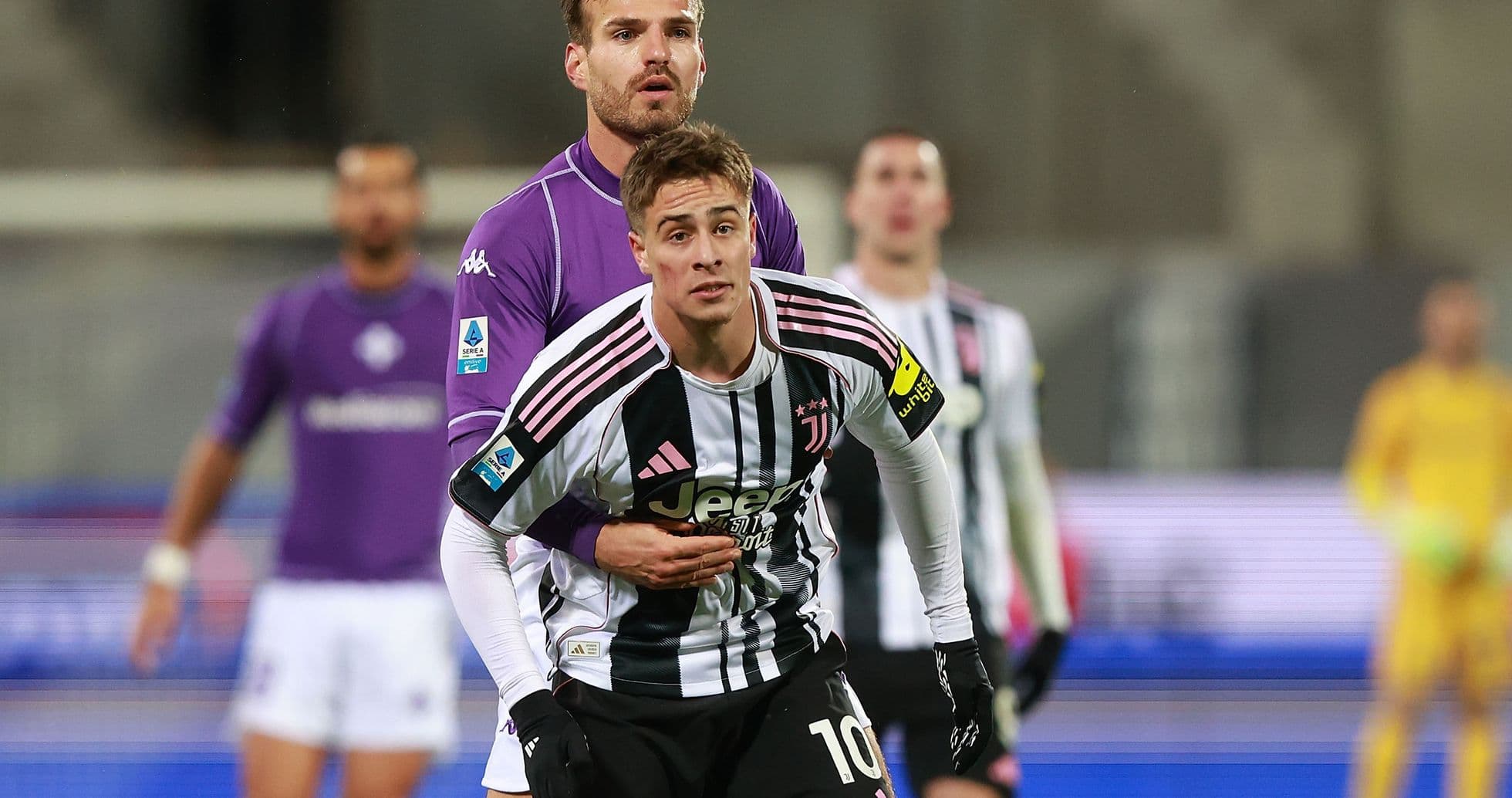
The “Hunter vs Shield” duel centred on Kenan Yıldız. With 10 league goals and 6 assists overall, 64 shots (40 on target) and a rating of 7.39, he has been Juventus’ most complete attacking reference. His 76 key passes and 149 dribbles attempted (78 successful) underline a player who doesn’t just finish moves but initiates them. He ran at a Fiorentina defence whose away record heading into this game was fragile: 29 goals conceded on their travels in 19 matches, an average of 1.5 per game. On paper, Yıldız attacking the channels between Gosens and Ranieri should have been Juventus’ primary weapon.
Yet the shield held. Fiorentina’s centre-backs have been season-long specialists in last-ditch interventions: Pongračić had blocked 26 shots overall, while Ranieri had blocked 13. Those numbers are not just statistics; they describe a defensive pair comfortable defending deep, absorbing waves of pressure and trusting their timing. Against Vlahovic’s physical presence and Yıldız’s slaloming runs, they consistently stepped in front of cut-backs and low crosses, turning likely xG into mere corners and half-chances.
In the engine room, the duel was more nuanced. Locatelli arrived as one of Serie A’s standout midfield controllers: 2,720 completed passes overall at 88% accuracy, 46 key passes, 99 tackles, 23 blocked shots and 38 interceptions. He is both metronome and met shield. Opposite him, Brescianini and Fagioli were tasked with disrupting his rhythm. Fiorentina’s broader season data – only 10 clean sheets overall but 6 at home and 4 away – suggests a team that defends more by collective effort than by individual brilliance. Here, their midfield line stayed compact, funnelling Juventus wide and forcing Locatelli to receive under pressure with his back to goal rather than facing forward.
Weston McKennie added another layer. With 5 goals and 5 assists overall, 47 key passes and 39 tackles, he is Juventus’ chaos agent, arriving late into the box and contesting second balls. His duels with Ranieri and Gosens were supposed to tilt the match in the hosts’ favour. Instead, Fiorentina’s full-backs, especially Gosens, balanced aggression with restraint, rarely overcommitting and often leaving McKennie receiving with his first touch already under pressure.
From a statistical prognosis standpoint, this 0-2 feels like the outlier that was always lurking. Heading into this game, Juventus’ home attack averaged 1.8 goals per match at Allianz Stadium (35 scored in 19), while Fiorentina’s away defence conceded 1.5 per match. The expected trend pointed towards a Juventus goal and a high probability of at least one breakthrough from Yıldız or Vlahovic. Juventus had failed to score at home in only 4 league matches overall. Fiorentina, meanwhile, had kept just 4 clean sheets away from home.
Yet the match unfolded along a different axis: Fiorentina’s defensive structure finally matched their underlying effort, and Juventus’ attacking stars found their usual margins shaved away by precise blocks and narrow lines. If we project this forward, xG models would still back Juventus to create and convert more often than not in a similar script. Their overall average of 1.6 goals per game and only 0.9 conceded suggests this is a system that usually bends results in its favour.
But following this result, the lesson is clear. When the Hunter (Yıldız and Vlahovic) is forced wide and into traffic, and the Shield (Pongračić, Ranieri, Gosens, de Gea) defends its box with the same intensity shown here, Fiorentina can punch well above their 15th-place reality. For Juventus, the structure remains sound; the question, as the season closes, is whether they can add enough unpredictability in the final third to ensure that a day like this remains a painful exception rather than the beginning of a trend.