Inter Held to Draw by Hellas Verona in Title Race
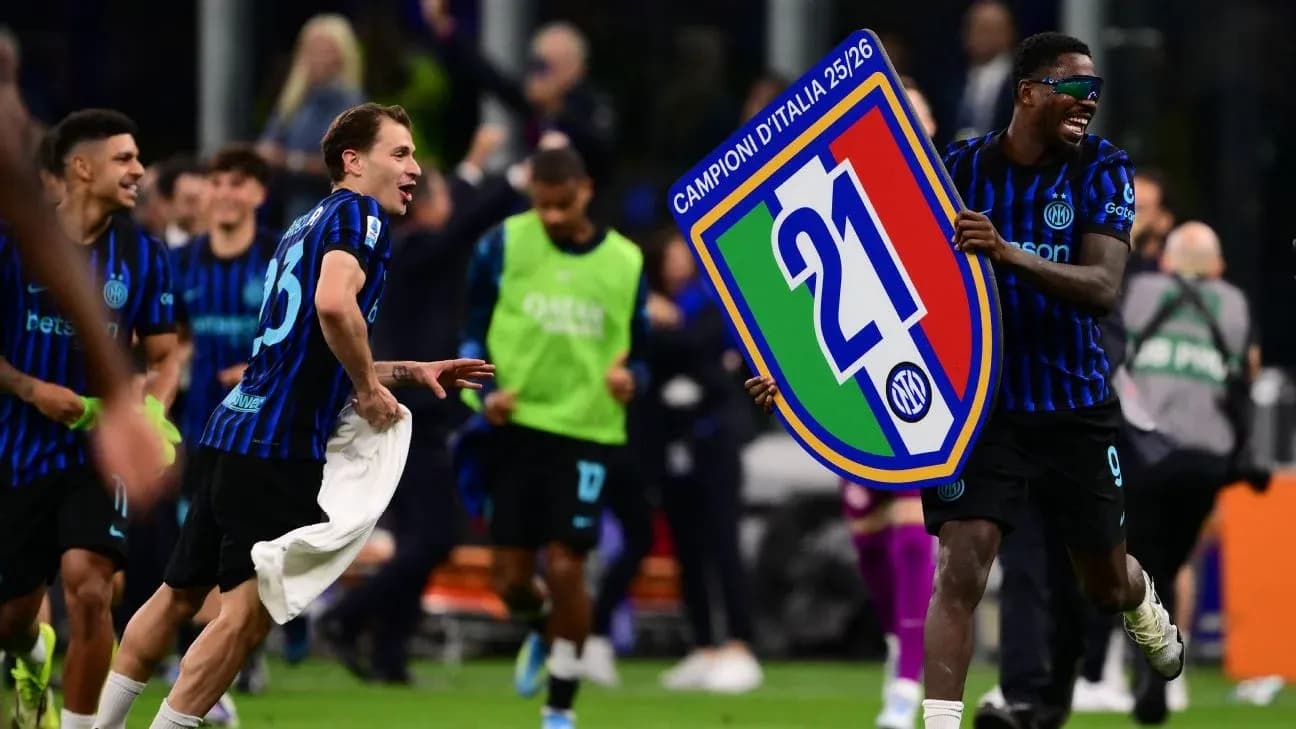
On a warm May afternoon at Stadio Giuseppe Meazza, the script said procession but the pitch demanded resistance. Inter, champions-elect in all but mathematics, met a Hellas Verona side staring into the relegation abyss. Ninety minutes later, the scoreboard’s 1-1 draw told a story of a title giant checked by a team fighting for its life.
Following this result, the table still underlines the gulf between them. Inter sit 1st on 86 points with a formidable overall goal difference of +54 (86 scored, 32 conceded), a side whose season has been built on dominance and control. Hellas Verona, 19th on 21 points with a goal difference of -34 (25 scored, 59 conceded), are a team accustomed to suffering, their campaign a grind of narrow hopes and heavy defeats. Yet for one afternoon, the gap compressed into a single goal each.
I. The Big Picture – Structures and Seasonal DNA
Cristian Chivu stayed true to Inter’s seasonal identity, rolling out the familiar 3-5-2 that has underpinned all 37 of their league outings. Y. Sommer anchored a back three of M. Darmian, S. de Vrij and F. Acerbi. Ahead of them, the wing corridors were patrolled by Luis Henrique and Carlos Augusto, with A. Diouf, P. Sucic and H. Mkhitaryan forming a fluid central trio. Up front, A. Bonny partnered L. Martinez, Serie A’s leading marksman for Inter with 17 league goals and 6 assists.
The numbers behind this shape are ruthless. Heading into this game, Inter had scored 86 goals in total this campaign, averaging 2.6 at home and 2.0 on their travels, while conceding just 0.8 at home and 0.9 away. Eighteen clean sheets overall and only 2 matches in which they failed to score speak of a side that imposes its rhythm and rarely loses control of the narrative.
Hellas Verona arrived with a very different story. Paolo Sammarco opted for a 5-3-2, a compact, survivalist structure: L. Montipo behind a five-man line of M. Frese, N. Valentini, A. Edmundsson, V. Nelsson and R. Belghali. The midfield triangle of A. Bernede, R. Gagliardini and S. Lovric sat deep, with T. Suslov and K. Bowie asked to chase scraps and counter-attacking moments.
Their seasonal profile is stark. Heading into this game, Verona had scored only 25 goals in total, averaging 0.7 both at home and away, while conceding 59 overall at 1.4 at home and 1.7 on their travels. They had failed to score in 19 league matches and kept just 6 clean sheets. This is a team used to defending long spells, relying on structure and discipline rather than sustained attacking play.
II. Tactical Voids – Absences and Discipline
If Verona’s game plan was built on defensive density, it was also shaped by who was missing. D. Mosquera, G. Orban, D. Oyegoke and S. Serdar were all listed as “Missing Fixture”, with injuries and inactivity thinning Sammarco’s options, especially higher up the pitch. The absence of Orban, who has 7 goals and 2 assists in the league and even a red card to his name, removed a direct outlet and a player accustomed to operating on the edge.
Inter, by contrast, came close to full strength in terms of available profiles. The bench brimmed with alternative solutions: F. Dimarco, the league’s top assist provider with 16, N. Barella with 8 assists, H. Calhanoglu with 9 goals and 4 assists, and M. Thuram with 13 goals and 6 assists. Chivu had the luxury of tailoring the game’s second act with high-quality substitutions in every line.
Disciplinary trends framed the contest’s emotional temperature. Inter’s season-long yellow-card distribution shows a late-game surge: 30.65% of their cautions arrive between 76-90 minutes, with another 20.97% between 61-75. They push harder as time runs out, and they pay for it in cards, though notably without red dismissals in the league.
Verona’s profile is more volatile. Their yellow cards peak between 46-60 minutes at 23.26% and 31-45 at 20.93%, suggesting that the transition from first to second half often drags them into physical, reactive defending. More tellingly, their red cards are concentrated late: 50.00% between 76-90 minutes, 25.00% between 0-15 and 25.00% between 46-60. As fatigue and pressure build, composure can fracture.
III. Key Matchups – Hunter vs Shield, Engine Room vs Enforcer
The headline duel was always going to be L. Martinez against Verona’s low block. With 17 goals from 69 shots (39 on target) and 37 key passes, he is not just a finisher but the tip of Inter’s creative spear. Behind him, the supply lines could have been reinforced by Dimarco’s 94 key passes or Barella’s 72, but even without both starting, Inter’s 3-5-2 is designed to flood the half-spaces and pull back fives apart.
Verona’s “shield” was collective rather than individual: a back five plus Gagliardini as the anchor. Gagliardini, one of the league’s most carded players with 10 yellows, embodies Verona’s combative core. His 73 tackles, 13 successful blocks and 54 interceptions show a midfielder constantly stepping into danger to protect his centre-backs. Alongside him, M. Frese adds 79 tackles, 10 blocked shots and 28 interceptions from the left side, a key piece in repelling Inter’s wide overloads.
In the engine room, the contrast in profiles was stark. Inter’s central trio—Diouf, Sucic, Mkhitaryan—are technicians who look to circulate and break lines. Verona’s trio—Bernede, Gagliardini, Lovric—are tasked with plugging gaps, delaying transitions and keeping the distances between lines tight. Every Inter possession phase asked: could Verona’s midfield step out to contest without tearing holes behind them?
IV. Statistical Prognosis – What the Numbers Say About the Draw
From a purely statistical lens, a 1-1 feels like an outlier against Inter’s home production and Verona’s away fragility. Inter at home average 2.6 goals scored and 0.8 conceded; Verona on their travels average 0.7 scored and 1.7 conceded. The expected pattern was a multi-goal Inter win, with the champions controlling territory and xG while Verona chased counters.
Yet Verona’s defensive structure and mentality have occasional spikes. They have managed 3 clean sheets away and can compress space when forced to protect. Their card profile—heavy in the mid-game and late—suggests that to hold on, they often accept fouls and cautions as the cost of survival. At San Siro, that translated into a back five that refused to be stretched beyond breaking point.
Inter’s flawless penalty record this season—5 scored from 5, with 0 missed—means that any clumsy Verona challenge in the box usually tilts the xG landscape decisively. Avoiding such moments was crucial to Verona stealing a point, and their discipline inside the area, despite their broader card issues, underpinned the result.
Following this result, the macro-narrative does not change: Inter remain the league’s benchmark, Verona remain in deep trouble. But the micro-story of this match is of a champion side whose attacking machine, led by L. Martinez, could not quite bend the game to its usual statistical destiny, and a relegation-threatened Verona that, stripped of key forwards like Orban, leaned on Gagliardini, Frese and a five-man wall to wrestle an unlikely point from the Meazza.