Genoa vs AC Milan: Tactical Analysis of Serie A Showdown
Under the grey Genoese sky of Stadio Luigi Ferraris, Round 37 of Serie A delivered a meeting of contrasting worlds: 14th‑placed Genoa, scrambling to complete a turbulent campaign, against 3rd‑placed AC Milan, already moulded into a Champions League side. The final scoreline – Genoa 1, AC Milan 2 – reflected not just a gap in quality, but the different stages of development each squad inhabits.
Heading into this game, Genoa’s season had been defined by narrow margins and structural searching. Overall they had played 37 matches, winning 10, drawing 11 and losing 16, with 41 goals scored and 50 conceded, for a goal difference of -9 (41 minus 50). At home, they averaged 1.2 goals for and 1.4 against, numbers that tell of a team that can hurt opponents but rarely keeps them out.
Milan arrived as a hardened, high‑functioning unit. Overall they had 20 wins, 10 draws and just 7 defeats from 37 games, scoring 52 and conceding 33 – a goal difference of 19 (52 minus 33). On their travels, they had been particularly ruthless: 11 away wins from 19, with 28 goals scored and only 14 conceded, an away average of 1.5 goals for and 0.7 against. This was the profile of a side that expects to control big moments, even in hostile venues.
Tactical Voids and Absences
The teamsheets told their own story before a ball was kicked. Daniele De Rossi rolled out a 4‑3‑2‑1 for Genoa, a departure from their season‑long reliance on back‑three systems (they had used 3‑5‑2 in 18 matches and 3‑4‑2‑1 in 9). It was a bold attempt to gain an extra line of pressure against Milan’s build‑up, but it came with a price: a defensive unit not as rehearsed as their usual three‑centre‑back block.
Compounding that tactical recalibration were Genoa’s absentees. M. Cornet and Junior Messias, both out with muscle injuries, removed dribbling and directness from the flanks. B. Norton‑Cuffy’s thigh injury robbed De Rossi of a dynamic wide outlet, while J. Onana’s injury and L. Ostigard’s knock stripped depth and physicality from the spine. The result was a starting XI that felt technically capable but light on raw power and recovery speed.
On the Milan side, the missing names were fewer but high‑impact. P. Estupiñan, Rafael Leão and A. Saelemaekers all sat out through yellow‑card suspensions. Leão’s absence, in particular, removed a 9‑goal, 3‑assist attacking reference who thrives in transition and one‑v‑one scenarios. Estupiñan, who had already collected a red card this season, is an aggressive presence down the flank; without him, Milan’s left‑sided thrust needed re‑engineering.
Disciplinary trends shaped the risk calculus. Genoa’s season card profile shows a worrying 25.40% of their yellow cards arriving between 61‑75 minutes, a phase when legs tire and duels become late. Milan, by contrast, peak even later: 25.81% of their yellows come between 76‑90 minutes, a reflection of a side that pushes intensity to the final whistle. Both teams, then, are accustomed to walking a disciplinary tightrope just when matches open up.
Key Matchups
Hunter vs Shield
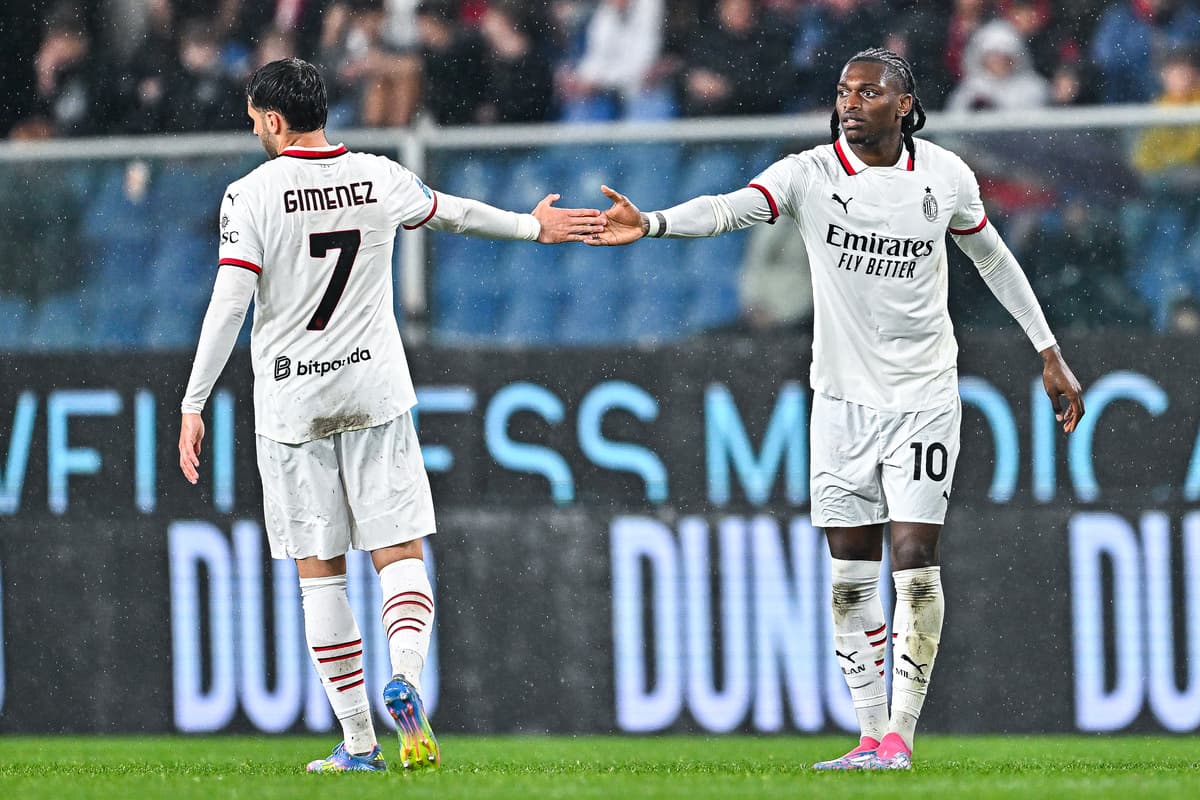
Without Leão, the “hunter” mantle for Milan shifted to the front two of S. Gimenez and C. Nkunku. Their task was to pierce a Genoa defence that, overall, concedes 1.4 goals per game and has allowed 26 at home. De Rossi’s back four – M. E. Ellertsson, A. Marcandalli, S. Otoa and J. Vasquez – were asked to compress space against two mobile forwards supported by a five‑man Milan midfield.
The structural mismatch lay in the numbers: Milan’s 3‑5‑2 naturally creates overloads between the lines, with wing‑backs like Z. Athekame and D. Bartesaghi stretching the pitch horizontally. Genoa’s 4‑3‑2‑1, with T. Baldanzi and Vitinha operating behind L. Colombo, risked leaving their full‑backs exposed in wide two‑v‑one situations. For a team that has already failed to score 8 times at home and kept just 4 home clean sheets, the margin for error against a side that has produced 28 away goals was always thin.
Engine Room
The midfield battle was the game’s true axis. For Genoa, R. Malinovskyi, M. Frendrup and Amorim formed the central trio. Malinovskyi arrives in this fixture as one of Serie A’s most combative midfielders: 6 goals, 3 assists, 36 fouls committed and 10 yellow cards this season underline both his creative weight and disciplinary edge. His ability to punch vertical passes into Baldanzi and Vitinha was Genoa’s main route to destabilise Milan’s shape.
Opposite them, Milan deployed a robust engine room of Y. Fofana, A. Jashari and A. Rabiot. This trio is built for control and counter‑pressing, designed to suffocate second balls and deny Malinovskyi time on the ball. With Milan conceding just 0.9 goals per game overall and 0.7 away, their midfield screen is a major reason why the back three of F. Tomori, M. Gabbia and S. Pavlovic often looks impregnable.
On the flanks, the duel between Genoa’s wide support and Milan’s wing‑backs was decisive. Without natural wide dribblers like Cornet or Messias, Genoa leaned more on Baldanzi drifting into half‑spaces and full‑backs stepping high. That, in turn, invited Milan’s counters into the vacated channels – a dangerous trade‑off against a side that has scored 3 times in their biggest away wins and thrives in broken‑field situations.
From the bench, narratives were equally rich. Genoa had the creative delivery of Aarón Martín waiting in reserve, a defender with 5 assists and 60 key passes this season, but also a player who has already missed a penalty. His crossing could tilt territory, yet his presence would also demand coverage behind him. Milan, meanwhile, could summon the control and vision of L. Modric, the box‑to‑box drive of R. Loftus‑Cheek, or the penalty‑area instincts of N. Fullkrug. And lurking as a late‑game weapon was C. Pulisic, whose 8 goals and 4 assists in Serie A are offset by a blemish from the spot – he has missed one penalty this season, an important detail in any tight contest.
Statistical Prognosis and Tactical Verdict
Viewed through the season’s statistical lens, Milan’s 2‑1 away win fits the underlying patterns. Heading into this game, Genoa’s overall scoring rate of 1.1 goals per match, combined with Milan’s away defensive average of 0.7 conceded, suggested the hosts would struggle to create sustained high‑quality chances. Conversely, Milan’s away attacking average of 1.5 goals per game against a Genoa defence conceding 1.4 overall pointed towards the visitors finding at least one, and likely more, scoring moments.
Genoa’s tactical gamble – shifting to a back four to add an extra attacking line – produced spells of pressure and the single goal that kept the contest alive, but it also loosened their usual defensive rigour. Milan’s more settled 3‑5‑2, honed over 33 league matches this season, brought clarity of roles and a familiar network of passing lanes. Even without Leão and Estupiñan, their structural superiority and deeper bench tilted the late phases in their favour.
Following this result, the story of the afternoon at Luigi Ferraris reads as a microcosm of the campaign: Genoa brave, sporadically incisive but structurally fragile; Milan controlled, resilient and clinical when it mattered. The numbers had hinted at such an outcome. The pitch simply confirmed it.