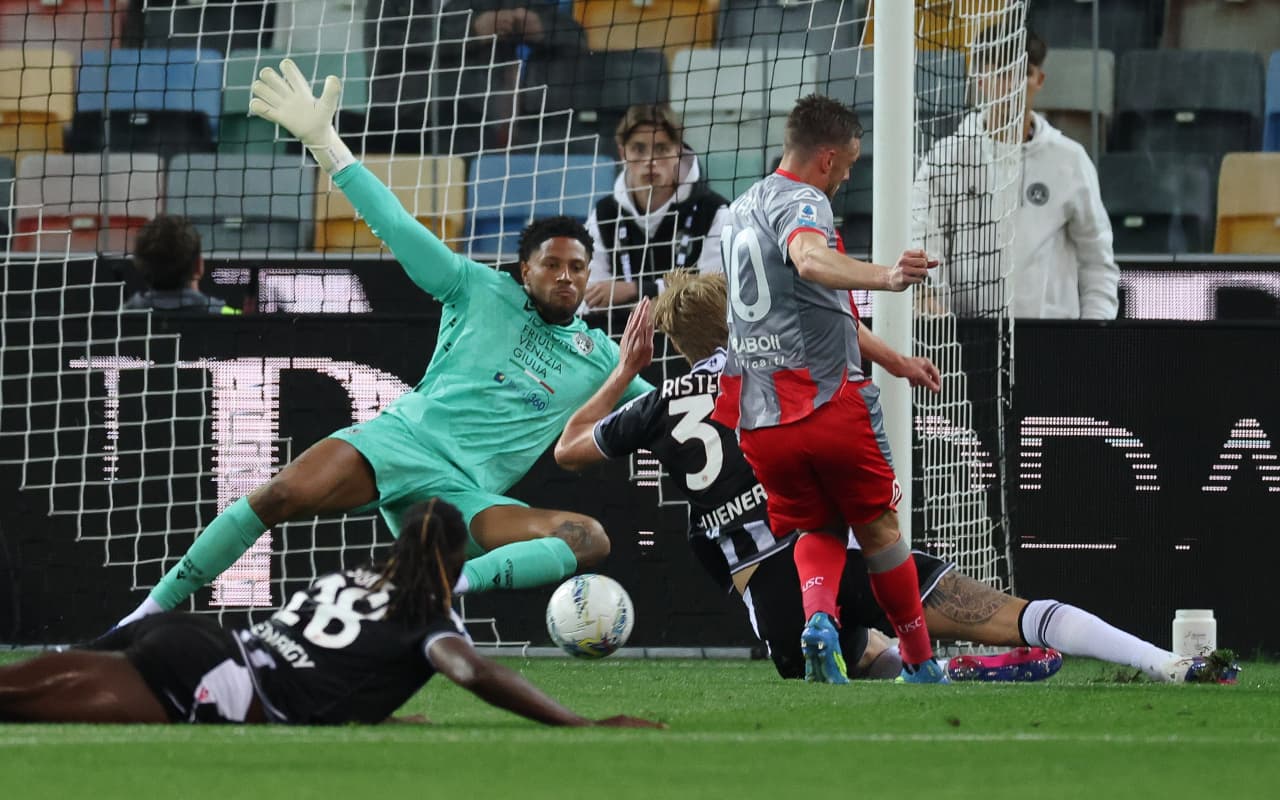
Cremonese Triumphs Over Udinese in Tactical Battle
The lights at the Bluenergy Stadium – Stadio Friuli had barely cooled when the table told the story: Udinese, 10th in Serie A on 50 points with a goal difference of -2, had fallen 0–1 at home to a desperate Cremonese side clinging to survival in 18th on 34 points and a goal difference of -22. Following this result in Round 37, the contrast in league positions remained stark, but the match itself was a lesson in how tactical clarity and edge can trump status.
Both coaches mirrored each other on the whiteboard with a 3-5-2, but the personalities inside those shapes could not have been more different. Kosta Runjaic’s Udinese leaned into structure and balance: a back three of T. Kristensen, C. Kabasele and O. Solet shielding M. Okoye, with a five-man midfield tasked with knitting together a side that, overall this campaign, has scored 45 goals and conceded 47 across 37 matches. Udinese’s season-long profile is clear: more incisive on their travels, where they average 1.5 goals per game, than at home, where they manage 0.9.
Marco Giampaolo’s Cremonese arrived with the same 3-5-2 skeleton but a very different emotional charge. Relegation-threatened, with only 31 goals scored and 53 conceded overall, they have lived on fine margins and suffering. Their away average of 0.7 goals per game underlines how rare an away strike has been; yet in Udine, one was enough.
The tactical voids shaped the narrative before a ball was kicked. Udinese were stripped of important rotation and creativity: K. Ehizibue (suspended for yellow cards), J. Ekkelenkamp (leg injury), N. Zaniolo (back injury) and A. Zanoli (knee injury) were all missing. Zaniolo’s absence in particular ripped out a key creative reference; he has 5 goals and 6 assists this season, and his 53 key passes and 94 dribble attempts speak to a player who normally bends the tempo between the lines. Without him, Runjaic turned to L. Miller, J. Karlstrom and A. Atta to supply A. Buksa and K. Davis.
Cremonese had their own wounds: F. Baschirotto (thigh), W. Bondo (muscle), F. Ceccherini (muscle) and F. Moumbagna (muscle) all sidelined. That stripped depth from the defensive rotation and midfield steel, but Giampaolo still had his key lieutenants: G. Pezzella, a card magnet but a relentless wing presence, and F. Bonazzoli, the side’s leading scorer.
Discipline was always likely to be a sub-plot. Across the season, Udinese’s yellow cards peak between 61–75 minutes, with 27.94% of their cautions arriving in that spell, followed by a late spike of 22.06% between 76–90. Cremonese, by contrast, show their sharpest disciplinary edge late, with 26.09% of their yellows between 76–90 minutes. Pezzella embodies that edge: 8 yellows and 1 red in 30 appearances, alongside 49 tackles and 11 successful blocks. In a match decided by a single goal, the ability to push aggression to the limit without tipping over was crucial; Cremonese walked that line better on the night.
The key matchup was always going to be “Hunter vs Shield”: K. Davis against a back line anchored by M. Bianchetti and S. Luperto, with E. Audero behind them. Davis has been Udinese’s most reliable attacking reference, with 10 goals and 4 assists from 29 appearances, 38 shots (25 on target) and a robust duel profile: 310 duels contested, 146 won. His presence is usually amplified by runners and creators around him; without Zaniolo, he was asked to be both finisher and fulcrum.
Cremonese’s shield has not been statistically impressive this season. Overall they concede 1.4 goals per game, with 1.5 on their travels. Yet Giampaolo’s insistence on a compact 3-5-2, with Thorsby and Grassi screening and Terracciano and Luperto aggressive in their stepping out, created a narrow corridor for Davis and Buksa. Audero, behind them, benefitted from the funnel: shots were forced from less favourable zones, and Cremonese leaned on their season-long habit of grinding out clean sheets (5 away, 11 overall).
On the other side of the duel, Bonazzoli arrived as Cremonese’s “hunter” with 9 goals and 1 assist in 34 games, 55 shots and 31 on target. He is not just a finisher but a reference point who can link play, having completed 821 passes at 84% accuracy and drawn 76 fouls. Against an Udinese defence that concedes 1.1 goals per game at home and 1.4 overall, his movement between Kabasele and Solet was always going to be a threat. One of those movements, in the first half, proved decisive, as Cremonese struck before the interval and carried a 1–0 lead into half-time.
In the “Engine Room”, Udinese’s trio of Miller, Karlstrom and Atta tried to control the rhythm against a Cremonese midfield built for attrition. Pezzella, Maleh and Thorsby, flanking Grassi, worked more like a rotating press unit than classic creators. J. Vandeputte, Cremonese’s top assister this season with 5 assists and 53 key passes, started on the bench but loomed as a second-half weapon to exploit tired legs and transitions. His profile – 893 passes at 77% accuracy and 37 tackles – makes him a rare two-way asset in this squad.
Statistically, the season-long xG story (even if not explicitly quantified here) would have leaned slightly towards Udinese. Heading into this game they were the more balanced side: 14 wins, 8 draws and 15 losses overall, with 11 clean sheets and only 10 matches where they failed to score. Cremonese, by contrast, had failed to score 17 times and carried a far heavier defensive load. Yet the match itself followed Cremonese’s preferred script: low margin, high concentration, and a willingness to suffer without the ball.
The disciplinary profiles underlined the tension of the closing stages. With Udinese prone to a card surge after the hour and Cremonese’s yellows clustering late, the final 15 minutes were always likely to be played on a tightrope. Pezzella, already known for his 8 yellows and 1 red this season, again walked that edge, biting into duels without crossing the line.
Following this result, the tactical verdict is nuanced. Udinese’s structural 3-5-2 remains sound, but their reliance on key individuals was exposed; without Zaniolo’s creativity, Davis was starved of high-quality service, and a home attack that averages 0.9 goals per game once again found itself on the wrong side of a fine margin. Cremonese, meanwhile, showed why their 3-5-2 has been Giampaolo’s default in 25 matches: it compresses space, maximises the work of their wide midfielders, and allows Bonazzoli to be decisive in a game state that suits him.
From a statistical prognosis perspective, the result aligns more with Cremonese’s need than with the season’s broader numbers. Udinese’s defensive solidity at home (21 goals conceded in 19 matches) should, on another day, have underpinned at least a point. But football’s small samples often belong to the side with the clearer emotional edge. Here, that was Cremonese: sharper in the boxes, more ruthless in their moments, and, for one night in Udine, a team whose fragile season-long figures were outweighed by a perfectly executed plan.