Como Edges Parma 1-0 in Serie A Clash
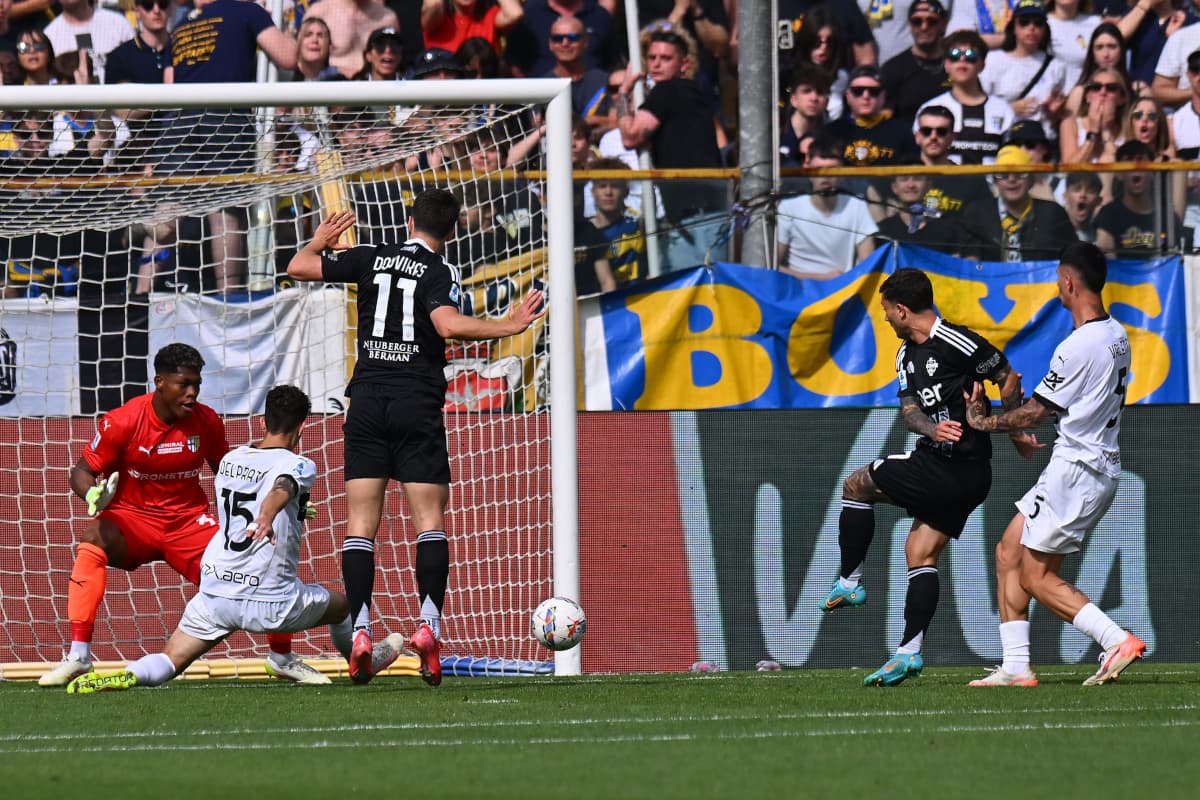
Under the early sun at Stadio Giuseppe Sinigaglia, Como edged Parma 1–0 in a tight Serie A contest that said as much about the season’s trajectories as it did about the 90 minutes themselves. Following this result, the league table underlines the contrast: Como sit 5th on 68 points, with a goal difference of +33 (61 scored, 28 conceded overall), closing in on Europa League qualification, while Parma remain 13th on 42 points, their goal difference at -19 (27 for, 46 against overall), a side still oscillating between consolidation and vulnerability.
Fabregas stayed loyal to the club’s seasonal blueprint, rolling out a 4-2-3-1 that has started 33 of their 37 league matches. J. Butez anchored a back four of I. Van der Brempt, Jacobo Ramon, M. O. Kempf and A. Moreno, with M. Perrone and L. Da Cunha as the double pivot. Ahead of them, the creative triangle of M. Caqueret, M. Baturina and A. Diao worked in support of lone striker A. Douvikas.
Across from them, Carlos Cuesta doubled down on Parma’s most-used structure: a 3-5-2 that has featured 18 times this season. Z. Suzuki started behind a trio of A. Circati, M. Troilo and L. Valenti, with wing-backs E. Delprato and F. Carboni flanking a central band of M. Keita, H. Nicolussi Caviglia and C. Ordonez. Up front, G. Strefezza buzzed around target man Mateo Pellegrino.
The tactical voids on the teamsheet were telling. Como were again without J. Addai (Achilles tendon), N. Paz (knee) and A. Valle (injury), removing both a high-volume creator and some depth from Fabregas’s rotation. For Parma, the absences were heavier still: A. Bernabe (muscle injury), S. Britschgi (suspended after a red card), B. Cremaschi, M. Frigan, J. Ondrejka and G. Oristanio (all knee or leg issues) stripped Cuesta of several attacking and linking options. The result was a Parma XI forced to lean on structure and work rate rather than individual inspiration.
Across the campaign, Como’s identity has been defined by controlled aggression. Heading into this game, they had scored 61 goals in total, with an average of 1.8 at home and 1.4 on their travels, while conceding only 0.8 at home and 0.7 away. Nineteen clean sheets overall and just 7 defeats from 37 underline a side comfortable defending high or low. Their disciplinary pattern is nuanced: yellow cards rise through the middle phases and peak in the 61–75’ and 76–90’ windows (20.25% each), while all their red cards in the league have arrived late, between 76–90’ (100.00% of reds in that band). Como finish games with intensity, but they also live on the edge in those closing minutes.
Parma, by contrast, have built their season around survival instincts. They average only 0.8 goals at home and 0.6 on their travels, with 27 in total, and rely on defensive organisation and clean sheets (12 overall, 8 away) to collect points. Yet their back line is under constant stress: they concede 1.4 at home and 1.1 away, 46 in total, a figure that explains the -19 goal difference. Their card profile shows a side that often has to scramble late: yellow cards spike in 46–60’ and 76–90’ (21.88% each), while red cards are scattered across 31–45’, 61–75’, 76–90’ and 91–105’, suggesting moments of panic when defending deep.
Within that framework, the “Hunter vs Shield” duel centred on A. Douvikas and the Parma defence. Douvikas, with 13 goals and 1 assist in Serie A, is a penalty-box forward who thrives on well-timed service rather than volume shooting alone. His 46 shots, 28 on target, point to efficiency more than wastefulness, and his 23 key passes show he can link as well as finish. Against a Parma side that has allowed 21 away goals and is used to defending in a low-to-mid block, his movement between Troilo and Valenti was always likely to stretch the back three.
Troilo himself is emblematic of Parma’s “Shield”. With 25 tackles, 18 successful blocks and 16 interceptions in just 20 appearances, he is a defender who steps in front of danger rather than simply tracking it. But his disciplinary record – 7 yellows, 1 yellow-red and 1 straight red – reflects the strain of protecting a team that often concedes territory. In a match like this, every aggressive front-foot intervention against Douvikas or the underlapping Baturina carried risk.
The “Engine Room” battle was equally decisive. In Paz’s absence, M. Perrone and M. Caqueret became the twin conductors of Como’s rhythm. Perrone’s 2,111 completed passes at 91% accuracy and 32 key passes show a metronome who can also break lines, while his 56 tackles and 8 yellow cards reveal a midfielder unafraid to bite. Caqueret, with 890 passes at 87% accuracy and 24 key passes, added verticality and press resistance. Together they allowed Como to sustain pressure, recycle possession and keep Parma’s 3-5-2 pinned deeper than Cuesta would have liked.
For Parma, H. Nicolussi Caviglia and M. Keita were tasked with disrupting that axis and feeding transitions to Pellegrino. The Argentine forward has 8 goals and 1 assist from 36 appearances, with 50 shots and 525 duels, 224 of them won. He is less a poacher than a reference point, drawing fouls (67) and occupying centre-backs. But against a Como side that concedes just 28 in total and boasts a towering organiser in Jacobo Ramon – 49 tackles, 17 blocked shots and 36 interceptions, plus 2 goals – Pellegrino was forced into a war of attrition rather than a flurry of chances.
From a statistical prognosis standpoint, this 1–0 fits the underlying numbers. Como’s overall scoring average of 1.6 goals per game against Parma’s 1.2 conceded suggested a narrow but clear home edge, especially given Como’s 10 home wins from 19 and Parma’s 7 away defeats from 19. Defensively, Como’s 0.8 goals conceded per game overall, coupled with 19 clean sheets, made a Parma goal unlikely unless Cuesta’s side could exploit set pieces or a rare transition.
Discipline always threatened to tilt the late stages. With Como prone to late cards and Parma’s yellows and reds clustering after the interval, the final quarter of an hour was destined to be a storm of tactical fouls, time management and territorial battles. In that chaos, Como’s superior structure and deeper bench – options like A. Morata, Jesùs Rodríguez and S. Roberto waiting to alter the tempo – gave them an extra layer of control.
In the end, the single goal felt like the natural expression of two seasons: Como, efficient and balanced, grinding out another result that strengthens their European push; Parma, organised but blunt, again discovering that in a league where margins are thin, defensive solidity without attacking punch rarely bends the story in your favour.