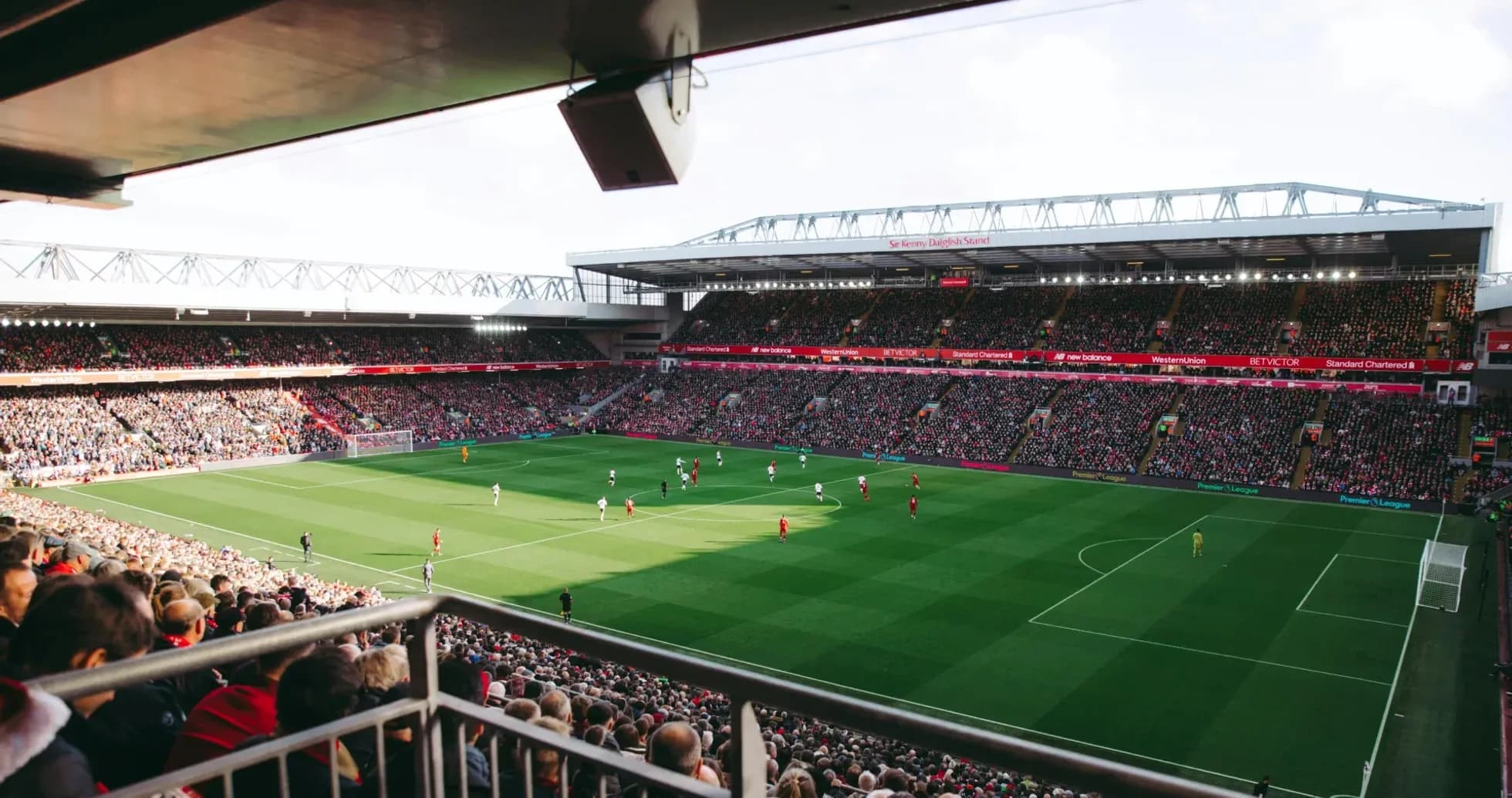
Brentford vs Crystal Palace: Tactical Analysis of 2-2 Draw
Brentford and Crystal Palace shared a 2-2 draw at Brentford Community Stadium in a match where contrasting structures produced a finely balanced tactical contest. Brentford’s 4-2-3-1 gave them territorial control and a possession edge, while Crystal Palace’s 3-4-2-1 traded the ball for vertical threat and penalty-box efficiency. The scoreline, level at both half-time (1-1) and full-time (2-2), reflects how each side imposed its own game for long stretches without ever fully breaking the other’s plan.
I. Executive Summary
Brentford, under Keith Andrews, built their game around a 4-2-3-1 with a clear emphasis on controlled possession and wide overloads. Their 58% of the ball, 454 passes and 9 corners show a team intent on constructing attacks patiently and pinning Palace back. Crystal Palace, coached by Oliver Glasner, leaned into a compact 3-4-2-1 that invited Brentford onto them, then looked to spring forward quickly through Ismaïla Sarr, Y. Pino and J. S. Larsen, supported by aggressive wing-back play from D. Munoz and T. Mitchell.
The xG numbers underline the balance of ideas: Brentford at 2.05 xG versus Palace at 1.67 xG. Brentford generated more volume and territory, Palace created fewer but cleaner moments, especially early on and just after half-time. Both sides were ultimately limited by the other’s structural strengths: Brentford by Palace’s back three and double pivot, Palace by Brentford’s compact double pivot and late-game pressure.
II. Scoring Sequence & Disciplinary Log
The tactical tone was set as early as the 4th minute when VAR confirmed a Crystal Palace penalty for Ismaïla Sarr, validating the visitors’ plan to attack space behind Brentford’s full-backs. Sarr converted from the spot in the 6th minute, giving Palace an early 0-1 platform to defend deeper and counter.
Brentford’s response came through the structure of their 4-2-3-1. With V. Janelt and Y. Yarmolyuk anchoring midfield, the home side pushed both full-backs high and used M. Damsgaard and M. Jensen between the lines to unpick Palace’s back three. In the 40th minute, this pressure told: D. Ouattara struck a Normal Goal to level at 1-1, exploiting the space created by Brentford’s sustained occupation of the final third.
After the interval, Glasner adjusted the front line, with B. Johnson (IN) coming on for Y. Pino (OUT) at 46', adding fresh pace against Brentford’s back four. Palace’s wing-back-centric pattern paid off in the 52nd minute when A. Wharton arrived from midfield to score a Normal Goal, assisted by D. Munoz, whose advanced positioning down the right consistently stretched Brentford’s left side. That made it 1-2 and briefly restored Palace’s control of transition moments.
As Brentford chased the game, Andrews turned to his bench to re-energise the double pivot and attacking midfield band, while Palace rotated their front and back lines to protect the lead. The late phase saw Brentford push their full-backs even higher and introduce S. van den Berg, who would prove decisive. In the 88th minute, D. Ouattara struck again with a Normal Goal, this time assisted by S. van den Berg, whose advanced position from defence underlined Brentford’s all-in attacking posture. That made it 2-2, a fair reflection of the tactical tug-of-war.
Disciplinary actions followed the game’s growing intensity. The card log, in strict chronological order, was:
- 83' Chris Richards (Crystal Palace) — Foul
- 89' Jefferson Lerma (Crystal Palace) — Foul
- 90+3' I. Sarr (OUT) for E. Guessand (IN) was followed by added-time management and protest phases, during which:
- 90+5' Michael Kayode (Brentford) — Argument
- 90+5' Dean Henderson (Crystal Palace) — Time wasting
Totals: Brentford 1 yellow card, Crystal Palace 3 yellow cards, overall 4.
III. Tactical Breakdown & Personnel
Brentford’s 4-2-3-1 was built on a clear idea: dominate the ball, circulate through the double pivot, and create overloads in the half-spaces. C. Kelleher, with 3 Goalkeeper Saves and 0.12 goals prevented, played a controlled role as a build-up starter rather than a shot-stopping hero; Palace’s 16 total shots were often from managed zones, reflecting Brentford’s solid central block.
In possession, Janelt and Yarmolyuk formed a stable base, allowing both full-backs, K. Lewis-Potter and M. Kayode, to advance aggressively. The front four of D. Ouattara, M. Jensen, M. Damsgaard and I. Thiago rotated fluidly, with Ouattara in particular attacking the inside channels between Palace’s wide centre-back and wing-back. Brentford’s 454 passes, 365 accurate (80%), show a side comfortable recycling the ball side-to-side to stretch the 3-4-2-1.
Crystal Palace’s 3-4-2-1, by contrast, was about verticality and compactness. With M. Lacroix, J. Canvot and C. Riad as the initial back three, protected by A. Wharton and D. Kamada, Palace were content to concede the flanks while defending the box. D. Henderson, with 1 Goalkeeper Save and 0.12 goals prevented, benefited from the density in front of him; Brentford’s 14 shots translated into only 3 on target, evidence of Palace forcing attempts from less optimal angles.
The wing-backs were crucial. D. Munoz’s advanced positioning and energy not only delivered the assist for Wharton’s goal but also provided an outlet whenever Palace regained possession. T. Mitchell, on the opposite side, tucked in more often to help against Brentford’s overloads, forming a situational back four.
Substitutions were explicitly tactical. For Palace, Johnson (IN) for Pino (OUT) at 46' added direct running; J. Mateta (IN) for J. S. Larsen (OUT) at 61' offered a more physical reference up front; C. Richards (IN) for M. Lacroix (OUT) at 61' refreshed the back line; J. Lerma (IN) for C. Riad (OUT) at 74' shifted Palace towards a more conservative, midfield-heavy shape to protect the lead; and E. Guessand (IN) for I. Sarr (OUT) at 90+3' was a late attempt to stretch Brentford in transition.
For Brentford, J. Henderson (IN) for V. Janelt (OUT) and K. Schade (IN) for M. Jensen (OUT) at 63' injected new energy and more forward thrust from midfield. S. van den Berg (IN) for K. Ajer (OUT) at 82' effectively turned a centre-back into an auxiliary attacker, a move vindicated by his assist for the 88' equaliser. Finally, J. Dasilva (IN) for Y. Yarmolyuk (OUT) at 89' added another progressive passer to sustain late pressure.
Discipline also reflected tactical pressure points. Palace’s three yellows — Chris Richards and Jefferson Lerma for Foul, Dean Henderson for Time wasting — came as they increasingly defended deep and managed the clock. Brentford’s single card for Michael Kayode (Argument) in stoppage time aligned with their emotional push for a winner.
IV. The Statistical Verdict
The statistical profile supports the idea of a territorially dominant Brentford against a structurally disciplined Palace. Brentford’s 58% possession and superior passing volume (454 passes to Palace’s 339) underpinned their ability to pin Palace back, while 9 corners to 4 highlighted the sustained pressure, especially late on. Their 14 total shots, 3 on target, and 2.05 xG show a side that eventually found decent-quality chances, culminating in Ouattara’s brace.
Crystal Palace’s 42% possession and 339 passes, 228 accurate (67%), speak to a more direct, risk-accepting approach. Their 16 shots, with 5 on target and 1.67 xG, reveal that when they did attack, they did so with purpose, particularly via wide-to-central combinations involving Munoz and Wharton and the early penalty scenario with Sarr.
Defensively, both goalkeepers posted identical goals prevented figures (0.12), underlining that this was less about extraordinary shot-stopping and more about the collective defensive structures. Brentford’s 7 Fouls to Palace’s 5, coupled with the 1-3 yellow card split, show Palace absorbing more pressure and resorting more often to tactical infringements.
In the end, Brentford’s possession-heavy 4-2-3-1 and Palace’s compact 3-4-2-1 cancelled each other out in different phases. Brentford will see the 2.05 xG and late equaliser as evidence of resilience and structural superiority with the ball; Palace will point to their efficiency, early lead and managed deep block as justification for a hard-earned away point.