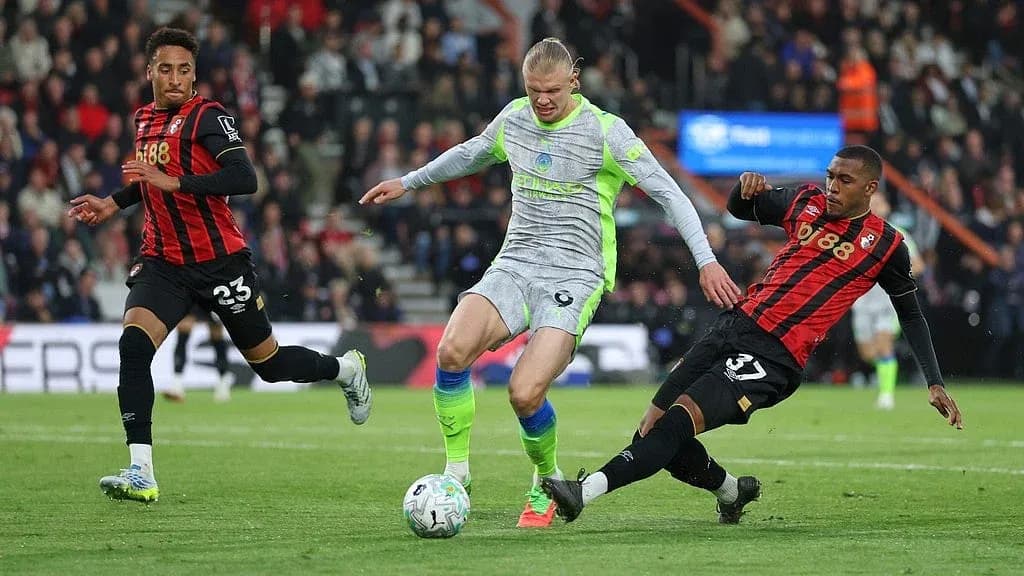
Bournemouth vs Manchester City: Tactical Insights from a 1–1 Draw
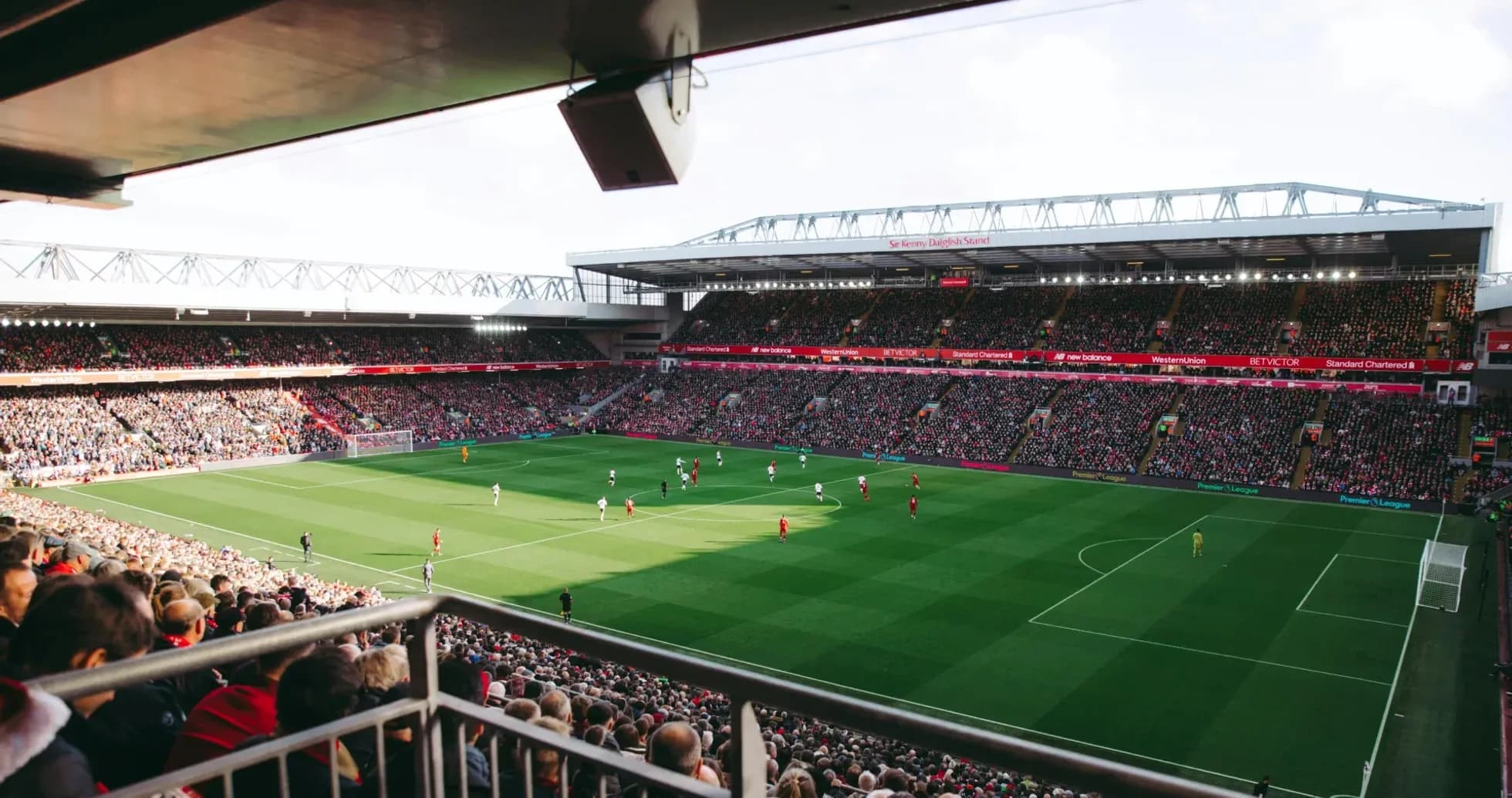
Under the lights at the Vitality Stadium, Bournemouth and Manchester City played out a 1–1 draw that felt less like a dead‑rubber and more like a statement of where both clubs stand heading into the final bend of the Premier League season. Matchday 37, with Anthony Taylor in charge, brought together the league’s second‑placed machine and a Bournemouth side sitting 6th, punching consistently above their historical weight and eyeing Europa League football.
Heading into this game, the table framed the narrative. Bournemouth, 6th with 56 points and a goal difference of 4 (57 scored, 53 conceded), have built their season on stubborn consistency: only 7 losses in 37 matches and an overall scoring rate of 1.5 goals per game. At home, they had played 19, winning 7, drawing 10 and losing just 2, with 29 goals for and 20 against. Manchester City arrived as title hunters in 2nd place on 78 points, their goal difference a commanding 43 (76 for, 33 against). On their travels, City had played 19, winning 9, drawing 6 and losing 4, scoring 32 and conceding 21 – still elite, but not the invincible juggernaut of their home form.
I. The Big Picture: Systems and Seasonal DNA
The tactical shapes told their own story. Bournemouth stayed true to their season’s identity, lining up in a 4‑2‑3‑1 – the formation they have used in 35 league matches – with D. Petrovic in goal, a back four of A. Truffert, M. Senesi, J. Hill and A. Smith, and a double pivot of T. Adams and A. Scott. Ahead of them, the creative band of three – Rayan, E. J. Kroupi and M. Tavernier – worked in support of Evanilson as the lone forward.
City mirrored much of their season’s structure with a 4‑1‑4‑1, the shape they have used 13 times. G. Donnarumma anchored the side, protected by a back line of N. O’Reilly, M. Guehi, A. Khusanov and M. Nunes. Rodri sat as the single pivot, with a fluid four of J. Doku, M. Kovacic, B. Silva and A. Semenyo operating behind E. Haaland.
Bournemouth’s seasonal profile is of a team comfortable in chaos but increasingly disciplined. They average 1.5 goals for and 1.4 against overall, with 11 clean sheets and only 7 games where they failed to score. City, by contrast, are defined by control: 2.1 goals scored per game overall, just 0.9 conceded, and 16 clean sheets. Yet away from home, City’s defensive average of 1.1 goals conceded hinted at vulnerability that Bournemouth’s aggressive front four were determined to exploit.
II. Tactical Voids: Absences and Edge
The key absences all belonged to Bournemouth. R. Christie, who has 1 red card this season, missed out through suspension following that dismissal. His energy between the lines and ability to press from midfield were a loss, particularly against City’s build‑up. Even more structurally significant was the suspension of Álex Jiménez, Bournemouth’s high‑usage full‑back and one of the league’s leading yellow‑card collectors with 10. His 69 tackles, 11 successful blocks and 27 interceptions underline how often he has been the first defensive responder in wide areas.
Without Jiménez, Andoni Iraola turned to A. Smith and A. Truffert as his full‑backs. The reshuffle subtly altered Bournemouth’s pressing angles: less aggressive one‑v‑one duelling high up, more compactness and protection of the half‑spaces. It was a pragmatic concession to City’s wide quality.
Disciplinary profiles also shaped the tone. Bournemouth’s yellow‑card distribution this season shows a pronounced late‑game surge: 26.44% of their bookings come between 76–90 minutes, and another 21.84% in added time (91–105). City’s own pattern is similar but slightly more balanced, with peaks of 19.70% between 46–60 and 76–90, and 16.67% in the 31–45 and 91–105 windows. This was always likely to become a contest where fatigue, pressure and late tackles coloured the closing stages.
III. Key Matchups: Hunter vs Shield, Engine Room Battles
The headline duel was always going to be E. Haaland against Bournemouth’s defensive structure. Haaland arrived as the league’s top scorer with 27 goals and 8 assists in 35 appearances, backed by 102 shots (59 on target). His penalty record this season is human rather than robotic: 3 scored but 1 missed, a detail that keeps defenders honest without assuming inevitability from the spot.
Bournemouth’s “shield” against him was collective rather than individual. Senesi and Hill, with Adams screening, were tasked with compressing the central lane and forcing Haaland to receive either with his back to goal or away from the danger zone. Bournemouth’s season‑long defensive average of 1.1 goals conceded at home suggested they could absorb pressure if they stayed compact.
On the other side, the “hunter” in red and black was E. J. Kroupi. With 13 league goals from 32 appearances and 21 shots on target from 31 attempts, his efficiency and movement between the lines have made him Bournemouth’s sharpest attacking edge. His 21 key passes and 75% pass accuracy show a player comfortable as both scorer and connector. Against City’s away defence – 1.1 goals conceded per game – Kroupi’s ability to drift into the right half‑space behind Rodri and between Guehi and Khusanov was central to Bournemouth’s threat.
The engine room was a layered battle. For City, Rodri and M. Kovacic dictated tempo, with B. Silva as the connective tissue. Bernardo’s season numbers are revealing: 2168 passes at 90% accuracy, 47 key passes, and 49 tackles with 6 successful blocks. He is both metronome and disruptor, and his 10 yellow cards underline how often he steps into the dark arts to halt transitions.
Opposite them, T. Adams and A. Scott formed Bournemouth’s double pivot. Adams’ role was to harry Rodri, break passing lanes into Haaland and B. Silva, and trigger counters. Scott’s task was more subtle: receive under pressure, progress quickly into Kroupi and Tavernier, and ensure Bournemouth’s attacks didn’t die in their own half.
Out wide, J. Doku and A. Semenyo for City posed different problems. Doku’s directness and Semenyo’s dual identity – 10 goals and 3 assists this season, plus 28 tackles and 3 successful blocks – meant Bournemouth’s full‑backs were constantly balancing when to step out and when to tuck in. Semenyo’s familiarity with Bournemouth from his time there added a psychological subplot, even as he operated in City blue.
IV. Statistical Prognosis and Tactical Verdict
Following this result, the numbers reaffirm both sides’ identities. Bournemouth’s draw extends a season built on resilience: 17 league draws in 37 matches overall underline a team that refuses to break. Their overall goal difference of 4 remains modest but meaningful, rooted in a balance between 57 goals scored and 53 conceded.
City’s point keeps their total at 78 and their goal difference at 43, but the match again exposed the slight drop‑off in their away control. Scoring 32 and conceding 21 on their travels this campaign, they are still superior, yet not unassailable.
From an xG‑style lens, Bournemouth’s home scoring rate of 1.5 and City’s away rate of 1.7, set against Bournemouth’s 1.1 goals conceded at home and City’s 1.1 away, always hinted at a tight, low‑margin contest – exactly what unfolded in a 1–1 draw. City’s superior shot volume and Haaland’s individual threat would likely have tilted the underlying chances their way, but Bournemouth’s structure, Petrovic’s presence and the discipline of Adams and Scott narrowed the gap.
Narratively, this felt like a microcosm of both seasons. Bournemouth, even without Christie and Jiménez, showed that their 6th‑place standing is no accident, their 4‑2‑3‑1 system robust enough to bend but not break against the league’s most fearsome attack. City, meanwhile, left with a point that keeps them mathematically powerful but emotionally frustrated – a reminder that on their travels, even their 2.1‑goals‑per‑game aura can be dragged into a dogfight by a well‑drilled, fearless side on the south coast.