AS Roma Dominates Lazio in Derby della Capitale
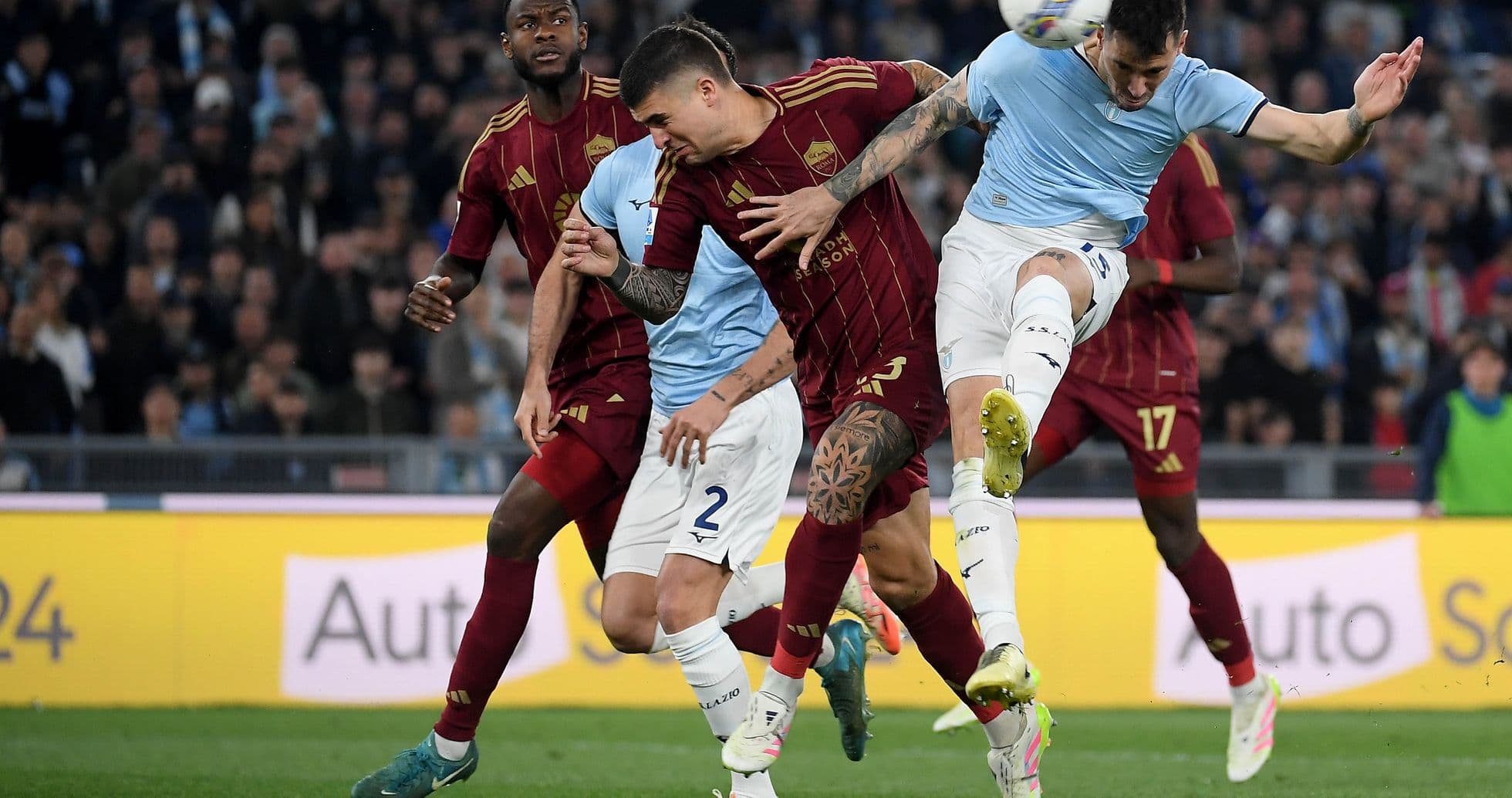
Under the pale midday light at Stadio Olimpico, AS Roma turned the Derby della Capitale into a statement of hierarchy and control. In a Serie A season 2025 clash from the “Regular Season - 37” round, Roma – chasing Champions League security – beat Lazio 2–0, adding another layer to a campaign built on defensive steel and ruthless efficiency.
Following this result, the table snapshots are revealing. Roma sit 4th on 70 points, their goal difference at +26, built on 57 goals scored and 31 conceded overall. Lazio, by contrast, are 9th with 51 points and a goal difference locked at 0, with 39 goals both for and against. The match felt less like a single derby and more like a crystallisation of each side’s seasonal DNA.
At home, Roma’s profile has been that of a bully who rarely loses control: 19 matches played, 13 wins, 3 draws, 3 defeats, with 33 goals for and only 10 against. An average of 1.7 goals scored at home, and just 0.5 conceded, underpins a fortress mentality. Lazio’s away record, by contrast, is solid but not intimidating: 19 played on their travels, 6 wins, 6 draws, 7 defeats, with 14 goals scored and 15 conceded, averaging 0.7 for and 0.8 against away from home.
The 2–0 scoreline mirrored those trajectories: Roma’s structure-first 3-4-2-1 against a Lazio 4-3-3 that has been familiar all season but, in this context, felt underpowered and stripped of its usual leaders.
Tactical Voids and Discipline
The team sheets told a story of absences before a ball was kicked. Roma were without E. Ferguson (ankle injury) and B. Zaragoza (knee injury – both listed twice in the report, underlining how long-term their absence has become). Neither is central to the current tactical core, but their unavailability narrowed Piero Gasperini Gian’s options for late-game rotation and vertical running from midfield.
Lazio’s voids were more structural and psychological. E. Motta, Patric, I. Provedel, A. Romagnoli and M. Zaccagni were all missing – injuries to Motta, Patric, Provedel and Zaccagni, and a red-card suspension for Romagnoli. That cluster ripped out the spine of Maurizio Sarri’s usual setup: the starting goalkeeper, a key centre-back, and one of the primary wide threats were all unavailable. The fact that Romagnoli appears in the season’s top red cards list is telling – his absence was not just physical but disciplinary, a reminder of a Lazio side that has flirted with the edge all year.
Season-long card distributions deepen that picture. Heading into this game, Roma’s yellow cards were heavily concentrated late: 23.88% between 76–90 minutes, part of a broader trend of escalating aggression after half-time (22.39% between 46–60 and another 22.39% from 61–75). Their reds are rare but also second-half events, with 1 between 46–60 and 2 between 61–75. Lazio, however, live even more dangerously in the closing stages: 26.32% of their yellows and a staggering 55.56% of their reds arrive between 76–90 minutes. This derby, with its emotional spikes, was always likely to stress those fault lines.
Key Matchups
Hunter vs Shield
The clearest attacking spear was D. Malen for Roma. As one of Serie A’s top scorers, he came into the season with 13 league goals and 2 assists in 17 appearances, converting 3 penalties from 3 and firing 46 shots, 29 of them on target. His 7.31 average rating and 10 times subbed off underline his status as a high-intensity, high-output forward whose minutes are managed but whose impact is concentrated.
Across from him, Lazio’s defensive “shield” was a makeshift unit. With Romagnoli suspended, Mario Gila had to step into an even more central role. His season numbers – 30 appearances, 30 starts, 2443 minutes, 46 tackles, 17 successful blocks and 25 interceptions – mark him as one of the league’s more reliable stoppers, and his 7.24 rating reflects that. But the structure around him was altered: O. Provstgaard alongside him, A. Marusic and N. Tavares as full-backs, and a new goalkeeper in A. Furlanetto due to Provedel’s shoulder injury.
Roma’s broader attacking pattern – 57 goals in total this campaign at an average of 1.5 per game, with 1.7 at home – met a Lazio defence that is merely average: 39 conceded overall, 15 away, at 0.8 per game on their travels. The derby’s 2–0 outcome felt like Roma’s offensive ceiling brushing up against Lazio’s realistic defensive limit.
Engine Room
In midfield, the battle was defined by Roma’s hybrid line of four – Z. Çelik, B. Cristante, N. El Aynaoui and Wesley Franca – against Lazio’s trio of T. Basic, N. Rovella and K. Taylor.
Wesley was a quiet axis of control and edge. Over the season he has combined 5 goals with 1028 passes (33 key passes), 53 tackles, 5 blocked shots and 23 interceptions. His disciplinary record is as sharp as his ball-winning: 6 yellows, 1 yellow-red and 1 straight red, with 1 penalty won. In the derby context, he was the player most likely to set Roma’s pressing tone and to test Lazio’s composure between the lines.
On the flanks, Çelik’s season as a high-usage defender – 33 appearances, 31 starts, 2646 minutes, 62 tackles, 6 blocked shots and 21 interceptions – combined with his 2 assists and 26 key passes to create a dual role: wide stopper and wide playmaker. Against Lazio’s front three of M. Cancellieri, B. Dia and T. Noslin, his ability to both defend and progress the ball was crucial in tilting the pitch.
Lazio’s midfield, without M. Guendouzi (who appears prominently in the red-card stats but was not listed among the absentees, suggesting rotation or tactical choice), lacked some of its usual vertical aggression. Basic and Rovella are more about circulation than incision, and with Zaccagni out, the burden of creativity shifted uncomfortably onto the shoulders of Cancellieri and Noslin.
Behind them, Roma’s back three of G. Mancini, E. Ndicka and M. Hermoso formed a seasoned defensive triangle. Mancini’s season numbers – 51 tackles, 14 blocked shots, 47 interceptions, 69 fouls committed and 9 yellow cards – paint him as both enforcer and lightning rod. Hermoso, with 36 tackles, 6 blocked shots and 28 interceptions, offers a calmer, more positional reading of danger. Together, they were designed to smother Lazio’s 4-3-3 central thrusts and force the visitors into low-percentage wide deliveries.
Statistical Prognosis and xG Lens
Even without explicit xG values, the statistical contours point to a derby that Roma were favourites to control. Heading into this game, Roma’s home defensive record – 10 goals conceded in 19 matches, with 11 clean sheets – suggested a high probability of shutting Lazio out, especially against an away attack averaging just 0.7 goals per game on their travels and failing to score 11 times away this season.
On the attacking side, Roma’s 33 home goals and 1.7 home goals-per-game average were always likely to generate an xG profile hovering around the 1.5–2.0 mark in a high-emotion derby with territorial advantage. Lazio’s away defence, conceding 15 times in 19, tends to allow chances but not collapses; a two-goal concession sits perfectly within that bandwidth.
Discipline and late-game patterns matter in projecting xG and chance volume. Roma’s propensity to collect yellows late (23.88% between 76–90 minutes) hints at a team that defends aggressively when protecting a lead, potentially allowing low-quality shots but few clear openings. Lazio’s late red-card spike – 55.56% of reds in the 76–90 window – raises the risk of playing phases with reduced numbers, inflating opponents’ xG in closing stages. Even if no dismissal occurred here, that underlying tendency speaks to a side that can lose structure under scoreboard pressure.
Penalties add another layer. Roma’s record from the spot this season is perfect: 5 penalties taken, 5 scored, 100.00% conversion, no misses. Lazio match that efficiency with 4 scored from 4, 100.00% as well. In a derby where marginal calls can tilt momentum, both sides carry high xG-on-penalty potential, but Roma’s more frequent box presence at home makes them more likely beneficiaries.
Following this result, the numbers and the narrative align. Roma’s 2–0 win is not an outlier but a logical extension of a campaign in which they average 1.7 goals scored and 0.5 conceded at home, driven by Malen’s cutting edge, Wesley’s two-way engine and a defensive core that includes Mancini and Hermoso. Lazio, stripped of Romagnoli, Provedel and Zaccagni, brought a recognisable shape but not enough substance to bend those trends.
In tactical and statistical terms, this derby was less a surprise and more a confirmation: Roma are playing at a Champions League level of control and efficiency, while Lazio remain a dangerous but flawed side, capable of structure but too often undermined by absences, disciplinary edges and an away attack that rarely bites hard enough.