Arsenal's Tactical Mastery in 1-0 Win Over Burnley
Arsenal’s 1-0 win over Burnley at Emirates Stadium was a controlled, possession-heavy performance built on Mikel Arteta’s 4-3-3 structure and an almost total suppression of Burnley’s attacking threat. With 61% of the ball, a 13–5 shot advantage and an xG edge of 1.03–0.21, the hosts turned territorial dominance into a narrow but tactically deserved victory, while Burnley’s 4-2-3-1 under Mike Jackson functioned more as a low block and counter screen than a genuine attacking platform.
The decisive moment came on 37 minutes: Kai Havertz finished for Arsenal, assisted by Bukayo Saka. The move underlined Arsenal’s intended attacking pattern – wide creation feeding the central forward – and was the one occasion Burnley’s compactness was cleanly broken. That goal established a 1-0 lead that held through half-time and to full-time, with Arsenal managing the game rather than overextending in search of a second.
Out of possession, Arsenal’s structure was aggressive and high. Declan Rice anchored the midfield, screening in front of William Saliba and Gabriel, allowing full-backs C. Mosquera and Riccardo Calafiori to hold relatively advanced starting positions. The defensive outcome was emphatic: Burnley registered 0 shots on goal from 5 total attempts, split between 2 inside the box and 3 from distance. David Raya did not record a single save, and Arsenal’s goals prevented figure of 0.85 reflects that most of Burnley’s meagre xG came from low-quality looks that were either blocked or off target before the goalkeeper was involved.
In build-up, Arsenal’s 510 passes with 440 accurate (86%) show a patient, circulation-heavy approach. Martin Odegaard and Eberechi Eze operated as interior playmakers ahead of Rice, creating a 3-2 base in the first phase when one full-back tucked in and the other advanced. The ball was moved methodically into wide zones, particularly towards Saka on the right and Leandro Trossard on the left, with Havertz acting as a connector between the lines and a penalty-box presence. The 9 shots inside the box out of 13 total underline how often Arsenal were able to reach advanced central spaces, even if the final action did not consistently match the approach play.
Burnley’s 39% possession and 325 passes (254 accurate, 78%) tell the story of a side largely content to defend deep and look for sporadic transitions. Florentino and L. Ugochukwu formed a double pivot in front of a back four of K. Walker, A. Tuanzebe, M. Esteve and Lucas Pires, with the wide trio of L. Tchaouna, Hannibal Mejbri and J. Anthony supporting Zian Flemming. However, Burnley struggled to connect those lines; their attacks were often vertical and rushed, leading to early shot selection from distance rather than sustained pressure. The low xG of 0.21 and absence of shots on target confirm that Arsenal’s rest defence – with Rice, Saliba and Gabriel controlling central transitions – functioned effectively.
Discipline and defensive strain were evident in Burnley’s foul count and bookings. They committed 16 fouls to Arsenal’s 7 and took three yellow cards, all linked to game-state and pressure. At 28', Hannibal Mejbri (Burnley) was booked for Time wasting, an early indication that Burnley were already looking to slow the rhythm at 0-0. In added time, with Burnley chasing, the back line was forced into more desperate interventions: at 90+1', Zian Flemming (Burnley) received a yellow for Foul, followed by Lucas Pires (Burnley) at 90+4' also for Foul. Arsenal, by contrast, picked up a single caution: at 67', Kai Havertz (Arsenal) was booked for Foul, a reminder that even within a controlled performance, Arsenal still needed to disrupt the occasional Burnley break.
The substitution pattern from both managers was tactical rather than reactive. For Burnley, the changes around 70–82 minutes were aimed at refreshing legs and adding more direct threat without altering the base 4-2-3-1. At 70', Z. Amdouni (IN) came on for H. Mejbri (OUT), followed a minute later by J. Laurent (IN) for L. Ugochukwu (OUT), adding fresh energy in midfield and the half-spaces. At 78', J. Ward-Prowse (IN) replaced Florentino (OUT), theoretically increasing passing range and set-piece quality. At 82', J. Bruun Larsen (IN) came on for L. Tchaouna (OUT) and B. Humphreys (IN) for M. Esteve (OUT), a late attempt to add attacking width and adjust the defensive line.
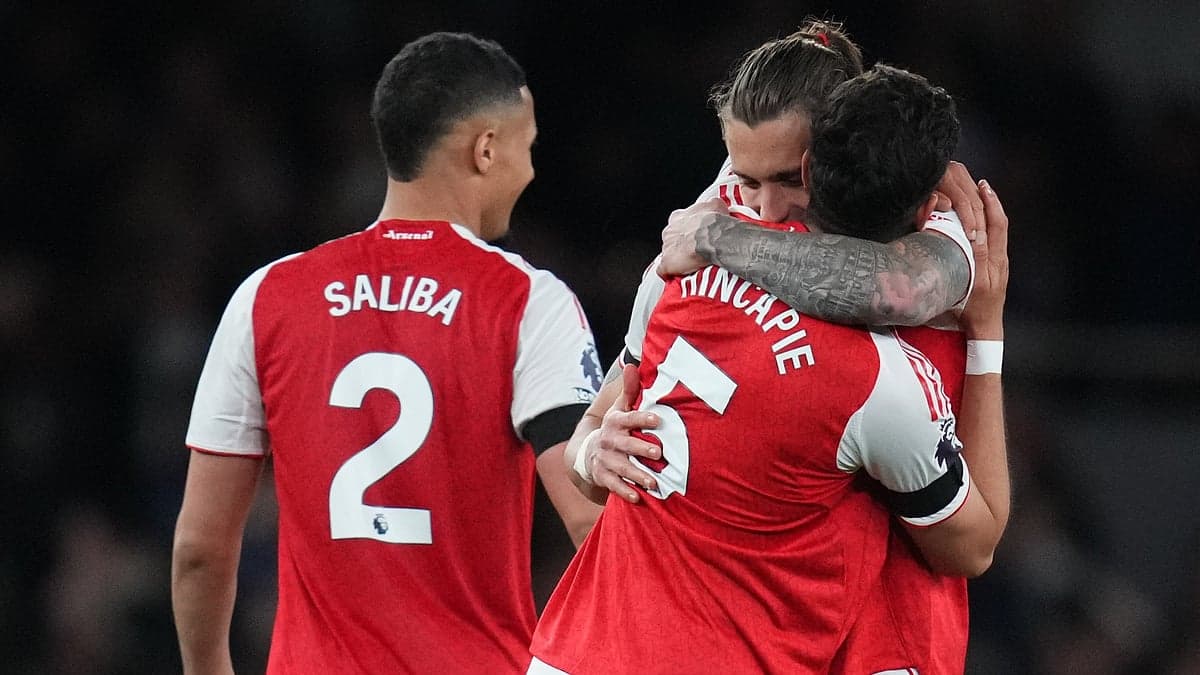
Arteta’s changes were geared towards game management and maintaining defensive control while preserving a counter threat. At 72', Piero Hincapie (IN) replaced Riccardo Calafiori (OUT), refreshing the left side of the back four without altering the structure. At 73', Viktor Gyökeres (IN) came on for K. Havertz (OUT), offering a more direct outlet to run channels and hold up long clearances, while M. Lewis-Skelly (IN) replaced Eze (OUT), adding legs and defensive coverage in midfield. In added time at 90+3', Gabriel Martinelli (IN) replaced Trossard (OUT) and Mikel Zubimendi (IN) came on for Odegaard (OUT), closing the game with fresh wide running and an extra layer of control in central areas.
From a statistical verdict, Arsenal’s 1.03 xG to Burnley’s 0.21, combined with a 3–0 shots on goal differential and 61–39 possession split, supports the 1-0 scoreline as a fair reflection of the balance of play, even if Arsenal might have hoped to convert one more of their 9 box shots. Arsenal’s passing efficiency at 86% contrasted with Burnley’s 78%, reinforcing the impression of a technically superior side dictating tempo. Defensively, the fact that Raya recorded 0 saves while Arsenal still posted 0.85 goals prevented suggests that the home side’s block and pressure limited Burnley to speculative efforts that were dealt with before they reached the keeper.
Burnley’s 16 fouls and three late bookings underscore how often they were forced into last-ditch or disruptive actions to contain Arsenal’s circulation and transitions. Yet, thanks to M. Weiss’s 2 saves and a compact block, Burnley limited Arsenal to a single goal, matching their own goals prevented value of 0.85. Tactically, however, the gap in chance creation and control was clear: Arsenal’s 4-3-3, with Rice anchoring and Saka supplying, provided a coherent platform; Burnley’s 4-2-3-1, while resilient, lacked the progression and final-third quality to seriously threaten the hosts.