World Cup Portraits: The Art of Player Representation
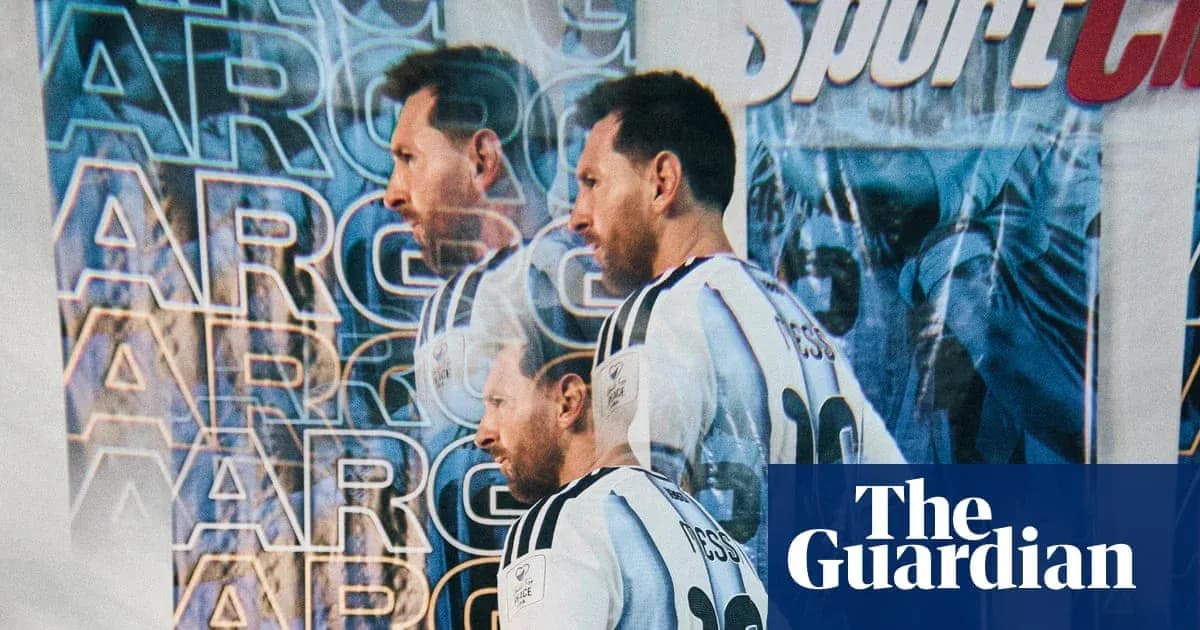
Lionel Messi freezes, almost statue-like, in front of the lens. Marc Cucurella flicks his hair and looks ready to dance. Diego Moreira hides his eyes behind a forearm, a ghostly tattoo peeking through. Harry Kane drops awkwardly to one knee, somewhere between a pose and a stretch.
Welcome to the World Cup’s most unavoidable fixture: the official portrait.
There are 1,248 players and 48 managers at this tournament. Every one of them has filed through the same production line, like it or not, to deliver the images that will follow them through every broadcast, every team sheet, every pre-match graphic.
Shot by Getty Images on behalf of Fifa in recent weeks, the portraits form a vast gallery of micro-performances. Some players play it straight, others lean into theatre. In a few seconds under the lights, you see not just a face but a choice: how they want to present themselves to the world.
Behind the scenes, the process is anything but casual. Getty’s backstage images reveal a slick operation built for speed and control. Two photographers are assigned to each team, working in tandem. One set-up is plain, almost ascetic. The other is more distinctive, ready for something bolder. Players and managers are shuffled between them with the efficiency of a pit stop.
The lighting is deceptively simple. A big studio strobe with a softbox punches light across the body. A couple of rim lights carve out shoulders and jawlines, separating superstars from muted backdrops. It’s classic studio craft, stripped of fuss so the focus can stay on expression.
What lifts these portraits beyond the routine is the glass in front of the camera. Special lens filters throw up unpredictable smears, flares and kaleidoscopic streaks – the kind of in-camera distortion that makes Messi’s image, for instance, feel more like a dream sequence than a standard media day mugshot. The 2022 World Cup portraits were louder in their backgrounds; this time, the colour and chaos live inside the frame instead.
Tom Jenkins, The Guardian’s veteran sports photographer, knows the drill as well as anyone. Photographing famous footballers is rarely straightforward. Doing it when they’re being marched through on a tight schedule is another level.
“With these kinds of shoots, you only get a few minutes with each player and you have to bash out various pictures and think incredibly quickly,” he says.
The clock is always ticking. You need the safe shot – the “school photo”, as Jenkins calls it – the kind that used to define player portraits for decades. Shoulders square, eyes front, no drama. But that’s no longer enough. The modern brief demands something else: personality, emotion, a bit of fun.
Many players arrive with their own moves already rehearsed. Goal celebrations double as ready-made poses. Arms folded. Hands to ears. Fingers to lips. Still, the photographer can’t just sit back and record. There has to be a mental playbook of ideas, ready to deploy when a player freezes or falls back on the same old look.
“The interesting thing is that you’re in control of these superstars and every aspect of the shoot,” Jenkins says.
That control comes with its own weight. If the lighting is wrong or the settings are off, there are no second chances. Everything has to be tested and locked in before the first name walks on set. Once they arrive, the only job is to read them, react and squeeze something real out of the moment.
Even the basics are handled with forensic care. Name cards sit ready for every player – including Messi, just in case anyone in the later editing chain somehow fails to recognise the most famous footballer on the planet. After each burst of frames, players often wander over to the monitor, checking angles and expressions, approving or discarding with a swipe of the finger.
They know exactly what these pictures can do for them. Image is currency now. Instagram reach, brand campaigns, personal logos – all of it feeds into how a player stands in front of a camera.
“Most football players are very aware of their own image these days and they know how powerful it can be, especially through Instagram,” Jenkins explains.
They’re not rookies in this space. Eberechi Eze has posed for Burberry. Declan Rice has fronted L’Oréal. For many, the World Cup portrait feels less like an obligation and more like another line on an already crowded media CV. Some genuinely enjoy the performance.
Not everyone comes out of it unscathed. England’s contingent, always under the harshest spotlight, found themselves mocked as quickly as they were immortalised. Rice’s sunburn became a punchline. Anthony Gordon drew comparisons to Princess Diana. Dean Henderson’s intense side-eye unsettled more than a few viewers.
Yet those same sessions produced some of the tournament’s most striking images. The more inventive portraits of Jude Bellingham and his teammates show what can be created when photographers push the limits of what’s possible in camera, even if the subject walks in flat, tired or uninspired. Technique and timing can carry a picture when charisma doesn’t.
And still, the standout image of this World Cup isn’t of a player at all.
It belongs to Marcelo Bielsa.
Uruguay’s head coach, photographed by Michael Regan at the team’s base in Cancún, Mexico, delivered a portrait that has travelled further and faster than any goal celebration shot. Faced with the camera, Bielsa simply refused to play the game. He didn’t square up. He didn’t fix his stare. He looked down at his feet.
The result is jarringly different from the tournament’s polished parade of faces. No eye contact. No pose. Just a man who seems to want to be anywhere else. For a figure as famously unorthodox as Bielsa, it fits perfectly. Later, he would brush the whole thing off with a simple protest: “I’m not a model.”
Jenkins sees it as the purest expression of what a portrait can be.
Ultimately, the best image doesn’t flatter or decorate. It reveals. It catches something true in the split second between instruction and instinct. In Bielsa’s case, that truth is stubborn, awkward, entirely uninterested in the circus around him.
That’s why his portrait has cut through the noise of 1,296 carefully lit faces. In a World Cup obsessed with presentation, one man chose not to perform – and ended up with the most honest picture of all.