
England's Defensive Dilemma: Can Tuchel Find Stability?
England’s forwards lit up Dallas. Their defenders did not.
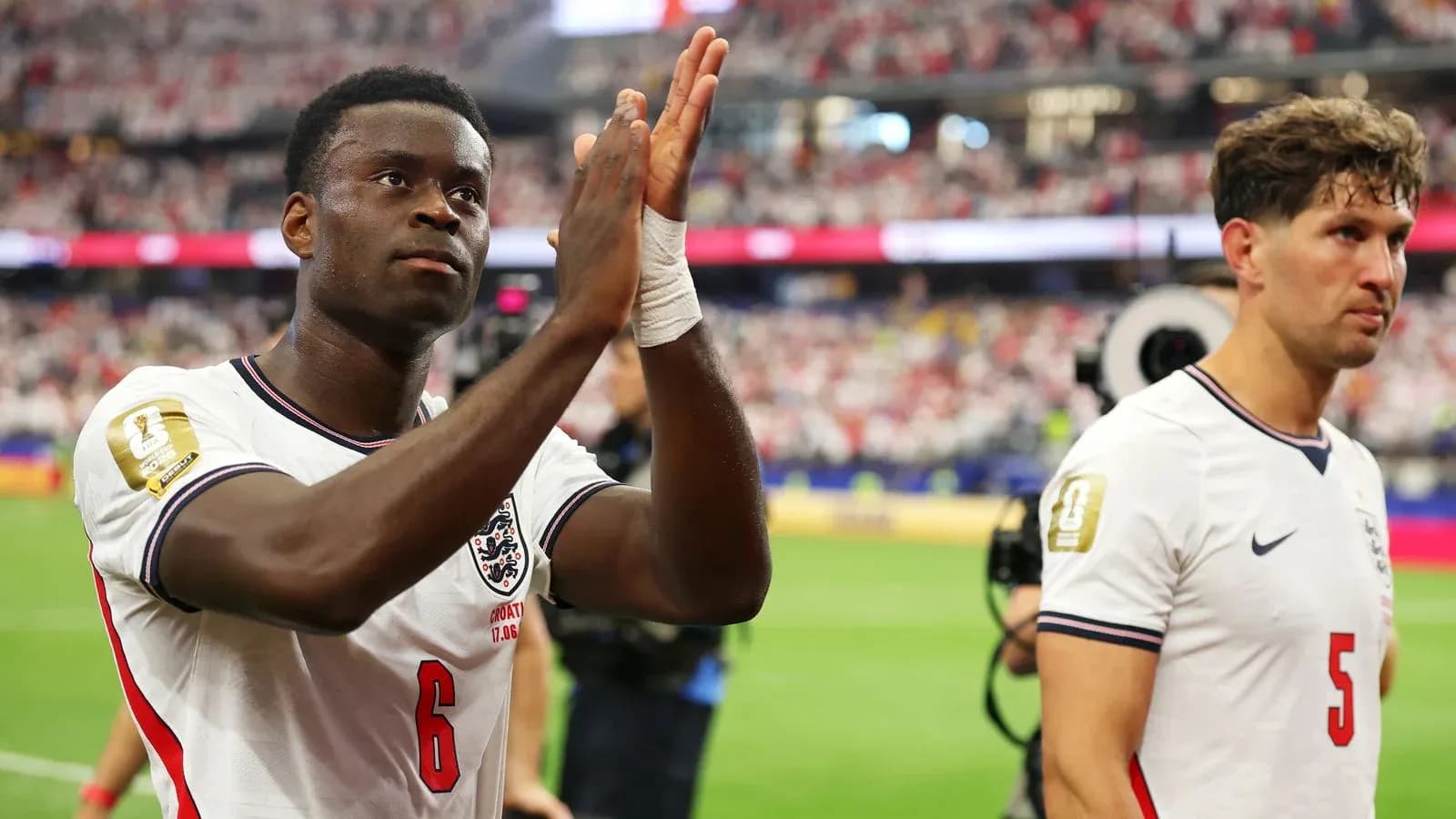
Thomas Tuchel walked away with three points and a statement attacking performance against Croatia, but the questions that trailed him down the tunnel were all about the other end of the pitch. Ezri Konsa and John Stones, paired together in the middle, never truly looked like a World Cup-winning axis. By the time Croatia had scored twice, the pre-match doubts had company.
Gary Neville put it bluntly at half-time on ITV. “Is Konsa and Stones a partnership that can win us the World Cup?” he asked, after Stones went to ground too easily for the first goal and Konsa misjudged a simple chipped pass in the build-up to the second. Neville’s warning to Declan Rice and Elliot Anderson was equally stark: they would have to be “outstanding” to shield this defence.
The numbers from Dallas did little to calm the nerves. Stones ended his 87 minutes with one tackle attempted – and missed – plus a single clearance. He did win four of seven duels, but that hardly screams dominance. Konsa’s figures were more troubling: three wins from eight duels, just one success in five aerial battles, and no tackles or interceptions at all.
The eye test matched the data. Croatia’s early high press rattled England’s back line, with both centre-backs coughing up possession in dangerous areas. England’s attack eventually burned through the chaos, but the sense of fragility lingered.
Jamie Carragher didn’t sugar-coat it on Sky Sports News the next morning. “We probably lack something defensively to go all the way,” he said, pouring cold water on the optimism generated by that “full gas” second half.
So where does Tuchel turn now? The obvious answer is already sitting on the bench.
Guehi waiting to restore balance
Marc Guehi’s omission from the starting XI against Croatia surprised plenty, given the season he has just produced. At 25, he looks like a defender entering his prime, and his mid-season move from Crystal Palace to Manchester City only accelerated that rise. Slotting straight into Pep Guardiola’s side, he collected another FA Cup winners’ medal in May and, more importantly, emerged as one of the Premier League’s most complete centre-backs in 2026.
Since his City debut in January, Guehi has ranked among the elite in both defensive and possession metrics. He sat 10th in the league for possession won in the defensive third, fourth for interceptions, sixth for forward passes and fifth for passes completed in that period. That blend of aggression and composure is exactly what England’s back line lacked in Dallas.
His rise has come at a cost for Stones. Once a cornerstone of Guardiola’s defence, Stones has been squeezed out by Guehi’s emergence. The City manager trusted the new man. Stones, despite insisting he was fit and ready, could not get back in. The numbers are stark: just five appearances for City in 2026, only five Premier League starts in the past year – and City lost four of those.
Stones will leave City at the end of his contract this summer. Tuchel, though, still values him. The England manager made room for Stones in his World Cup squad for a reason: experience, leadership, and that familiar calm on the ball. But he may have erred in how he used him.
To accommodate Konsa on his favoured right side, Stones started on the left of the pairing against Croatia. It is not his natural home. Across the past three seasons at City, Stones has logged just 371 minutes at left centre-back, compared to 1,151 minutes on the right. In an era obsessed with detail, that shift matters.
Guehi, by contrast, has lived on that left side for much of his career, even while being right-footed. At Palace he anchored the left of a back three. At City he has shown he can operate comfortably on both sides, but the left remains his most familiar channel.
He explained the nuance himself back in December. “When you have been playing on one side for a long time and you switch to the other side it can throw you off a little bit,” he told Sky Sports. It was an understated line, but it cuts to the heart of England’s current dilemma.
Reuniting Guehi with Stones, with the former on the left and the latter back on his natural right, looks the cleanest route to stability. Tuchel used that combination in England’s first World Cup warm-up against New Zealand and, for many, it felt like the likely tournament blueprint.
The Konsa question
But that plan runs straight into a brutal reality: what happens to Konsa?
Under Tuchel, only Jordan Pickford and Harry Kane have played more minutes for England. Konsa has been a constant. Guehi, when he has started, has actually partnered Konsa more often than Stones. To drop the Aston Villa defender after one World Cup game – a game England still won – would be ruthless.
Tuchel could dodge that decision by squeezing all three into the XI against Ghana.
He has already tested that structure. In October against Wales, Konsa started at right-back with Stones and Guehi as the centre-backs. The shape suited Tuchel’s preference for a physically dominant back line. He has consistently overlooked more creative full-backs such as Trent Alexander-Arnold in favour of defenders who can win duels, defend the back post and hold their own in one-on-one battles.
That approach would have consequences. Reece James, who impressed when he drifted into midfield late on against Croatia, would be the obvious casualty. James has started five times at right-back under Tuchel – more than anyone else in this era – and clearly sits at the top of the pecking order when fit.
His fitness, though, is the catch. James has only just put together back-to-back starts for England, against Costa Rica and Croatia, after a long stretch without doing so for Chelsea. He had not started consecutive games for his club since March. Managing his minutes early in a long tournament is not a trivial concern.
Tuchel’s tightrope
Strip away the permutations and the core issue is simple: England’s attack looks ready to take on the world; their defence does not. The Croatia win showed both sides of this team. Kane and company can rip opponents apart. The back line can invite them back in.
Tuchel’s job over the next few days is to pick a defensive formula that can carry England through the knockouts, not just through the group. Guehi’s return feels inevitable. Stones’ experience still matters. Konsa’s trust bank with the manager is deep. James’ quality is obvious, his body less reliable.
Somewhere in that mix lies a back four that can turn this World Cup from a thrilling ride into a genuine tilt at the trophy. The question now is whether Tuchel finds it in time.




