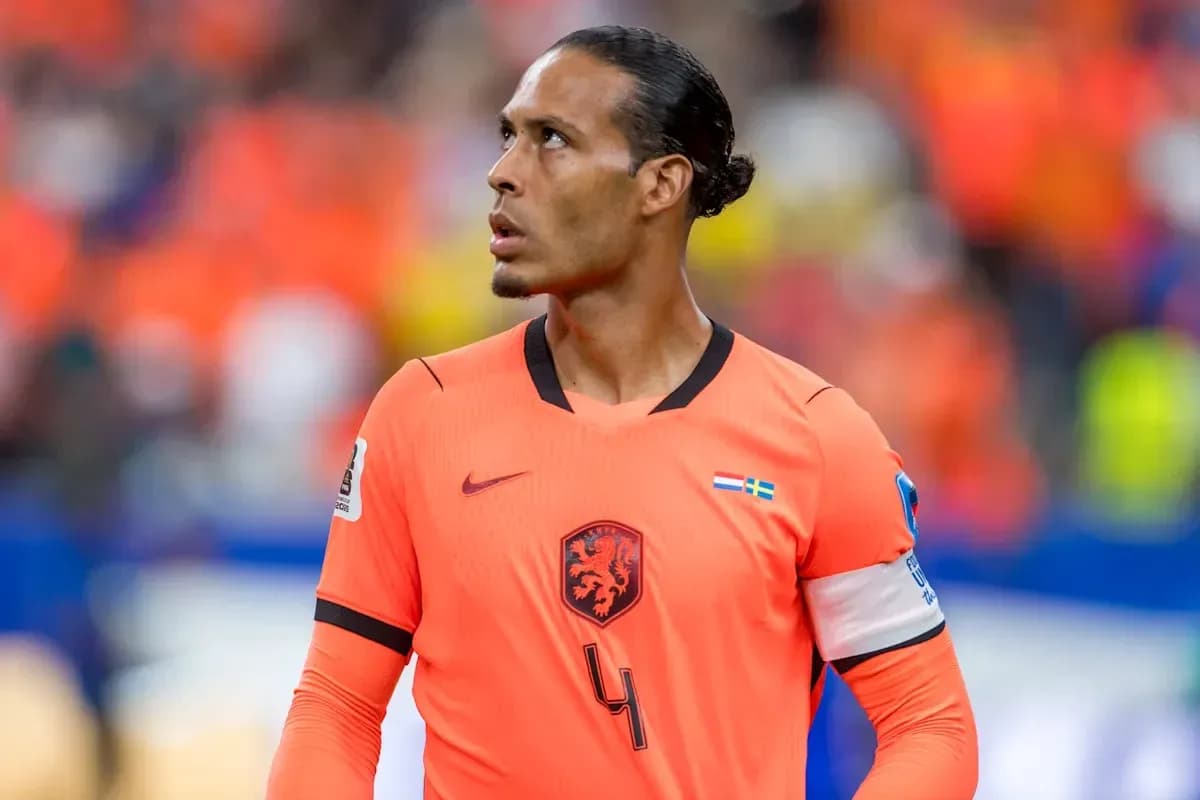
Virgil van Dijk Faces Criticism After Netherlands Exit to Morocco
Virgil van Dijk has walked into a storm back home. The Netherlands’ World Cup exit against Morocco has not just stung a football-mad nation; it has triggered one of the fiercest personal critiques of a Dutch captain in recent memory.
A late Moroccan equaliser, extra time, penalties, and then the fall. Out in the quarter-finals after a shootout, a campaign that once carried quiet belief ended with fingers pointed squarely at the Liverpool defender.
Driessen’s Verdict: “Time Is Up”
De Telegraaf did not bother with soft landings. In a blistering column, Valentijn Driessen tore into both Van Dijk and outgoing head coach Ronald Koeman, accusing them of betraying the very principles Dutch football claims to stand on.
“Ronald Koeman and Virgil van Dijk have betrayed everything our national team stands for,” he wrote, a line that has ricocheted around the Netherlands since the final whistle.
Driessen argued that the switch to a back three during the tournament was not a clever tactical evolution but a concession to Van Dijk’s shortcomings in organising the defence in the group stage. In his view, the captain had effectively forced a compromise on the team’s identity, and the back line never fully convinced.
When Morocco’s dramatic equaliser arrived in stoppage time, Driessen was unforgiving. He pinned the moment on Van Dijk, accusing him of losing his man at the worst possible time and allowing the move that dragged the tie into extra time. His conclusion was brutal: for him, Van Dijk’s “time is up” at international level.
For a player who has come to symbolise calm and authority for both club and country, it was a stunningly harsh public takedown — and one that captured the raw frustration of a nation that expected more.
One Lapse, Huge Consequences
The equaliser will haunt Van Dijk. Morocco threw bodies forward in added time, sensing one last chance. The cross came in, the run was made, and the Dutch captain could not shut it down. The ball was in the net, the momentum gone.
This is the defender who built his reputation on reading danger before it appears, on dominating his penalty area, on making strikers feel suffocated. To see him caught out in such a decisive moment felt jarringly out of character.
Yet boiling an entire World Cup exit down to one defensive lapse strips away the nuance of knockout football. The Netherlands had chances to kill the game long before the late drama. They did not take them. The margins narrowed, and when the tension peaked, Morocco punished them.
Across the 120 minutes, Van Dijk still had long spells where he looked like the leader he has been for a decade: clearing crosses, winning headers, stepping in front of danger, keeping Morocco at arm’s length for much of normal time. None of that will be the lasting image. The equaliser will.
Playing Through Pain
After the match, Koeman added a detail that changes the lens, even if it does not erase the mistake. He revealed that Van Dijk had been struggling with a calf problem in the latter stages of the contest.
The defender’s calf had been “bothering him badly”, the coach admitted, yet Van Dijk stayed on through extra time, refusing to come off as his side chased a semi-final place.
For a central defender, a compromised calf is not a minor inconvenience. It affects acceleration, turning, recovery runs — exactly the qualities tested in the dying minutes of a knockout tie when legs are heavy and spaces open up.
Van Dijk could have asked to be replaced. He chose not to. He stayed on, limping through the chaos, trying to marshal a back line under siege. That decision will be interpreted in two ways: heroic commitment or stubbornness that hurt the team. Either way, it underlines the context behind a performance now being dissected frame by frame.
Legacy Under Scrutiny, Not Erased
The backlash speaks to the emotional violence of tournament exits. Captains are lightning rods in these moments. When things go wrong, the armband weighs more.
Van Dijk has spent over a decade at the top of European football, defined by consistency, leadership and a rare sense of control under pressure. One agonising night does not wipe away Champions League runs, Premier League titles or the years in which he transformed defences almost by presence alone.
Yet international football is unforgiving. The World Cup does not care about reputations built at club level. It deals in snapshots: one game, one duel, one misjudged step. Those are the images that stick.
What Comes Next
The immediate priority for Van Dijk is recovery. Physically, he needs the calf to heal. Mentally, he needs distance from the noise. A draining World Cup exit, followed by a public battering at home, is not something any player shrugs off overnight.
Koeman and the KNVB will soon turn to the next cycle, with questions about system, personnel and leadership all on the table. Van Dijk, still one of the most decorated defenders in Dutch history, will sit at the heart of that debate.
Is this the start of a gradual phasing out, as Driessen demands? Or the spark that drives a proud captain to come back harder, fitter, and more defiant in orange?
The answer will arrive not in a column, but in his next performances for the Netherlands — when the whistle blows, the cameras roll, and every step he takes is judged all over again.