Spain’s Tactical Dominance Over Austria in World Cup Match
Spain’s 3-0 win over Austria at SoFi Stadium in this World Cup Round of 32 tie was a tactical demonstration of territorial dominance and control of tempo. The 65–35 possession split, a 23–5 shot count and a 9–0 advantage in corners translated cleanly into the scoreline, with Spain leading 1-0 at half-time and calmly accelerating after the break. Austria, who finished with just 0.32 xG and no shots on target, were forced into structural and personnel adjustments early in the second half but never escaped Spain’s pressing and positional stranglehold.
Scoring Pattern
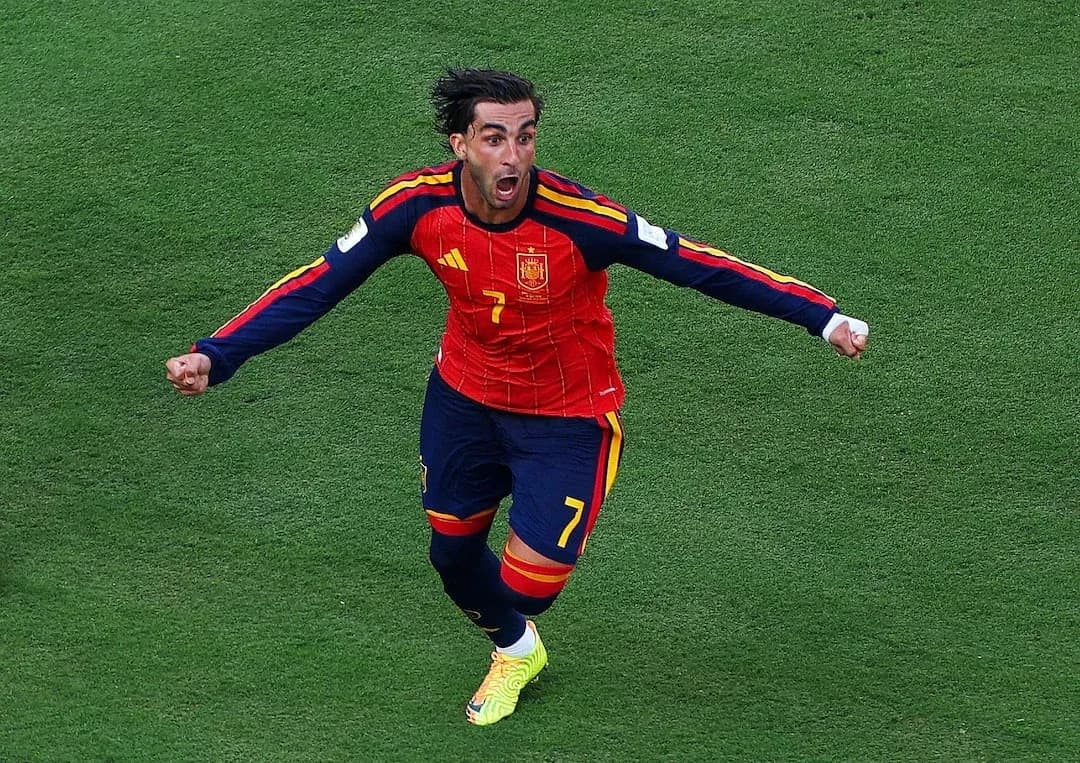
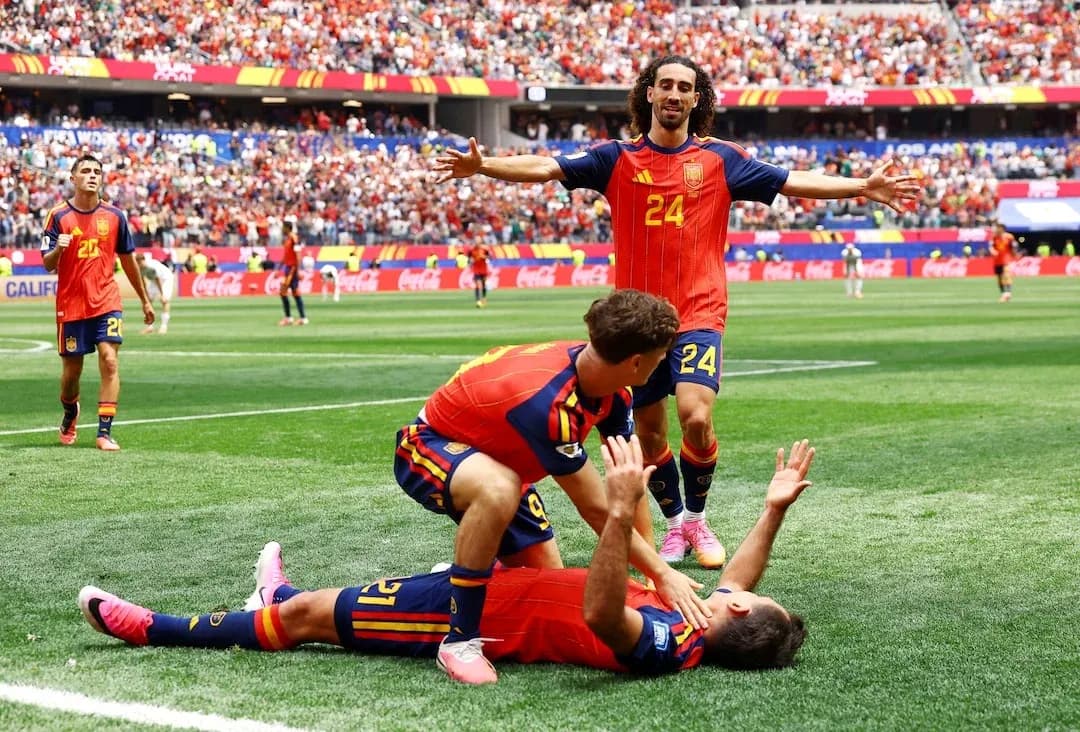
The scoring pattern underlined Spain’s methodical control. On 36', Mikel Oyarzabal (Spain) opened the scoring, finishing a move assisted by Marc Cucurella, giving Spain a deserved 1-0 lead that reflected their early territorial pressure. After the interval, Austria made a double change at 46' to adjust the midfield, but Spain’s control persisted. On 66', Pedro Porro (Spain) struck the second, assisted by Alex Baena, effectively punishing Austria’s attempts to step higher and chase the game. As Austria tired and stretched, Spain retained their structure and continued to circulate the ball, and on 89' Oyarzabal (Spain) added his second, again assisted by Cucurella, sealing a 3-0 result.
Discipline
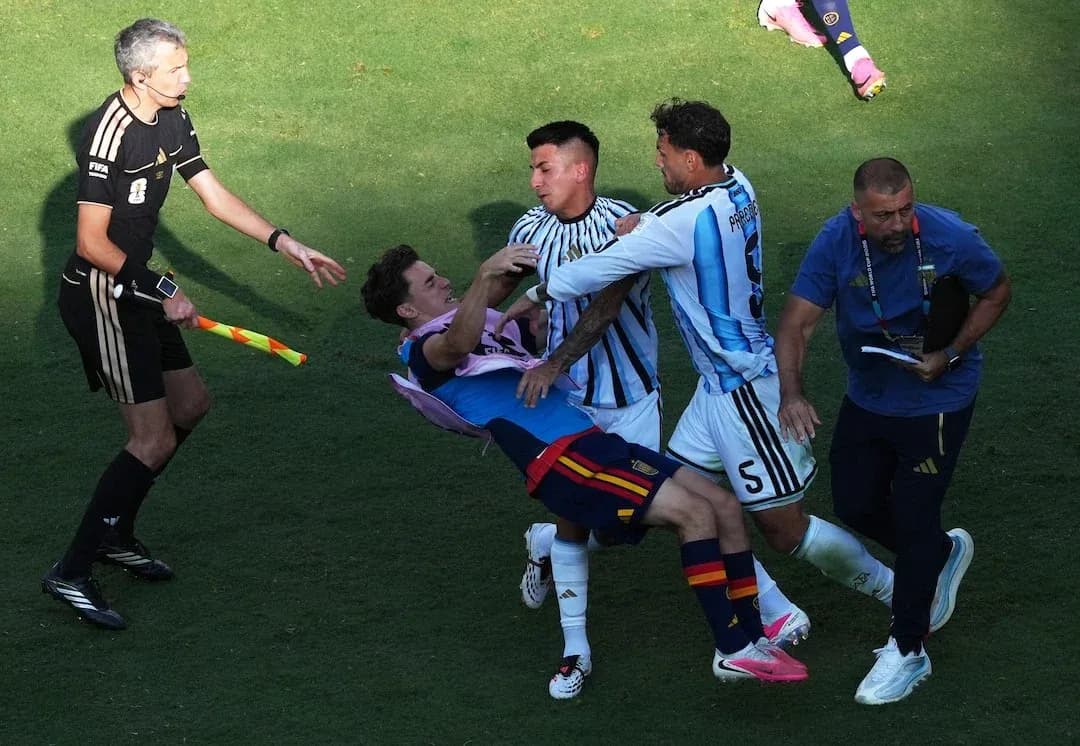
Discipline stayed largely under control. Austria collected the only card of the night: at 83', Stefan Posch (Austria) received a yellow card — Foul. This was consistent with Austria’s reactive, often late defending, reflected in their 15 fouls to Spain’s 8. No red cards were shown, and there were no VAR incidents listed; the game’s narrative was decided by structure and execution rather than controversy.
Tactical Approach
Tactically, Spain imposed a classic high-possession, position-based game, even without a listed formation. Their 629 passes with 570 accurate (91%) show a side comfortable circulating under minimal pressure, using Rodri as the central metronome and Pedri, Dani Olmo, Lamine Yamal and Alex Baena to occupy and overload pockets between Austria’s lines. The ball progression pattern is clear in the shot profile: 23 total shots, with 15 inside the box, indicates that Spain consistently managed to access the penalty area rather than settling for speculative efforts.
Cucurella’s role was especially significant. Twice he provided the final pass for Oyarzabal, which points to Spain creating width and depth on the left, with the forward attacking the inside channels. On the right, Pedro Porro’s goal, assisted by Baena, underlines how Spain’s full-backs or wide defenders were allowed to advance and finish moves, benefiting from Austria’s narrow, collapsing defensive shape.
Defensive Control
Defensively, Spain’s control was almost total. Austria managed only 5 shots in total, 4 inside the box but none on target, which suggests that while they occasionally reached finishing zones, they did so under heavy pressure and poor body shape. Spain’s blocked shot count (7) highlights proactive defending: centre-backs and midfielders stepping out to contest attempts before they could test Unai Simón (Spain). According to the data, Spain’s goalkeeper registered 0 saves; that is not a reflection of passivity, but of a defensive block and pressing scheme that prevented Austria from producing a single effort on goal that required intervention.
Austrian Approach
Austria’s approach under Ralf Rangnick was built around vertical transitions and compactness, but the numbers show they spent most of the match chasing. Their 346 passes with 284 accurate (82%) are respectable in isolation, yet the lack of territorial gain is exposed by 0 corner kicks and just 1 blocked shot. They were pushed so deep that their first significant structural adjustment came at 46', with Nicolas Seiwald (OUT) replaced by Carney Chukwuemeka (IN) and Xaver Schlager (OUT) replaced by Florian Grillitsch (IN), an attempt to gain more composure and ball-carrying from midfield. Later, at 60', Michael Gregoritsch (OUT) made way for Marko Arnautović (IN) and Romano Schmid (OUT) for Saša Kalajdžić (IN), signalling a shift towards more direct, target-man options.
Spain’s Substitutions
These changes, however, came against the backdrop of Spain’s increasing control. Spain’s substitutions were aimed at refreshing energy without altering the core structure. At 71', Dani Olmo (OUT) was replaced by Mikel Merino (IN), and Alex Baena (OUT) by Ferran Torres (IN), keeping the same positional map but adding fresh legs and different profiles between the lines and in wide channels. At 85', Lamine Yamal (OUT) was replaced by Pablo Gavi (IN), ensuring continued intensity in pressing and ball circulation. In the final minutes, Aymeric Laporte (OUT) made way for Marc Pubill (IN) and Pedri (OUT) for Fabián Ruiz (IN) at 90', changes that were more about load management and game closure than tactical repair.
Statistical Verdict
From a statistical verdict perspective, the 3-0 scoreline aligns closely with the underlying metrics. Spain’s xG of 2.84 is almost a one-to-one match with their three goals, indicating that they created sustained, high-quality chances rather than relying on low-probability shots. Austria’s xG of 0.32, combined with zero shots on target, confirms that their attacking threat was marginal and mostly contained to low-danger situations.
Spain’s defensive performance is further underlined by the goals prevented value of -0.57 for their side, which in context suggests that their defensive unit limited Austria to chances even below an already low xG baseline, making Unai Simón (Spain) largely a spectator in terms of shot-stopping. On the other side, Austria’s goalkeeper Alexander Schlager (Austria) made 6 saves despite Spain registering 10 shots on goal, which implies that several efforts were blocked or missed the target, but also that he prevented the defeat from becoming heavier.
In summary, this was a structurally dominant, low-risk performance from Spain: heavy possession, high passing accuracy, multiple box entries and effective pressing. Austria’s attempts to adjust via substitutions and a more direct attacking profile never broke Spain’s control, and the statistical profile confirms that the 3-0 scoreline at SoFi Stadium was an accurate reflection of the tactical gap between the sides on the night.