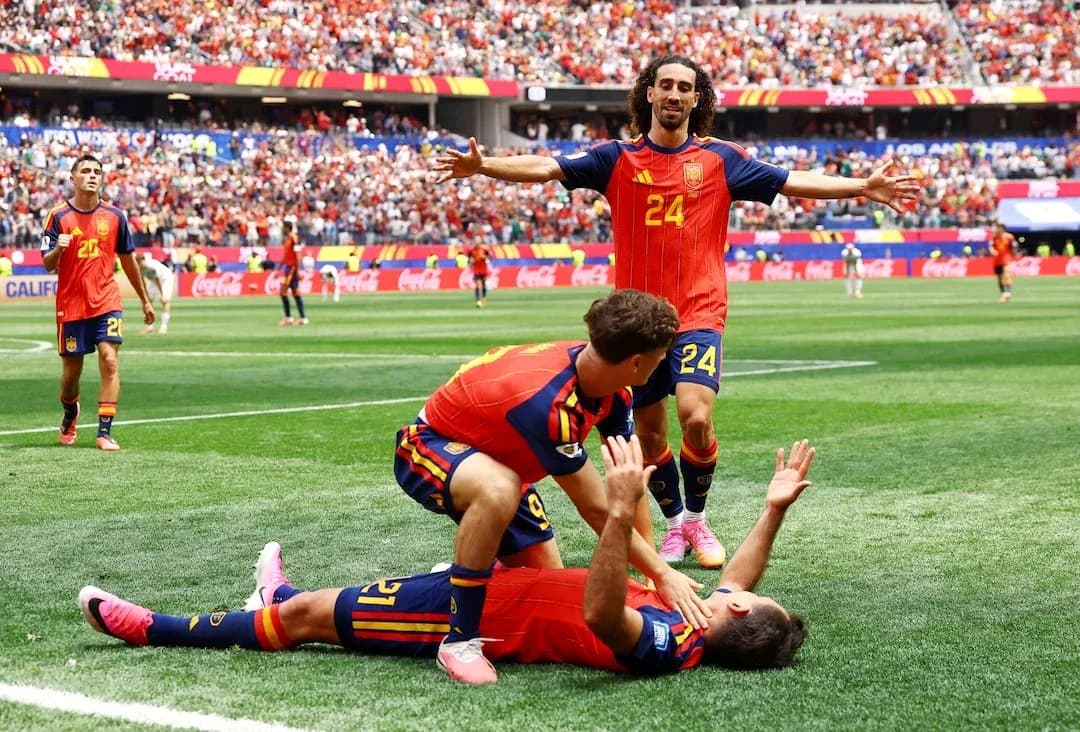
Spain vs Austria: World Cup Round of 32 Preview
Under the lights of SoFi Stadium, Spain and Austria arrive at the World Cup Round of 32 with mirrored formations but very different footballing identities. Both line up in a 4-2-3-1, yet the numbers beneath the shapes tell a story of a heavyweight favourite against a dangerous but fragile outsider.
Heading into this game, Spain have been close to flawless across the tournament. Overall they have played 4 matches, winning 3 and drawing 1, with no defeats. At home venues in this World Cup they have played 3 times, winning 2 and drawing 1. The attacking output has been controlled but ruthless: overall they have scored 8 goals, with 7 of those coming at home and 1 on their travels. That translates to 2.3 goals per home game and 1.0 away, for an overall average of 2.0. More ominously for Austria, Spain have not conceded a single goal so far — 0 conceded at home, 0 away, 0 overall — a defensive perfection backed up by 4 clean sheets in 4 matches.
Austria arrive with a very different statistical profile. Overall they have played 4 matches, winning 1, drawing 1 and losing 2. At home they have been strong in a small sample (1 match, a 3-1 win), but on their travels they have struggled: 3 away fixtures, no wins, 1 draw and 2 defeats. Their attack has been lively enough, with 6 goals overall — 3 at home and 3 away — giving them 3.0 goals per home game and 1.0 away, for an overall average of 1.5. The problem is at the other end. Austria have conceded 9 goals overall, with 1 at home and a worrying 8 away. That means 1.0 goal conceded per home game, but 2.7 on their travels, for an overall average of 2.3. There are no clean sheets in their record so far.
From the group stage standings, Spain topped Group H with 7 points from 3 matches, scoring 5 and conceding 0. Their goal difference there was +5, calculated from 5 goals for and 0 against. Austria, by contrast, finished second in Group J with 4 points from 3 games, scoring 6 and conceding 6 for a group-stage goal difference of 0. The Round of 32, then, sets a disciplined, airtight Spain against an Austria side whose matches tend to open up into chaos.
Tactics
Tactically, Luis de la Fuente has settled on a 4-2-3-1 that can morph into a 4-3-3 in possession. The back four of P. Porro, P. Cubarsi, A. Laporte and M. Cucurella sits in front of U. Simon, a goalkeeper who has yet to concede in this tournament. In front of them, Rodri and Pedri form a double pivot that is far more than a shield: Rodri dictates tempo and circulation, while Pedri drifts between the lines, linking phases and dragging markers out of shape.
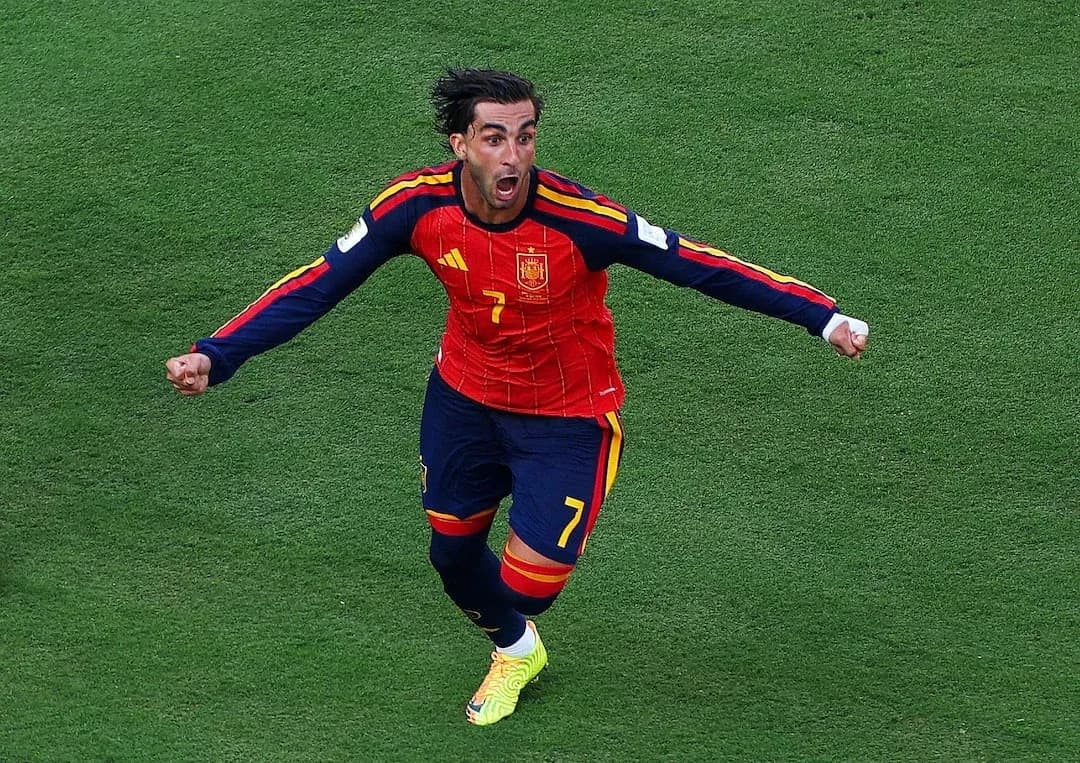
Ahead of them, the trio of Lamine Yamal, D. Olmo and A. Baena supports M. Oyarzabal as the lone forward. Oyarzabal is not just Spain’s reference point in this match; he is one of the World Cup’s standout forwards so far. Overall he has 4 goals and 1 assist in 4 appearances, from 15 shots with 8 on target. His average rating of 7.7 underlines his influence. He is not merely a finisher; 2 key passes and 69 total passes at 73% accuracy show a forward who drops into pockets, combines and opens lanes for runners like Lamine Yamal and D. Olmo.
Austria mirror the 4-2-3-1 on paper, but their interpretation is more vertical and risk-laden. A. Schlager starts in goal, shielded by a back line of S. Posch, K. Danso, D. Alaba and K. Laimer. Laimer, nominally a defender here, will almost certainly step into midfield lanes, leaving Alaba and Danso to manage large defensive spaces. In the double pivot, N. Seiwald and X. Schlager are tasked with both disrupting Spain’s rhythm and springing quick transitions.
The attacking midfield line of R. Schmid, P. Wanner and M. Sabitzer sits behind M. Gregoritsch. Sabitzer, drifting inside from the left, is Austria’s natural conduit between lines, while Gregoritsch offers a physical target and penalty-box presence. Austria’s overall scoring record — 6 goals in 4 matches — suggests they can trouble any defence when given room to run or cross.
But their defensive frailty is stark, particularly away from home. On their travels they concede an average of 2.7 goals per game, and they have yet to keep a clean sheet anywhere in the tournament. Spain, by contrast, average 2.3 goals per home match and 2.0 overall while maintaining a perfect defensive record.
Disciplinary Profiles
The disciplinary profiles sharpen the tactical picture. Spain’s yellow cards so far have been concentrated in the middle and late phases of games: 50.00% of their yellows have arrived between minutes 46-60, and another 50.00% between 91-105. That hints at a side that pushes physicality as matches open up and again as they close out results. Austria’s bookings tell a different story: 20.00% of their yellows have come in the opening 0-15 minutes, another 20.00% between 31-45, and a heavy 60.00% in the 76-90 window. They start aggressively, then become increasingly desperate late on as games slip away.
S. Posch is the emblem of that edge. Across the tournament he has 2 yellow cards, 7 fouls committed and 1 penalty conceded. He has still been active defensively — 4 tackles and 10 interceptions, with 16 duels won out of 35 — but his aggressive style is a clear risk against a Spain front line that thrives on drawing contact around the box. One mistimed challenge on Oyarzabal or D. Olmo in the final third could tilt the tie.
Key Matchup
The “Hunter vs Shield” duel is therefore clear: Oyarzabal, with his 4 goals overall, against an Austrian defence that concedes 2.3 goals per game overall and 2.7 away. Spain’s “Shield” is their collective structure, anchored by U. Simon, Laporte and Rodri, against an Austrian attack that scores 1.5 goals per game overall but has already shown both potency and volatility.
In the “Engine Room”, Rodri and Pedri face Seiwald and X. Schlager. If Spain’s pair can dictate the rhythm, Austria’s 4-2-3-1 risks being pinned back into a 4-5-1, with Sabitzer and Wanner forced into deeper defensive roles. If, however, Austria’s double pivot can disrupt early phases and find Sabitzer between Spain’s lines, Gregoritsch and the second line of runners can test a Spanish defence that, while perfect so far, has not yet faced a side as direct as Rangnick’s.
Statistically, all indicators lean towards Spain. Their overall attacking average of 2.0 goals per game meets an Austrian defence conceding 2.3 overall. Their unblemished record of 0 goals against confronts an Austrian attack that is dangerous but inconsistent, having failed to score in 2 matches overall. Austria’s one area of statistical comfort is from the spot: they have scored 1 penalty from 1 overall, a 100.00% conversion so far. Spain, by contrast, have not yet taken a penalty in this tournament.
The tactical prognosis, then, is of Spain controlling territory and tempo, using the rotations of Pedri, Lamine Yamal and D. Olmo to stretch Austria’s back line horizontally while Oyarzabal prowls between centre-backs and full-backs. Austria will look to compress the middle third, trust Alaba’s leadership and Posch’s aggression, and then break quickly through Sabitzer and Wanner towards Gregoritsch.
Given Spain’s defensive perfection — 4 clean sheets in 4, 0 goals conceded overall — and Austria’s vulnerability on their travels, the balance of probability tilts strongly towards Luis de la Fuente’s side progressing. Yet Austria’s 6 goals overall and their willingness to play on the edge ensure that this Round of 32 tie will not be a procession. If Spain’s shield holds, their hunter up front has the numbers to finish the job.