
Roy Keane Critiques English Arrogance After World Cup Exit
Roy Keane has never had much time for English self‑congratulation. After England’s World Cup semi-final defeat to Argentina in Atlanta, he had even less.
As the inquest raged over another near miss on the biggest stage, Keane turned his fire not on Thomas Tuchel or the players, but on the mood music that surrounded the entire campaign – the hype, the entitlement, and what he called a familiar strain of “arrogance” in the stands and studios.
Semi-final heartbreak, full-blown meltdown
England had led. Anthony Gordon’s strike on Wednesday night put Tuchel’s side in front and, for a spell, the dream felt tangible. But the pressure from the world champions-in-waiting built and then broke them.
Enzo Fernández dragged Argentina level late on. Lautaro Martínez then drove the knife in, completing a turnaround that sent Lionel Scaloni’s team into a second consecutive World Cup final and left England stranded at the same stage once more.
The reaction at home was instant and ferocious. Tuchel, hired as the proven serial winner to finally push England over the line, found himself at the centre of a storm. Team selection, substitutions, game management – every decision was pulled apart. For many, a semi-final was framed not as progress, but as failure.
Keane wasn’t buying that.
Crouch’s tweet, and a backlash that told a bigger story
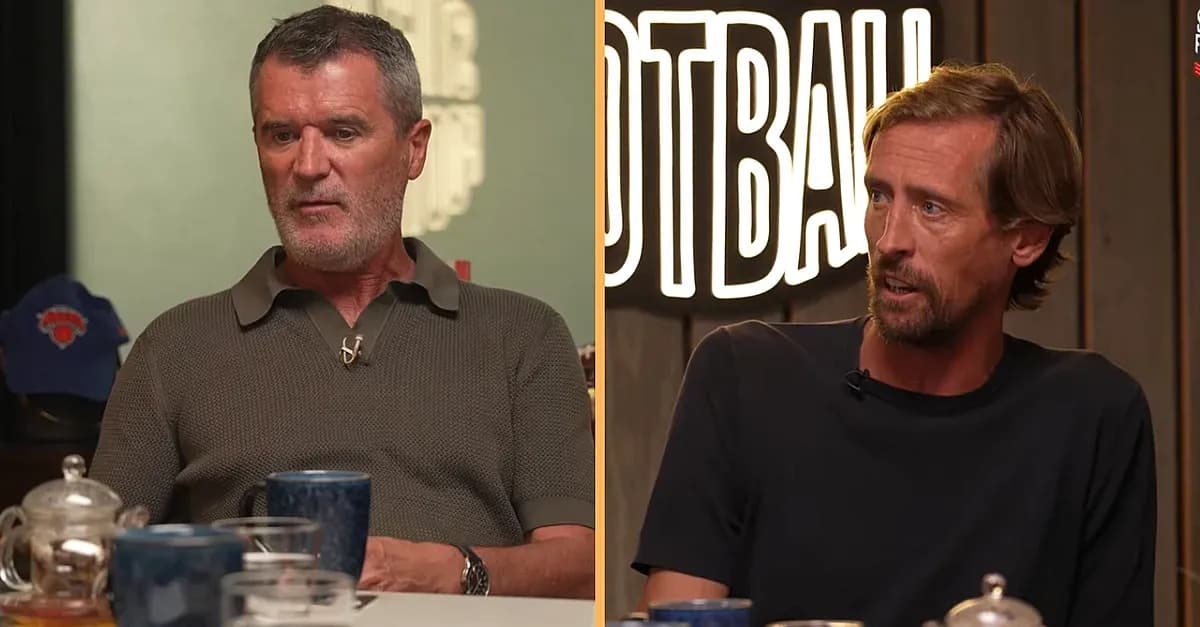
On the latest episode of Stick To Football, Keane sat alongside Gary Neville, Ian Wright and Peter Crouch to pick through the wreckage. Crouch admitted he had been stunned by the level of fury he’d seen online after the defeat, and pointed to one example in particular – his own.
The former England striker had posted a now-deleted message after the final whistle in Atlanta. It was simple, emotional, and, in the eyes of some, far too generous:
“Gutted we are out, but watching Argentina was an experience, Messi's a genius and a hard bastard as well like the rest of them. I'm proud of our lads and what they've achieved at the World Cup, some real heroes emerged and it was a pleasure to have been here for it.”
Hardly a victory parade. Just a nod to Lionel Messi’s edge, Argentina’s steel, and an England side that had gone deep into a World Cup again.
The replies were brutal.
Crouch was hammered for daring to praise the opposition, for calling Messi “a genius”, for suggesting pride in a team that had fallen one step short of the final. That, Keane argued, was the problem in a nutshell.
“I think this is the bit of arrogance with English fans comes into it and pundits or whatever because, what they got beaten in a semi-final?” he said. “The World Cup is going on for nearly 100 years and England have won it once. There's been 23 World Cups so why are they thinking they should be winning it? They're competing, they came up short, that's what happens in sport unfortunately.”
No dressing it up. No soft landing.
Expectations, history, and fine margins
Keane’s point cut against the national mood. This England squad had been widely tipped as genuine contenders. The talent is real, the depth obvious, and under Tuchel the belief that this was “their time” only grew louder.
But for Keane, the anger after a semi-final defeat to a side of Argentina’s pedigree ignored both history and reality. One World Cup title in nearly a century. Twenty-three tournaments, one trophy. That is the context.
Elite football is decided in moments. Gordon’s opener had England dreaming; Fernández and Martínez snapped them awake. The margins at that level are razor-thin, and Keane was adamant that falling just short of the final did not automatically equate to a national disgrace.
They competed. They lost to a heavyweight. That, in his eyes, is sport.
The questions now are not just about Tuchel’s tactics or England’s game management. They cut deeper. Can a football culture that reacts with fury to anything less than lifting the trophy ever see a semi-final as anything but failure – and what does that do to the next team that dares to try?




