
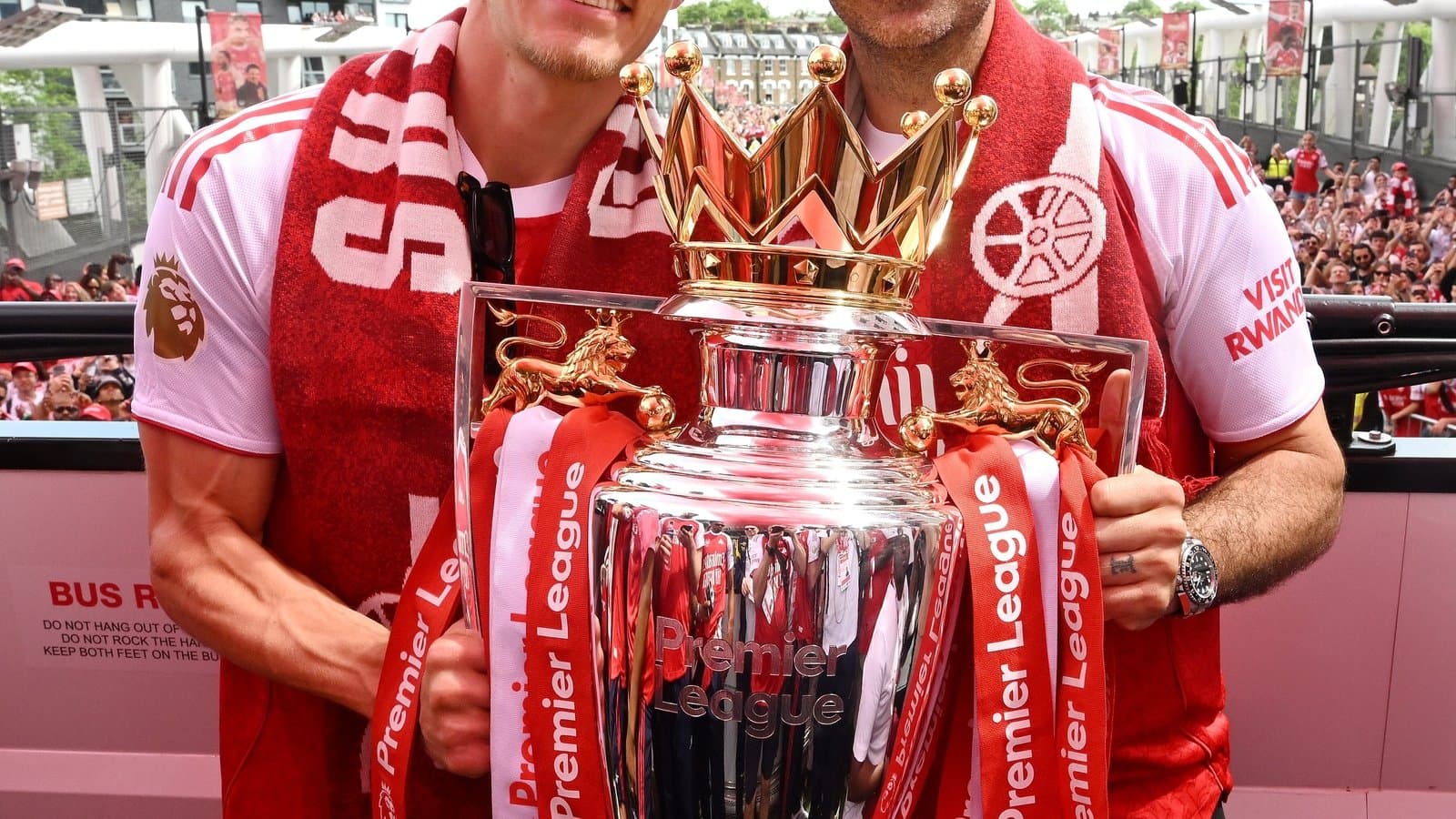
Premier League Trophy: A Symbol of Glory
The Premier League trophy glinted under the Selhurst Park lights as Martin Odegaard raised it high, a 22-year wait finally broken. A month on, it has swapped the noise of south London for the calm of a trophy cabinet, but the story of that silver crown is more intricate than a single title-winning night.
This is the prize that has defined an era. Now it finally bears their name again.
A weight worthy of a season’s work
Every player who stepped up to the podium and wrapped their hands around the trophy felt the same thing first: the sheer heft of it.
The Premier League trophy weighs 9.5kg – around 1.4 stone – before you even count the base. Add the engraved plinth, where champions are immortalised, and the total surges to 25.4kg, or 4 stone. It’s not just a symbol; it’s a load you have to earn the right to lift.
You don’t casually swing this thing around. You brace, you grip, and then you let the emotion take over.
A crown that dominates the room
Up close, the trophy is taller and broader than it looks on television. From the bottom of the engraved base to the tip of the crown, it stands at 104cm – 3ft 5in of polished authority. Across, it stretches 61cm, or 2ft wide, broad-shouldered like the league it represents.
What many forget is that there isn’t just one. There are two identical Premier League trophies in existence. Both carry the roll call of champions around the base, both ready to be thrust into the sky when another season’s story is written.
Only one, though, currently sits with the new title winners.
Built like a jewel, rooted in the pitch
Look down to the base and the history is literally carved into it. Every champion from 1993 is there, season by season, right through to the freshly engraved 2025/26 winners. One long line of dominance, disruption, and now, a long-awaited return.
That base is made from Malacite, a semi-precious stone sourced from Africa. Its rich green ring isn’t decorative for the sake of it – it represents the field of play, the stage on which the title is fought for from August to May.
Above it rises the work of Asprey London, the Crown Jewellers, who cast the main body from solid sterling silver. The crowns that sit on top are formed from 24-carat silver gilt, catching the light in a way that television never quite captures.
The entire design leans on a single idea: “The Three Lions of English Football.” Two golden lions stand on either side of the trophy. The third? That’s the captain, every season, in every era, when he grips the handles and lifts the title into the air. For a few seconds, man and metal complete the emblem.
How long does glory stay on the shelf?
For now, one of the two trophies belongs to the new champions. It will travel with them, sit at events, appear in photos, and quietly dominate any room it’s in. The other remains with the Premier League, ready for its own duties.
But this isn’t a permanent handover. The club must return its trophy to the Premier League at least three weeks before the final league match of the next season. At that point, the title is back in the balance, the engraving tools are poised, and the silver crown waits to see whose name it will carry next.
The trophy is home for now. The real question is how long it stays there.




