
Kubo Takefusa's Injury and Japan's Challenge Against Brazil
On the eve of the biggest night in this Japanese team’s recent history, Kubo Takefusa summed up his condition in two words.
“I’m good.”
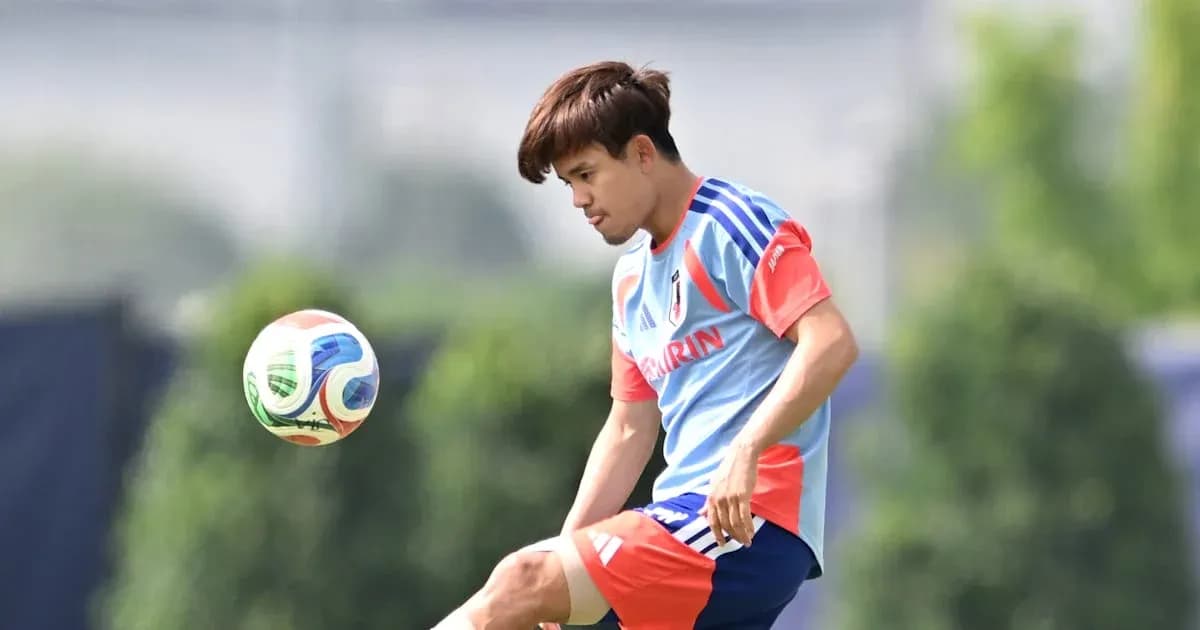
The left knee tells a different story. Since he went down in the tournament-opening draw with the Netherlands, the Real Sociedad playmaker has been reduced to rehab sessions and solitary runs. The joint is heavily taped, the touches on the ball minimal. For a player who lives through rhythm and repetition, it’s been a brutal pause.
On Sunday, coach Moriyasu Hajime cut through any lingering optimism.
Kubo will not play against Brazil.
A nation that will stay up until 1 am to watch this round of 32 clash already knew the stakes. Now it has its “what if?” as well.
Moriyasu tried to offer a sliver of light in the pre-match press conference. Kubo is pushing, working, doing everything he can to rebuild his conditioning, the coach said. The message was clear: this isn’t a case of a star holding back. The body simply isn’t ready.
For a side that has not only talked openly about beating Brazil but has also set its sights on winning the World Cup, losing their most gifted creator sounds like a fatal blow.
Maybe it is. Maybe it isn’t.
What’s undeniable is that Japan are a richer, more unpredictable side when Kubo is on the pitch. At 25, with that cultured left foot and a streak of invention few of his team-mates can match, he had started to grow into a different role at this tournament. With Mitoma Kaoru, captain Endo Wataru and Minamino Takumi all sidelined by injuries, the responsibility vacuum was obvious. Kubo stepped into it.
Around the camp, his presence carried weight. On the training ground, in team meetings, in the way others looked to him. This was his moment to become one of the leaders of a new Japan.
Now someone else has to grab it.
If there is a reason Japan are not collapsing under the weight of this latest setback, it lies in the way Moriyasu has built his squad. The spine of this campaign has been depth. Real, usable depth. He has already turned to almost his entire 26-man group; only three have yet to see the pitch, and two of those are reserve goalkeepers.
The “next man up” line that gets thrown around in sport is often little more than a slogan. In this team, it has become a habit. Players step in, and the level barely dips. The names change, the intensity doesn’t.
That conviction shapes how Japan are talking about Brazil.
There is no deference, no nostalgic bow to the old order. When Wolfsburg striker Shiogai Kento was asked which teams he considered the strongest at this World Cup, he named France and Argentina. Brazil didn’t make the list.
“You don’t really hear about Brazil lately,” he said, a sentence that would have sounded almost sacrilegious in Japan three decades ago.
Pressed on Neymar – a man who has scored nine times in five previous matches against Japan – Shiogai’s response cut straight to the point.
“That’s Neymar of the old. I think we’re OK right now.”
The shift is striking. When the J.League kicked off 33 years ago and professional football finally took root in Japan, Brazil were the unreachable model. The Selecao and Joga Bonito were not just admired; they were worshipped. Japanese players grew up mimicking Brazilian idols, Japanese fans stayed up through the night to watch them.
That era of awe is over. Respect remains, but the fear has drained away.
Now comes the real examination. Can a Japan side without Kubo, already stripped of Mitoma, Endo and Minamino, carry that bold talk onto the pitch against the country that once defined their football dreams?
The answer arrives against Brazil, in the small hours, with a nation watching and wondering if this is the night the balance of belief finally matches the result.




