Pochettino's Vision for US Soccer: From Short-Term Fix to Long-Term Architect
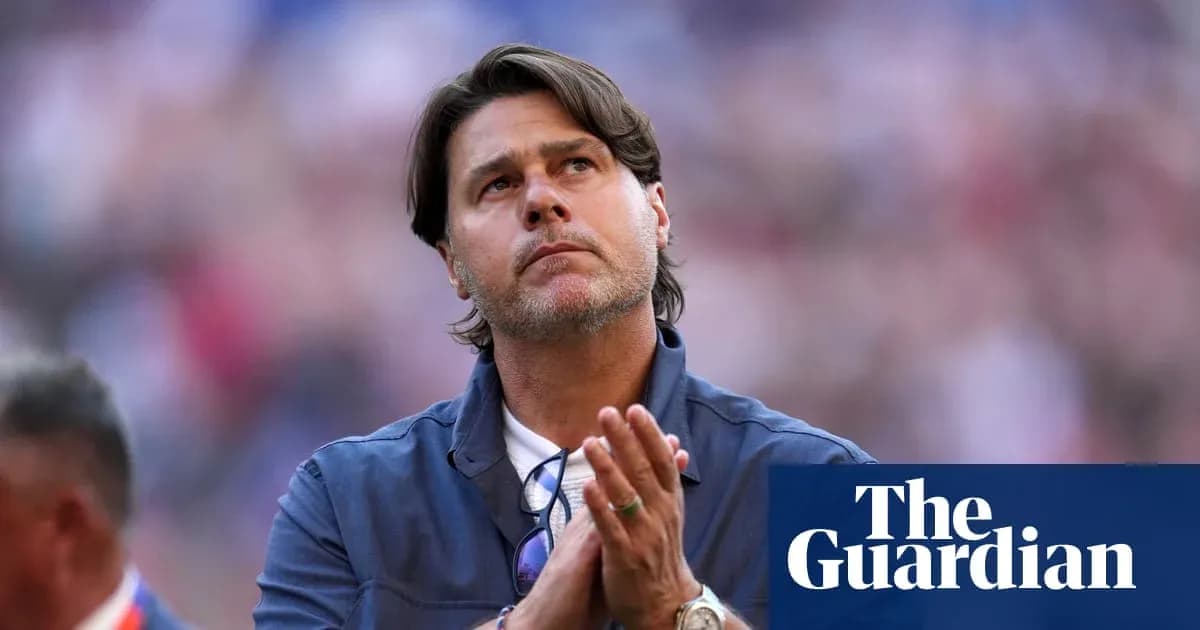
Mauricio Pochettino is back on the training pitch, and the scars of the World Cup exit are still fresh.
Two months after the US men’s national team crashed out in bitterly disappointing fashion, the Argentinian is not packing his bags or plotting his next club job. He is digging in. The coach many viewed as a short-term hire for a home World Cup has signed on for the long haul – and with a bigger brief than any USMNT manager before him.
From short-term fix to long-term architect
When Pochettino arrived in 2024, the assignment looked simple enough on paper: squeeze every last drop out of a talented generation for the first World Cup on US soil in more than 30 years. The contract extension agreed in August changes that storyline entirely.
He is now tied to the 2030 World Cup qualification campaign and, crucially, to something far more ambitious. Pochettino has framed his decision to stay as a chance “to have a lasting impact on the sport in the country that has welcomed us so warmly – and for that impact to extend beyond results on the field.”
US Soccer has backed that up with structure, not slogans. When they announced the renewal, they revealed an expanded role: Pochettino will help steer youth development, shape coaching education and advise on collaboration with the professional leagues. It is the kind of sweeping influence often seen with national team managers in other countries, but unprecedented in the United States.
This all lands at a moment of major internal change. US Soccer is overhauling its technical setup and recruiting two new directors to oversee the men’s and women’s senior and youth programs. Pochettino made it clear on Monday that he is ready to be part of those decisions – with one caveat.
“He’s happy to help,” he said of himself, joking that the new hires “can’t [just] be my guy.” The point was clear: this is about building a system, not an empire.
Then he turned to the bigger picture.
“This is the future of the USA,” Pochettino said. “We want to try to perform in the World Cup and to create something special with the fans. And now it’s about being a part of the legacy that the federation wants to create – becoming one of the most powerful countries in soccer. That is a dream, no? It’s amazing. If we can be part of that, we are so excited and so happy.”
Friendlies, but with a longer shadow
On the immediate horizon, the US have four friendlies in late September and early October against Peru, Chile, Mexico and Canada. Useful tests, good atmospheres, a chance to reset after the World Cup.
They are also, in context, a sideshow.
The real weight lies in what comes next: a 2030 qualifying campaign the US cannot afford to botch, a 2028 Olympics in Los Angeles on home soil, and the strong possibility of a Copa América in the same summer. Pochettino’s work will bleed across all of it, from the senior squad to the next wave of teenagers trying to break through.
Those friendlies will be the first glimpse of how he intends to knit those strands together.
Balogun’s deadline-day blow
The summer transfer window came and went without major upheaval for most USMNT regulars. Gio Reyna moved to Strasbourg, Sebastian Berhalter joined Middlesbrough, and teenage forward Zavier Gozo jumped from MLS to Crystal Palace. Beyond that, it was mostly continuity.
Folarin Balogun was supposed to be the exception.
After a breakout World Cup, the Monaco striker looked set for a big-money move. Everton pushed hardest, only for the deal to collapse at the last moment, with the Premier League club citing a potential fitness concern. Monaco and Balogun disputed that reasoning, but the clock ran out. The move died.
Pochettino has seen this before. Players left in limbo by medicals, boardroom doubts, or last-minute cold feet. On Monday, he made it clear Balogun will not face that disappointment alone.
“Yes, it’s difficult because you cannot influence that decision,” Pochettino said. “You need to support what they are doing with the people making the decisions. In some special cases, like Flo’s, I will call in the next few days. I wanted to give him a little bit of space after that situation in Everton. I want to know from him what happened. But we are always offering our support, and that’s it. I think he’s an important player for us, he was an important player in the World Cup and I hope that he can find being in Monaco, or in another place, his best place to perform in the best way.”
For the US, the message is simple: Balogun remains central. His club future may be uncertain, but his national-team role is not.
The dual-national chessboard
If the transfer market was quiet, the recruitment market is anything but.
Pochettino kept his cards close when asked about the 26-man roster he will name later this month. One absence is already confirmed: Augsburg center-back Noahkai Banks will not be there.
The 19-year-old, eligible for both Germany and the US, has not yet chosen his international future. He has said he wants to decide by “the next international break, or at the latest by the international break after next,” while in Germany, reports say new national team coach Jürgen Klopp has already scouted him in person.
For a program that has built much of its recent growth on convincing dual nationals to commit, this is familiar territory. High stakes, no guarantees.
“We are in contact with all the potential dual nationals,” Pochettino said. “I think it’s important for us, of course, because that is the human connection that is so important. Even if they, like in that case, Noki, didn’t change his mind and is waiting still, no decision, and of course we cannot consider him for the next camp … But the organization is working with all the dual nationals and players with the possibility to make a decision.”
That phrase – “human connection” – cropped up again.
“That human connection is important because if one day they feel that they can defend and they want to fight and to be part of our national team … Of course, if they deserve it, and we consider that they deserve to be involved, of course we are going to call [them up].”
It is a delicate balance: respect the player’s process, keep the door open, and still build a coherent squad in the present.
Eyes on Los Angeles
All of this – the expanded remit, the dual-national battles, the support for players like Balogun – feeds into a four-year runway that ends in Los Angeles in 2028 and stretches on to 2030.
The US will host the Olympics in Southern California, a showcase for a generation that could form the spine of the 2030 World Cup team. Pochettino is not just managing a senior side; he is, in effect, curating an era.
The friendlies against Peru, Chile, Mexico and Canada will offer early hints. The real judgment will come later, when the US step into Olympic stadiums at home and, not long after, into another World Cup cycle with expectations higher than ever.
Pochettino has chosen to stay for that pressure. Now he has to turn a grand vision – “becoming one of the most powerful countries in soccer” – into something that can survive the grind of qualifying campaigns, tournament exits and transfer sagas.
The next four years will reveal whether this is the start of a genuine legacy, or just another bold American project that ran out of time.