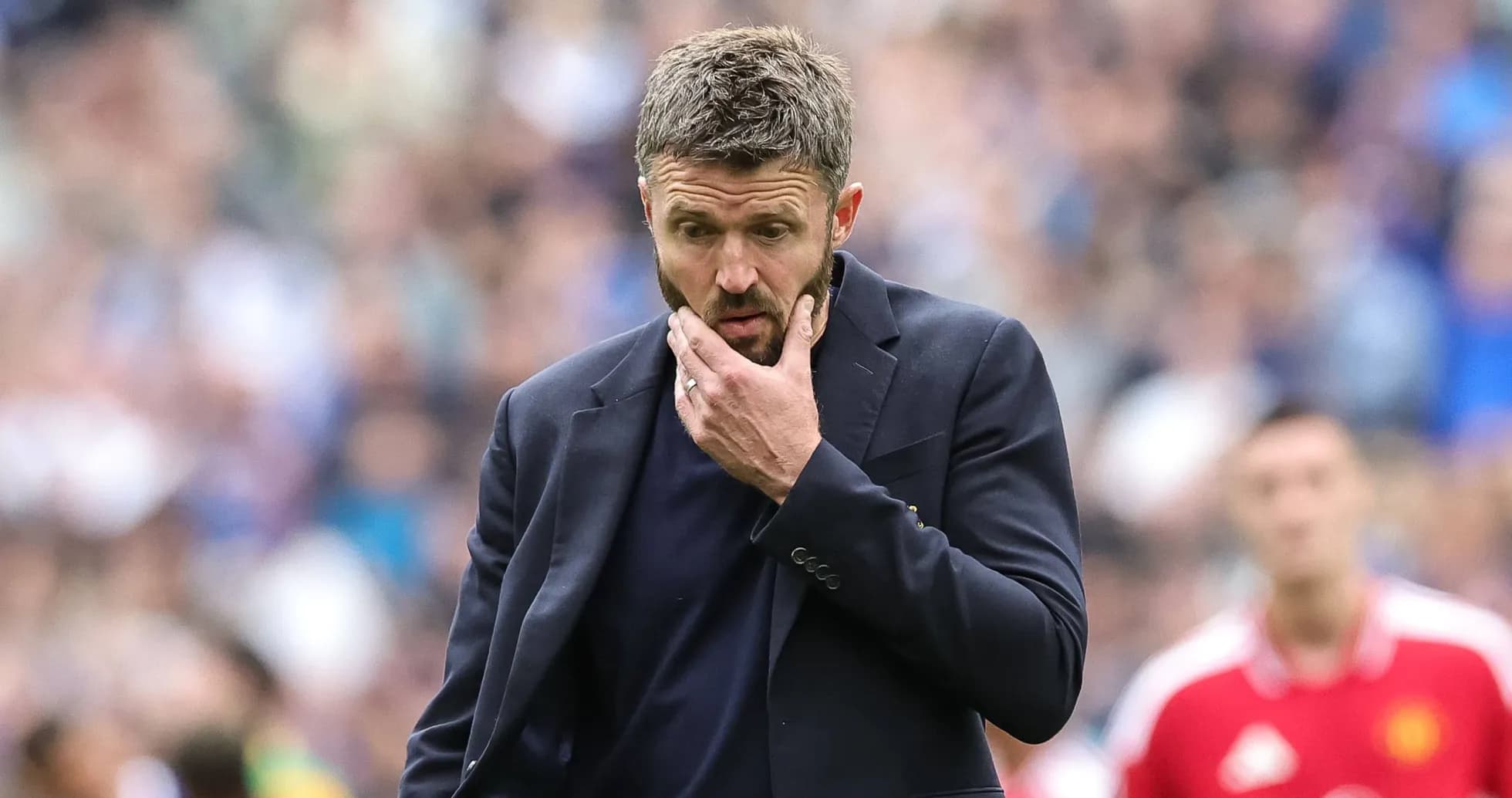
Gary Neville's Warning to Michael Carrick on United's Complacency
Gary Neville has warned Michael Carrick he is walking into the same traps that swallowed Erik ten Hag and Ruben Amorim after Manchester United threw away victory at the Hill Dickinson Stadium.
United were in control. Then they weren’t.
Leading deep into stoppage time, they allowed Everton to build one last wave of pressure, and Ainsley Maitland-Niles punished them with a 96th-minute equaliser that felt as predictable as it was painful. Three games into the Premier League season, United sit on four points and already look fragile when the temperature rises late on.
Neville’s warning: “Teams think they’ve got a chance”
On his Gary Neville Podcast, the former United captain cut straight to the core of the problem: this team doesn’t scare opponents.
“Teams think they've got a chance against them,” Neville said, accusing United of drifting into complacency long before Everton’s late punch. He pointed to the period after United’s first goal as the moment standards slipped.
“I thought they were a little bit complacent and I was saying it after the first goal, they lacked that killer instinct before that period when Everton equalised and then they react again.”
The pattern is a familiar one. United play, United lead, United wobble. Neville’s frustration came not just from the result, but from the sense that nothing has really changed.
Defensive tinkering deja vu
If the mentality irked him, the substitutions infuriated him.
Carrick’s late reshuffle at the back, including the removal of key defenders, left Neville baffled. With the game still in the balance, United invited pressure onto a back line that already looked uneasy.
Neville singled out the decisions involving Luke Shaw and Diogo Dalot, likening Carrick’s choices to the constant defensive chopping and changing that undermined previous managers.
“I don't think it's going to go away and that's my big fear,” he said. “I think conceding goals is going to chase them and hunt them down the road and I don't know how Michael deals with it because he's got his best back four on the pitch. I don't know why Shaw went off with five minutes to go – hopefully he's not injured.”
The message was stark: stop overthinking the back four, or the same old story will play out again and again.
Carrick fronts up: “We need to concede fewer goals”
Carrick stayed calm in front of the cameras, but he didn’t pretend the problems at the back could be glossed over.
“Obviously, we can't ignore it. We need to concede fewer goals to give us a better chance of winning games,” he admitted. “We'll certainly look at that and keep improving. There's obviously things we need to get better at as a team.”
He pointed out that Everton’s goals came from long range, and on another day might not have found the top corner.
“There's been two strikes from distance really, two really good strikes from their point of view. Sometimes they fly in the top corner and more often than not they probably don't. Yeah, for sure, it is [on conceding late].”
Carrick’s tone was measured. Neville’s was not. Between them lies the tension that will define United’s early season: is this just bad luck and fine margins, or a deeper flaw in how this side manages games?
Rashford worry adds to United’s headache
As if the defensive drama wasn’t enough, United now face an anxious wait over Marcus Rashford.
The forward, sharp and threatening down the left, was withdrawn in the second half. Carrick later confirmed it was a physical issue rather than a tactical switch. Rashford had linked well with Shaw, repeatedly stretching Everton down that flank before his early exit disrupted United’s rhythm.
“He felt a little bit of something, so we had to change him,” Carrick said. “We had good connections pretty much all over the pitch at different times of the game, and Marcus and Shaw have played together for a long period of time and have a good understanding. And you can see that, they look really dangerous down that side, and there is obviously more to come.”
More to come is exactly what United need. Right now, though, the story is all too familiar: late goals conceded, leads surrendered, and a manager already being told he is repeating history.